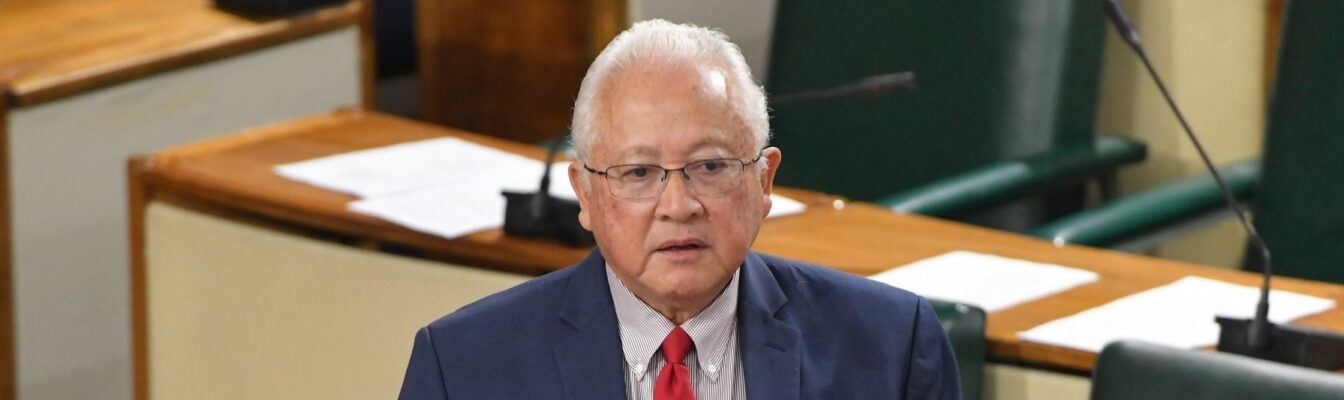
Chuck delivers ministerial statement on amendment to Political Ombudsman (Interim) act
Shari-Lee Crooks / Our Today
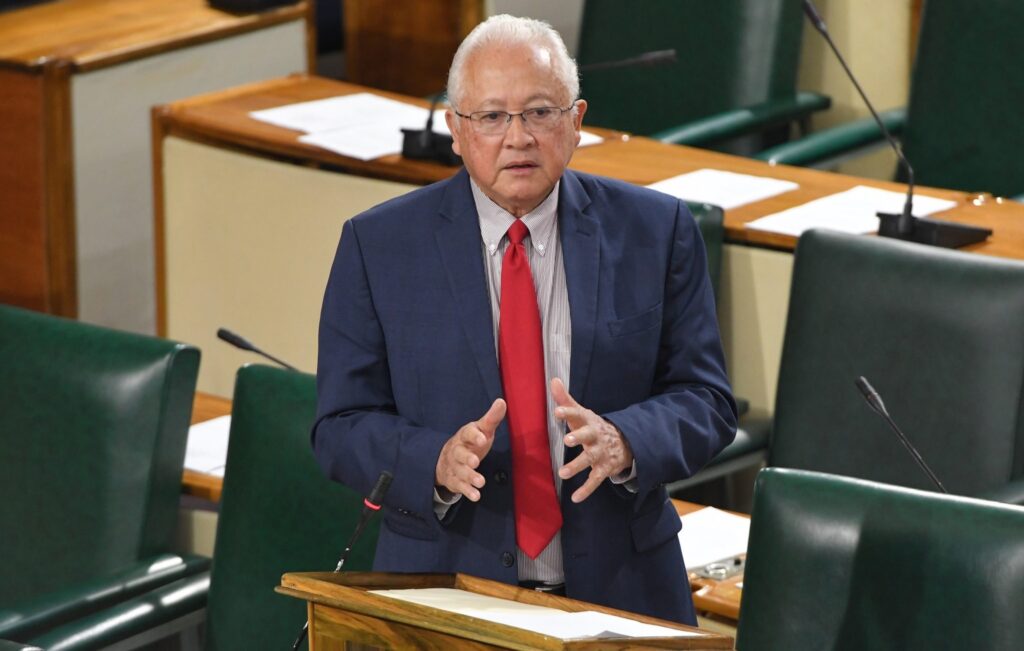
Minister of Justice Delroy Chuck tabled a statement in the House of Represenatives on Tuesday (February 6) regarding amendments the Political Ombudsman (Interim) Act and to provide for connected matters.
Chuck used some time to address some concerns that were raised by the Opposition on January 30, in relation to the amendment. The Opposition raised concern that the Electoral Office of Jamaica (ECJ) has achieved a level of stature that would be diluted should it undertake the roles and responsibilities of the Political Ombudsman.
The Opposition contended that the change would be in fundamental opposition to the purpose of the ECJ and alter its core functions.
In response to this concern, the justice minister said that it is the Government’s belief that the work done by the two offices is synergistic instead of contravening each other.
Addressing the Parliament, Chuck said, “as I mentioned in the last sitting of the House regarding this Bill Madam Speaker, the operation of the Office of the Political Ombudsman is intended to provide oversight of the conduct of political parties, its members and supporters, by promoting good governance and ensuring that political actors adhere to prescribed codes and ethical standards.”
He went on to say that this is in perfect harmony with the functions of the ECJ which is expected to safeguard the democratic foundations of the country by enabling eligible electors to elect their representatives to govern Jamaica through free and fair elections.

Based on the overlap of these two commissions, it is clear that subsuming the role of the Political Ombudsman under the ECJ would not alter the latter’s character. “The ECJ has long established internal protocols for treating with matters that will be adopted and applied to the matters they will now assume. We are not seeking to reinvent the wheel, but to adopt what has shown to work,” Chuck said.
Chuck went on to say that the things that the Opposition pointed out as being the strength of the ECJ is exactly why they would be the perfect office to assume the role of the Political Ombudsman. The same stature that has been achieved by the ECJ is needed for the office of the Political Ombudsman as well.
The Minister went further to say that “investing these responsibilities in a nine (9) member Commission will result in more impactful recommendations made to political parties or its representatives in circumstances where there has been breaches. It is in the nation’s interest to extend the reach of the well-functioning ECJ to close any gaps that may exist in the oversight of the political process and political conduct,” he explained.
Chuck also highlighted the fact that there is a Commission of Parliament responsible for making recommendations to the Governor General as it relates to the granting of emoluments to the Political Ombudsman as allowed under section 8(4) of the Principal Act. Chuck pointed out that one-third of said Commission is made up of Opposition members and the Commission had previously voted in favour of the office of the Political Ombudsman to be subsumed by the ECJ.
Chuck also pointed out that a letter was written to the offices of the Prime Minister and leader of Opposition on November 4, 2022 by the chairman of the commission.
It stated, among other things, “…it is undeniable that the political landscape has changed significantly since the establishment of the Office of the Political Ombudsman. The culture has shifted … Based on the foregoing, the commission constituted under section 8(4) of the Act, after careful consideration, has taken the decision not to extend the contract of the current Political Ombudsman beyond November 2022 which signified the seven-year tenure stipulated in the Act. This commission notes that in the process of examining the status of the Office of the Political Ombudsman, the Parliament may wish to consider a move to have the Office of the Political Ombudsman subsumed by the Electoral Commission of Jamaica, as the mandate of the two commissions and their roles in our society have proven to be complementary. This is buttressed
by the fact that the Electoral Commission is continuously active whereas the Office of the Political Ombudsman is most active during election periods which occur generally, every four to five years. The commission also notes that the bringing together of these two Commissions of Parliament would also be a significant cost saving measure for the State.”
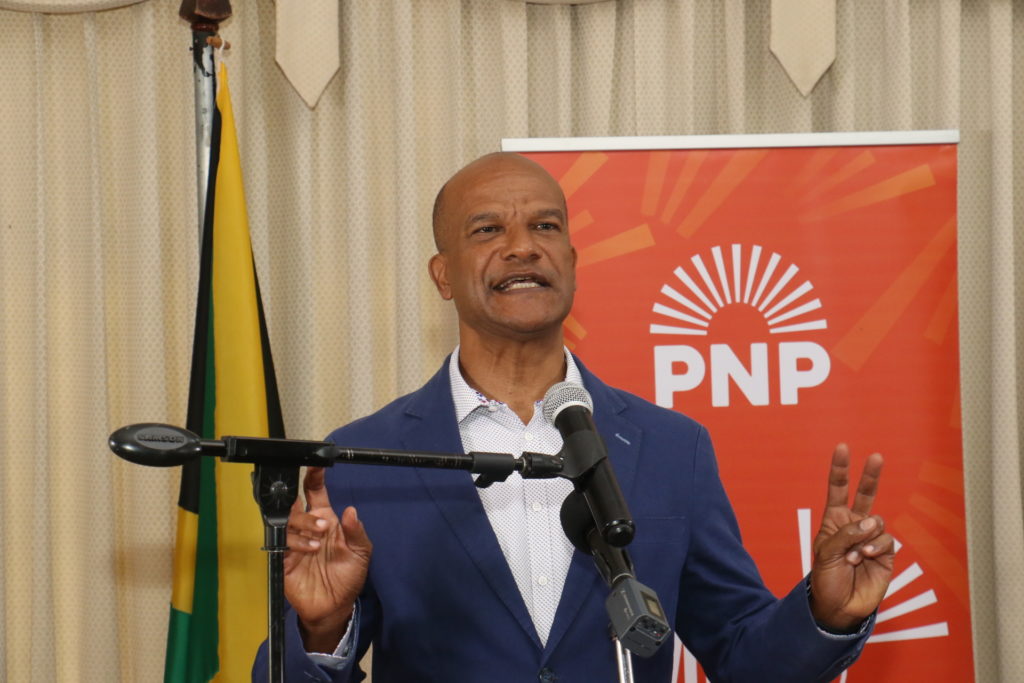
In November 2022, Senator Peter Bunting gave his support to the letter and even urged the executive to act quickly in considering the recommendations so that a protracted period would not pass between the departure of the Ombudsman and the appointed successor.
Chuck said that this response in addition to support for the original motion that was led in Parliament some ten year prior shows that the Opposition had always been consulted on this issue and that they had always been in favour of the move. He said the bill would do nothing more than give effect to that which was already agreed to by the Opposition.
“The passage of this Act will redound to the benefit of future generations as the assumption of the functions by the ECJ will allow for the wealth of knowledge and experience in that body to be brought to bear in the performance of the functions of the Political Ombudsman,” the minister stressed.
Chuck concluded his presentation with hope to receive the House’s full support for the bill.

Comments