
Crude’s retreat offers little relief as diesel squeeze hits Caribbean import bills

/ Our Today
administrator
Brent crude has dropped close to 9 per cent in five sessions to about US$99 a barrel, but the fuel Caribbean economies actually import is not following it down.
Diesel, which runs much of the region’s power generation, trucking, farming and fishing, is trading at record levels in major markets because the world is short of refining capacity, not crude.
The gap shows up in the crack spread, the margin between a barrel of crude and the diesel refined from it. On the US Gulf Coast, that spread crossed US$100 a barrel for the first time in August and set a record above US$103 at the close on September 1. In a normal market, it sits between US$20 and US$30. US retail diesel has climbed past its 2022 peak even though crude is roughly US$28 a barrel cheaper than it was then.
Several supply problems are stacking up at once. Drone and missile strikes have knocked out large amounts of refining capacity in Russia and the Gulf, and global refinery runs in July were about 5 million barrels a day below a year earlier. Refined fuel also moves on smaller product tankers, a fleet with less spare room than the crude tanker market to absorb rerouting around Hormuz. US diesel stocks in mid-September were the lowest for that point of the year since records began in 1982, and traders are pricing tightness well into 2027. The Northern Hemisphere heating season will add demand in the coming months.
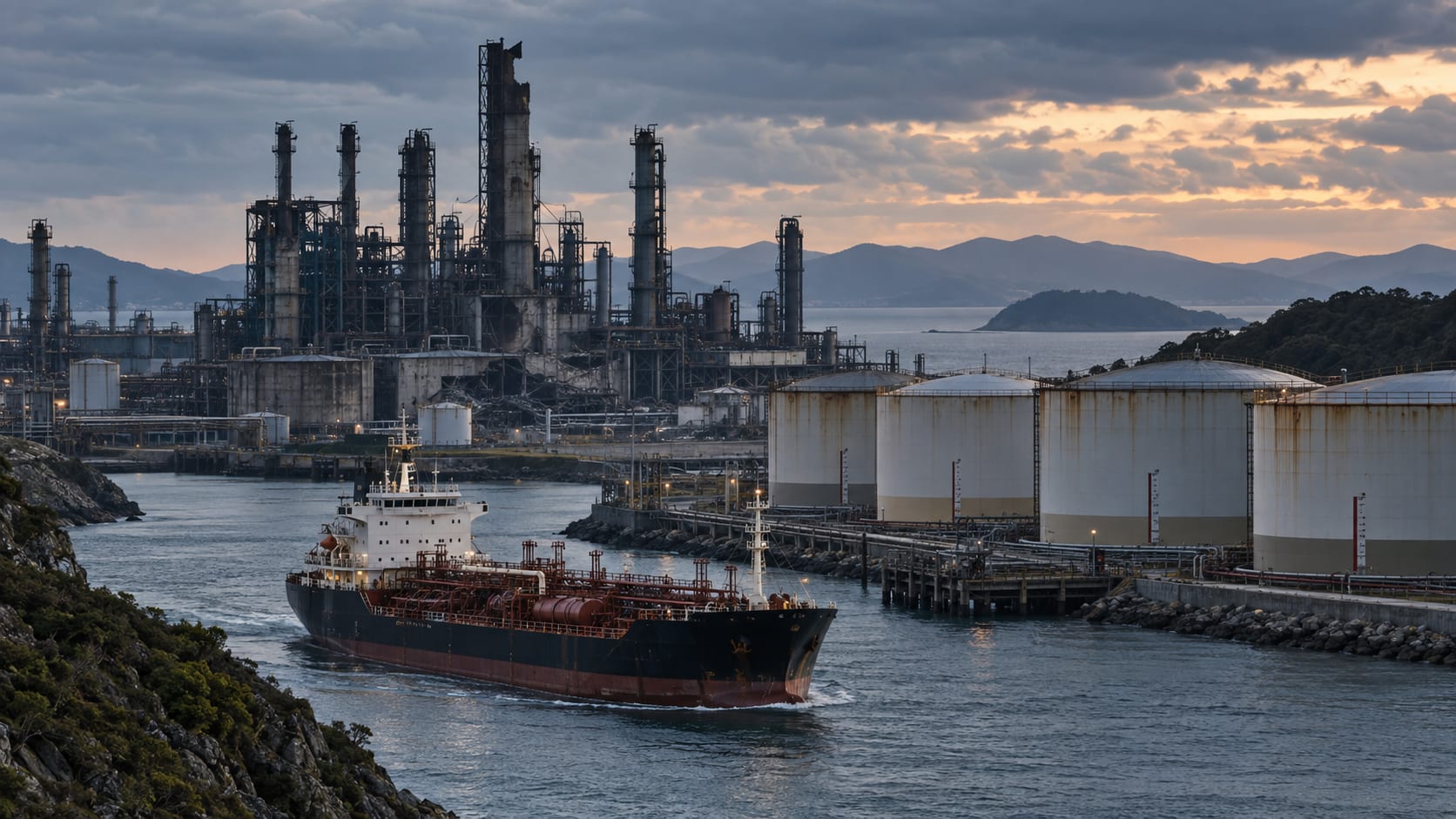
For the Caribbean, that matters more than the headline crude price. Most Caribbean states buy their fuel as finished product rather than refining it at home. Trinidad and Tobago has imported its gasoline and diesel since the Pointe-a-Pierre refinery closed in 2018, and Guyana, now producing more than 900,000 barrels of crude a day, still imports the fuel it burns.
A falling Brent price helps these buyers only to the extent that product prices fall with it.
The pass-through is fastest on electricity bills. Most island utilities generate with diesel or heavy fuel oil and pass fuel costs straight to customers through a monthly adjustment. In StLucia, the fuel surcharge rose from under one EC cent per unit in March to 25.5 EC cents in April. Barbados used its 2026-27 budget to absorb half of any fuel clause increase above the March rate for three months, and capped the VAT collected on diesel through March 2027. Jamaica’s shift toward natural gas at its largest plants has reduced the power sector’s direct diesel exposure but transport, agriculture and standby generation still run largely on distillates.

The effect spreads beyond power. Jet fuel, another distillate, prompted Caribbean Airlines to add a US$15 to US$25 surcharge per flight segment in April, and shipping lines serving the region have applied emergency fuel surcharges on cargo. Freight surcharges feed into the landed cost of food and consumer goods, while higher airfares weigh on tourism.
Relief from cheaper crude is therefore likely to arrive slowly and only partly. The more useful gauge for Caribbean fuel-import bills in the months ahead is the price of diesel and jet fuel, not Brent.






Comments