
Dr. Devon Taylor | Government propaganda cannot hide their lies about Lack of Beach Rights and Dispossession

/ Our Today
administrator
The Jamaica Beach Birthright Environmental Movement (JaBBEM) is calling out the Government of Jamaica for what is being described as a coordinated propaganda campaign of deception and gaslighting.
Across multiple media outlets and persons, messages have been spread justifying the continued dispossession of the Jamaican people from their beaches. Moreover, the core issue continues to be dismissed: the Jamaican people have no inherent right to access and use their own coastline.
The government’s most recent proposed coastal policy, the Beach Access and Management Policy 2026 (BAMP), confirms what communities have experienced for generations: we have no right to swim, bathe, walk along a beach or fish as stipulated in Section 3(4) of the Beach Control Act (BCA) of 1956. This law, aided by government policy and complicity, is the driver of beach dispossession in Jamaica.
The most recent acts of attempted dispossession include: Drapers (Sanco Bay) in Portland and Old/New Pera in St Thomas, all stark reminders of the lived reality of exclusion from beaches on this island. The proposed overwater bungalow hotel rooms at Providence/Flanker and Success Beaches in Montego Bay, Paradise Pen in Westmoreland and Mammee Bay beach in St Ann drive privatisation further—into the sea. The government is now pushing contradictory data from two different ministers in the same administration to distract from this injustice and deceive the people.
The unwillingness of a government to abolish discriminatory colonial law is now drawing international condemnation. Pressured by grassroots movements into confronting the real question: Do Jamaicans have a right to their own beaches? The government now finds itself exposed. Sadly, they are scrambling not to correct the injustice, but to reassure investors and local elites that beach exclusivity, segregation, and privatisation will remain government policy.

Rejecting the Government’s “Gotcha” Diversion on Beach Access
The government’s latest tactic is not a defence; it is a distraction. By trying to seize on the figure that less than 1% of Jamaica’s public beaches are accessible to Jamaicans, a statistic drawn directly from their own data, and attempting to spin it into a “gotcha” against the people’s movement, the government reveals exactly what this fight has always been about: the undeniable fact that continued privatization is built on the disregard for the Jamaican people, justified by negative characterizations they have repeated in unison over the last few weeks. This diversion aims to shift focus, so the public loses sight of the real issue: Jamaicans have NO enshrined right to their own beaches.
Through an Access to Information (ATI) request, NEPA confirmed the substantive trend in dispossession: 366 beach licenses were granted in 2024, up from 295 in 2022. This is a 24% increase in beach licenses within just two years. This is dispossession from coastal land, license by license, of a coastline that belongs to the nation, not to whosoever can afford to buy a piece of it.
The government is struggling to present a consistent narrative with Matthew Samuda, the Minister of Environment and President of the United Nations Environment Assembly, and Minister of Tourism Edmund Bartlett presenting conflicting data. The conflicting beach-access figures include Samuda’s 21% (i.e., 104 miles of the coast) as carried in the local media, June 2026. If we compare this to Bartlett’s claim of 70 public beaches, what is implied is that there is a public beach every 2 miles, which conflicts with lived experience.
Further contradiction is provided by the report composed by NEPA and presented to parliament in March 2026 by the Prime Minister. JaBBEM is calling this confusion of contradictory statistics what it truly is: a public relations campaign built to deceive and pacify a population that is watching its coastline disappearing in real time.
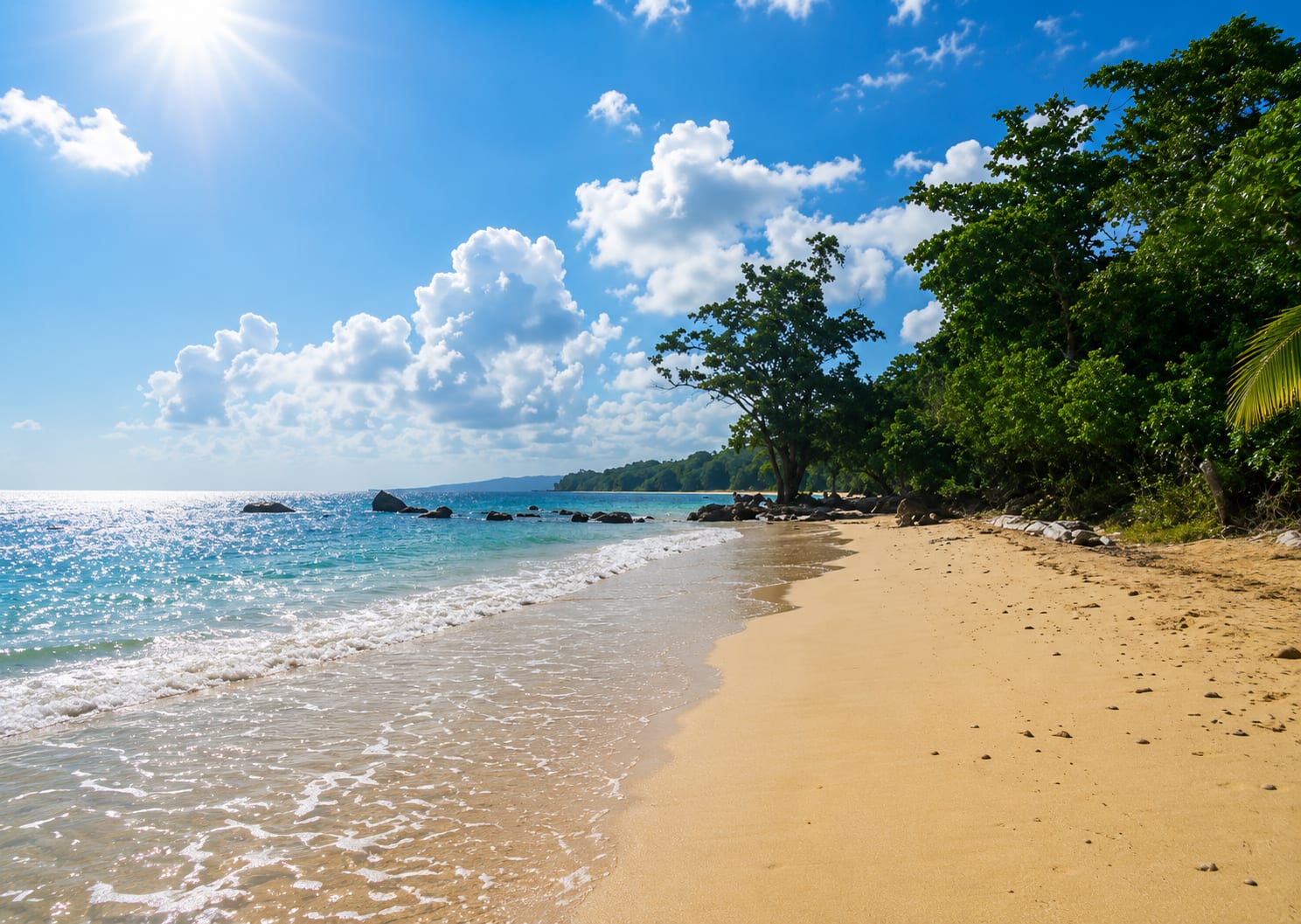
Instead of spending money to fix the real problem, the government is spending money to call the Jamaican people all manner of evil things.
We are demanding that both ministers make public the raw data, the methodology, and the dates for every figure they have released to the Jamaican people. We are also demanding that state agencies make available data that JaBBEM has requested through the proper Access To Information channels, a mechanism that was fought for by the Jamaican people and yet is met by state obstructionism and under-resourcing.
Let this be stated plainly. The core reality is that the existing law, the BCA-1956 offers ZERO guaranteed unfettered use of the shore or waters, and no protected right of access at all. The government cannot litigate its way out of that truth. This is a textbook diversion, an attempt to make the messenger’s precision the story, instead of the government’s six-decade failure to enshrine beach rights despite demands from the people since the 1950s. We recognise this tactic for what it is: an effort to discredit the movement rather than confront the substantive demand for legal, statutory, guaranteed access to our own coastline.
We will not be baited while the government continues to evade the real question it has spent a month demonising the Jamaican people to avoid: do Jamaicans have a legal right to their beaches?
Today, under Jamaican statutory law, the answer is no. Until that changes, no counter-narrative and no propaganda campaign will settle this movement. We are here to win the right to the coastline.
Dispossession is not a data point; it is a daily, physical, and psychological reality lived by Jamaicans up and down this coastline. It is the failure of an out-of-touch government to understand this. We therefore refuse to believe that these ministers are unaware of the demand for rights. Instead, we believe they are deliberate in confusing the public that ACCESS equals RIGHTS. The truth is that any access we have is by permission and can be taken away any time a landowner—be they private or government—decides to draw their wire fence. We who feel it know it is true.

A Colonial Law Still Running the Country supported by the Government of Jamaica
Guaranteed access exists under customary or common law and only where the people have fought and paid for it in court, one prescriptive-rights case at a time. JaBBEM is currently a party to five such cases including Mammee Bay, Little Dunn’s River, Blue Lagoon, Bob Marley Beach, and Providence/Flanker Beach, and in four of them, the government itself is on the other side, defending the very exclusion it claims to oppose. This is not an oversight. It is a system. A system that criminalises ordinary Jamaicans as trespassers on beach land their families have used for generations, while extending every courtesy and every permit to developers building walls, fences, and razor wire around the same shoreline.
Communities such as Old Pera/New Pera beach in St. Thomas and Brownlow Beach in Old Fort Bay, St.Ann, have watched this happen within the past weeks. Fishing communities at Mammee Bay, Lilliput and Success Beach, gazetted since 1976, are being pushed off beaches they legally worked to secure access to for half a century.

This Is Betrayal, and Jamaicans Know It
In the 2025 election, both major political parties promised Jamaicans access to their own beaches. A year later, BAMP-2026 proposed to do the opposite: if it becomes law, it would give the Cabinet the power to sell beaches, formalise pathways for privatisation of the sea itself for hotel construction, and legalise the creation of artificial beaches that the public will never have rights to access. Under this new policy, the Jamaican people will still access beaches by permission, as the government declared that any right to our beaches is conditional. This is not a policy failure. It is a policy choice aligned against the people.
JaBBEM will not accept a system where a right can be revoked by whosoever holds power today, while a revocable permission is dressed up and sold to the public as progress. A right cannot be taken away. Permission can. The government owes every Jamaican a straight answer to a simple question: will it restore an enforceable right to the coastline, or, are we still, in 2026, meant to beg to stand on our own shore?
The Government of Jamaica’s beach policy is not a pathway to beach rights but a machinery of dispossession: by converting beaches that communities already occupy and use under longstanding common-law and claimed prescriptive rights into ten government-controlled “beach parks,” then subjecting their use to permission, undisclosed regulation and restricted opening hours, the State is interrupting and undermining the very patterns of continuous public use upon which rights protected under the Prescription Act of 1882 depend, transforming rights exercised by the people into privileges administered by the State.

The Demand
The lack of fundamental beach rights has enabled coastal dispossession alongside a socially, culturally, and ecologically destructive pattern of hotel construction and resource extraction along the shoreline.
JaBBEM is demanding the immediate withdrawal of BAMP-2026 and the repeal and replacement of the Beach Control Act of 1956 with legislation that guarantees an enforceable, unconditional, and universal right of every Jamaican to their own coastline declared as a common: not a permit, not a fee schedule, not a policy that can be rewritten by whichever administration is in power.
We are demanding full public disclosure of every dollar earned from beach licensing and coastal leases, including the destination of the estimated US$4.3 billion generated by tourism in 2024. On behalf of the Jamaican people, we are also demanding ten years of audited reports for the Tourism Enhancement Fund (TEF) and the Tourism
Product Development Company Limited (TPDCo). The Jamaican people paid for this coastline with generations of labour, displacement, and silence. We are done being silent.
We are organising, we are in the courts, and we are not going anywhere until this coastline belongs to the people of this country.




Comments