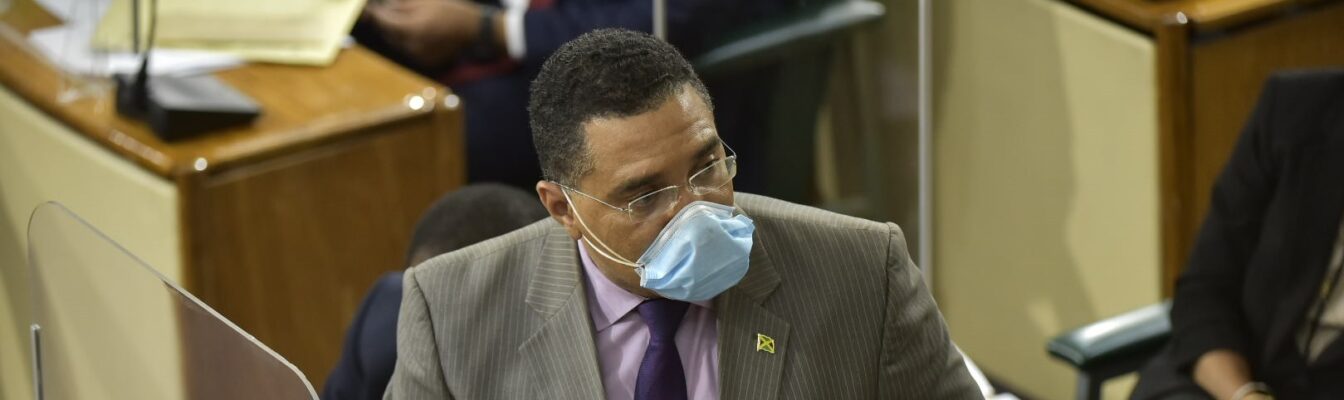
‘Everyone has a role to play’ says Holness on violence epidemic

Juanique Tennant / Our Today
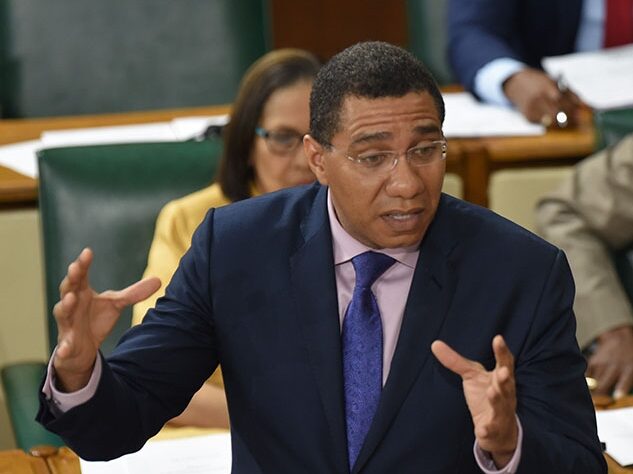
As cases of violence in all its forms and in particular, gender-based violence continue to capture, the nation’s attention, Prime Minister Andrew Holness is reminding citizens that “everyone has a role to play” in overcoming the country’s violence epidemic.
Addressing the House of Representatives on Tuesday (April 20), Holness said that each group in society had its own role to play in curbing violence.
For the Government, the duty is to address and otherwise seek to thwart violence “through laws, policies, public education, and social support transformational programmes”.
SAFE HAVEN FOR CHILDREN
For the family, the responsibility is to create “a supportive, non-violent loving environment”.
The role of the school is to “create a safe haven for children, promoting non-violence and pro-social behaviour”, in addition to “supporting children’s positive learning, particularly those with learning difficulties”.
The Church is expected “to serve as a moral compass, providing support for families, and a safe haven for children”.

At the same time, the community’s role is to reduce the “exposure to violence in all its forms and create positive communities for all to thrive”.
In emphasising the necessity of each group carrying out its responsibility to put to rest the violence epidemic once and for all, the prime minister evidenced the fact that violence and, in particular, gender-based violence, has been one that has plagued the country for many years.
“According to recent statistics, 28 per cent of women in Jamaica experience physical or sexual violence in their lifetime,” said Holness.
“Violence against women and girls is not just a tragedy for the victims, it represents a wider societal failure.”
Andrew Holness, prime minister of Jamaica
He also noted that “in 2018, 71 per cent of girls under 18 who were victims of crime had been raped” and that “two out of 10 girls aged 15 to 19 years think it is okay for a husband or partner to hit his wife or partner”.
In response to this, Holness said: “Violence against women and girls is not just a tragedy for the victims, it represents a wider societal failure.”
He added: “Studies show that the risk of violence is greatest in societies where the use of violence in any situation is a socially accepted norm”.
For this reason, the prime minister argued that “in speaking out against violence, we can create a new culture that is intolerant of all forms of violence in our homes, in our institutions, in our workplaces, in our communities, in our music, in our schools, and most importantly in our Parliament”.




Comments