

Illicit trade distorts markets, harms consumers, undermines public safety- Minister Hill
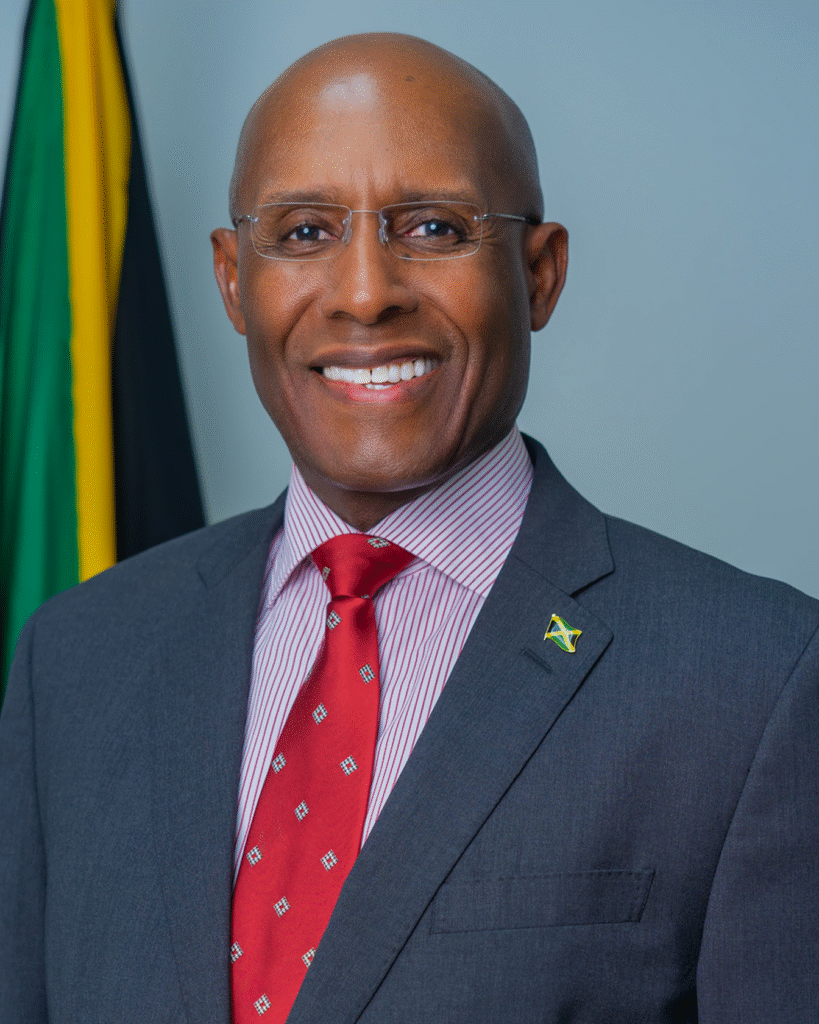
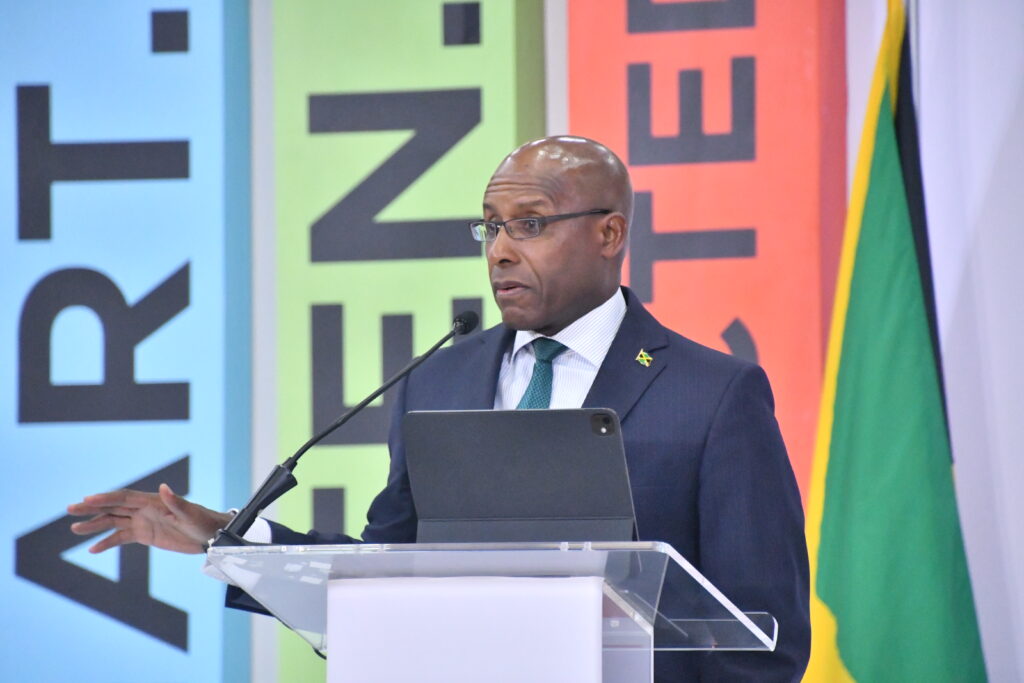
Minister of Industry, Investment & Commerce Senator Aubyn Hill addressed Jamaica’s rising illicit goods operations and its impact on both the business sector and the economy while speaking at the Jamaica Chamber of Commerce’s Anti-Illicit Trade Forum held at the AC Hotel in Kingston on Wednesday
Below is his full presentation:
As the Minister of Industry, Investment and Commerce, Jamaica’s Business Ministry, I am pleased to be here at this second convening of the Jamaica Chamber of Commerce’s Anti-Illicit Trade Forum with all who are committed to the economic integrity of Jamaica.
I commend the Jamaica Chamber of Commerce for hosting this Forum, and importantly for understanding that illicit trade is an economic urgency. The theme today, “Unmasking the Cost: The Financial Impact of Illicit Trade” is precisely the right subject for this moment.
Jamaica’s illicit trade reality
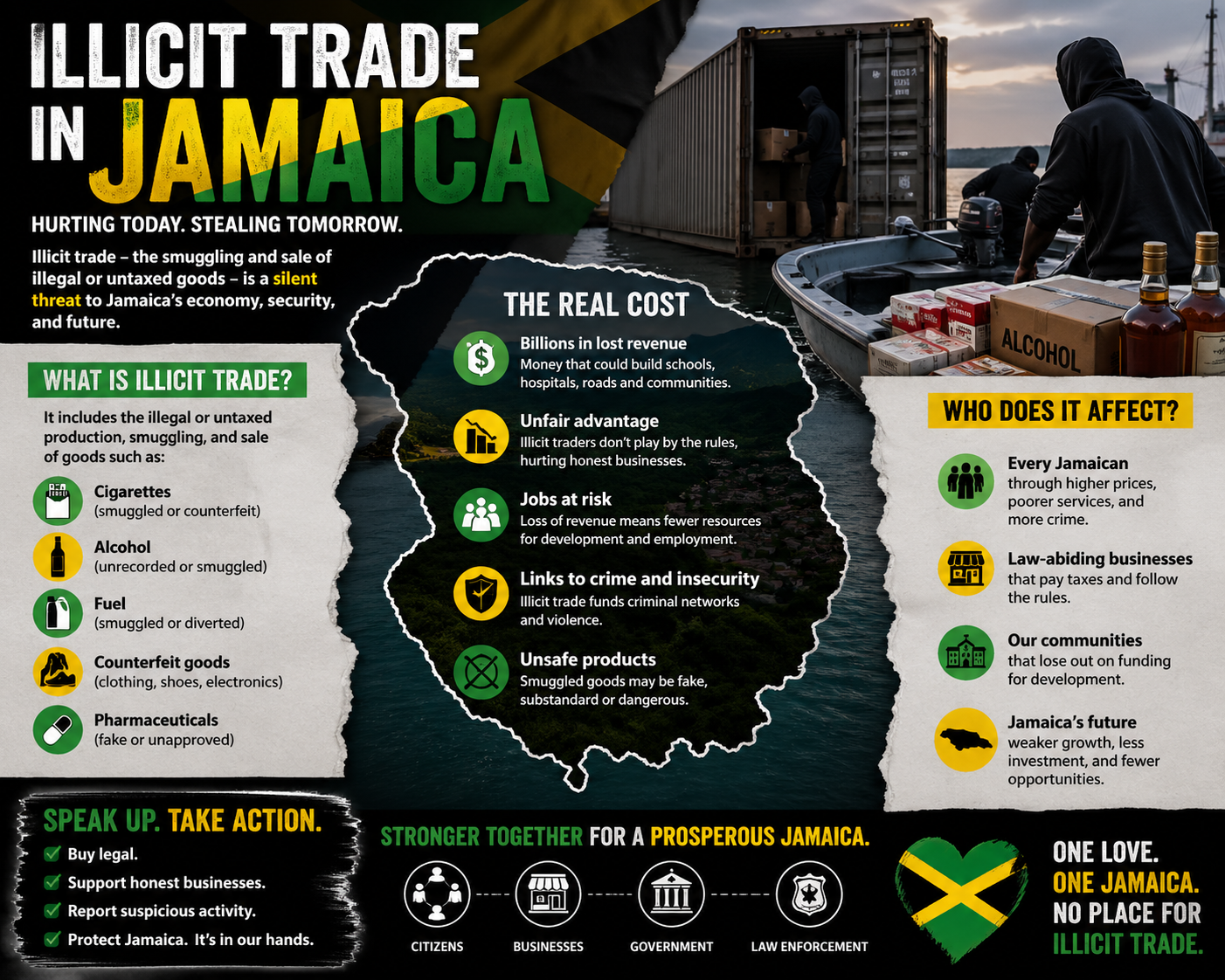
Over the five-year period from 2021 to 2025, the Jamaica Customs Agency (JCA) recorded 179 seizures. Those seizures resulted in the confiscation of over 57,391,317 illicit items with a combined estimated value of J$3.6 billion. These seizures were made across seaports, airports, and through inland operations.
Cigarettes are the largest category by a significant margin, with approximately 57 million sticks seized across 119 seizures. According to a 2024 Pack Collection Study, approximately 33 per cent of the cigarette trade in Jamaica is illicit. In effect, one in every three cigarettes sold in Jamaica has not paid its dues to the Government of Jamaica.
That is not a 2024 anomaly. From 2016 to 2024, the Government of Jamaica lost approximately J$26 billion in revenue to the illicit cigarette trade alone.
The 2024 Pack Collection Study further reveals that the number of illicit cigarette brands available in Jamaica’s market increased from 7 in 2023 to 17 in 2024. The parishes with the highest illicit prevalence were Clarendon, Manchester, St. Catherine, and Kingston.
This trend points to a structured and expanding illicit market. One that leverages established distribution networks and thrives in price-sensitive communities. IPR-infringing goods1 which include counterfeit handbags, shoes, and clothing, represent the second-highest seizure category, with a value of approximately J$1.58 billion over the 2021-2025 period.
Counterfeit beauty products, restricted food items, pharmaceuticals, and liquor further reflect the breadth of the illicit trade.
How illicit trade affects compliance
Illicit trade does not merely break the law. It distorts the proper working of markets significantly. I want to make something very clear, because it is the central economic argument of this Forum.
A regulatory-compliant Jamaican business, whether distributor, manufacturer, or retailer, operates within the full compliance framework of the Government of Jamaica. They pay General Consumption Tax (GCT) and excise duties, meet labelling and compliance requirements, and adhere to health and safety standards.
These are the necessities of participating in a legitimate market. Illicit operators pay none of these legal regulatory costs. The result is a price distortion that effectively subsidises criminal activity!
The National Compliance and Regulatory Authority (NCRA), one of 20 agencies in my Ministry, recorded 44,374 non-conforming and or illicit products in the domestic market in 2024, rising to 75,036 in 2025. This is a 69% increase in a single year.
Some products are imported as inputs for manufacturers but are actually sold as finished products at higher prices.
These are not goods that slipped through a crack. These are goods moving through informal and unregulated (in other words, criminally illegal) distribution channels at a vast scale. These criminals compete, every single day, against Jamaican businesses that have done everything right and are legally compliant.
When a compliant business loses market share to an illicit competitor, it loses some of its ability to invest, hire, innovate and eventually, it may have to close its operations. When businesses close, the jobs go with them, the tax contributions go with it, and the government is left with an even larger enforcement problem and a smaller tax base from which is to fund the enforcement.
Illicit operators initiate a totally bad chain reaction. This is the very bad compounding logic of illicit trade, and it is why we must treat it as the economic threat that it is.
Investment, innovation, & Cost of an unlevel market
When investors assess Jamaica, they look at our macroeconomic fundamentals.
- Our debt-to-GDP ratio has fallen dramatically from 143.9% (2012) to 62.4% (2025)
- Unemployment is at a historic low of 3.3%.
- 2025 end-of-year data showed Jamaica recorded a significant reduction in crime, with a 43 per cent reduction in murders compared to 2024.
The European Union removed Jamaica from its high-risk third-country list for anti-money laundering and counter-terrorism financing (AML/CFT, FATF).
This morning on the news, the latest report of the JCC’s Business and Consumer Indices report recorded consumer confidence increased by 6 per cent in the first quarter of this year! That’s in spite of hurricane Melissa effect. These are real, earned achievements.
An investor also looks at market integrity. They may ask: if I build a factory in Jamaica or invest in a distribution network, if I bring my brand to this market, will the rules be enforced? Will my compliant operation compete on a level playing field?
Will some business operators in my sector, or any sector, be able to break the rules and get away with it?
- When 33% of the cigarette trade is illicit, that is a signal.
- When 75,000 non-conforming products are circulating in the domestic market in a single year, that is a signal.
- When illicit cigarettes from 17 different unregulated foreign brands are openly available across Jamaica, that is a signal. Those signals are read by investors considering doing business in Jamaica.
Illicit trade distorts markets, harms consumers, undermines public safety, weakens institutions, and erodes the rule of law and robs the government of legitimate taxes that compliant businesses pay. For a small island developing state like Jamaica, those dynamics are amplified. Every dollar of tax revenue lost to illicit trade is a dollar we cannot direct to education, healthcare, or infrastructure, which are the very foundations that make Jamaica attractive to legitimate investment. Illicit traders who are non-compliant taxpayers suppress the kind of private sector dynamism that Jamaica’s growth strategy requires.
Protecting our ports – The first line of economic Defence
The data from the Jamaica Customs Agency is instructive. Between 2021 and 2025, 99.54 per cent of illicit goods were intercepted within Customs-controlled areas at seaports and airports. The seaport accounted for 89 per cent of seizures, with illicit goods most often concealed within containers of legitimate cargo. The airport accounted for the remaining 11 per cent.
This tells us two things.
First, enforcement at our ports supported by intelligence-led operations and inspection systems is effective, but more needs to be done – given the revenue see page numbers I quoted above.
Second, same challenges emerge after the port. Once goods enter Jamaica’s commercial environment, interdiction becomes more difficult. The 0.46 per cent of seizures recovered through inland operations reflects a wider domestic enforcement challenge.
In response, Jamaica’s border security framework continues to be strengthened through technology, intelligence-led operations, and enhanced inspection capacity at ports of entry. The Jamaica Customs Agency has expanded the use of non-intrusive scanning systems and risk-based targeting to improve the detection of illicit goods.
Some of the parties with whom I speak that Customs should have 2-3 scanning machines – but they are very expensive.
At the policy level, the Andrew Holness Administration has prioritised the modernisation of border and maritime security, including surveillance and interdiction capabilities. Prime Minister Dr. the Most Hon. Andrew Holness has consistently emphasised the importance of full deployment of cargo scanning technology across ports as part of strengthening national security and disrupting illicit trafficking networks.
These measures have contributed to significant interdictions, including major seizures of firearms and ammunition detected through enhanced cargo inspection systems.
Within this context, Jamaica’s crime plan, Plan Secure Jamaica4, provides a broader security architecture that extends across the full spectrum of illicit activity. This is underpinned by sustained national investment in security. The Holness-led Administration has invested over J$87 billion since 2016 nearly three times the amount spent in the preceding eight-year period, strengthening Jamaica’s security capacity in very measurable and identified ways.
What comes next?
Legislation must keep pace with the threat. The enforcement gap in post-entry domestic markets requires a strengthened policy and legislative framework.
One with stronger enforcement on labelling compliance, supply chain accountability, and the informal distribution channels through which many non-compliant goods currently move. The MIIC will be doing some work on this in collaboration with other Ministries.
The private sector’s role is essential. Businesses must invest in supply chain integrity. Industry bodies must support intelligence-sharing. Financial institutions must apply the full rigor of their anti-money laundering frameworks to reduce substantially proceeds of illicit trade. Every business in this room must recognise that the fight against illicit trade is an investment in the market conditions that make your own compliance worthwhile.
Jamaica is at an inflexion point. We have earned hard-won credibility with the international financial and business community. Our debt, crime, and our regulatory trajectory are moving in the right direction.
Note, though, that economic gains are not self-sustaining. They must be supported, enhanced and defended. Illicit trade is one of the most insidious threats to the gains we have made, because it operates beneath the surface.
The Andrew Holness administration has been clear: we will pursue organized criminal enterprises wherever they operate. We will invest in the technology, the manpower, and the legislation required to defend Jamaica’s economic integrity. We will not allow those who choose to break the rules to prosper at the expense of those who follow them.
This commitment requires each of us in government, private sector, law enforcement and international partners to act with the urgency that the evidence now demands.
Conclusion
I invite all partners and businesspeople here today to join in this noble national effort to reduce and wipe out illicit commercial trade in order to cement our political independence with robust and sustained economic independence.
That is my idea of sustainable development! Distinguished ladies and gentlemen, join us on this noble journey to wipe out illicit trade in Jamaica.



Comments