
Ibex posts record profit as Jamaican capacity falls 37%

/ Our Today
administrator
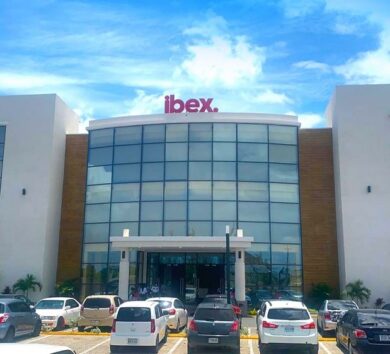
Ibex Ltd earned more in the year to June 30 than in any year before it, and over the same twelve months it removed more than a third of its seat capacity in Jamaica.
Net income rose 25.7 per cent to US$46.3 million on revenue of US$644.1 million, up 15.4 per cent, according to the company’s September 10 results release. Ibex said profit benefited from growth in its higher-margin offshore regions and from lower administrative and tax costs relative to sales. In Jamaica, the Jamaica Gleaner reported, capacity fell to 2,405 seats from 3,810, and centres fell to two from four.
The transition carried costs the company booked itself. Ibex recorded US$1.24 million in severance costs and a US$744,000 loss on ending leases. Its 10-K separately ties US$0.9 million of severance in payroll costs to moving work from nearshore to offshore centres. The company said that shift temporarily weighed on fourth-quarter margins, when quarterly net income slipped 8.8 per cent. It expects revenue of US$700 million to US$715 million in fiscal 2027.

The filings do not say how many Jamaican employees lost their jobs. Headcount across the nearshore region, which covers Jamaica, Nicaragua and Honduras, fell to about 7,100 from 7,500, the 10-K shows, while offshore staff rose by roughly 1,700. Under the Employment (Termination and Redundancy Payments) Act, redundancy pay starts at two weeks’ pay per year of service for the first ten years, according to legal guides, and applies to workers with at least two years of continuous employment. What individual workers received has not been reported.
Others carry exposure as well. The Development Bank of Jamaica has disbursed US$90.01 million to 20 BPO property ventures since 2012, and one completed project with room for 1,200 jobs is still seeking an operator, the Government’s annual report says, as reported by the Jamaica Observer. The Port Authority of Jamaica has postponed a planned stock exchange listing of its BPO property assets. Sector-wide local spending fell to about US$780 million from roughly US$1 billion. Those figures cover the whole industry, not Ibex alone.
Ibex describes its moves as geographic “optimisation” of centres in higher-cost regions and says it is building capacity offshore, according to the Gleaner’s account of the annual report. Its March quarterly filing lists Jamaica among the countries that have granted it tax holidays. Together, those holidays cut its group income tax expense by US$3.7 million in the nine months to March 31. That figure spans all the countries involved, not Jamaica alone.

The company also returned cash and invested elsewhere. It spent US$14.4 million buying back about 0.5 million shares and US$27.8 million on capital projects, which it said were driven by expansion in offshore regions.
Ibex remains a Jamaican employer. Its 10-K names the island among the countries its business depends on most and places one of its three customer-acquisition centres of excellence there.
With IBEX cutting 1,500 jobs in Jamaica, it is another case of why the BPO industry is in trouble. The Development Bank of Jamaica went all in with BPOs, declaring them a major pillar of the Jamaican economy. A few years ago, it made the BPO sector its top investment priority and was reluctant to back other ventures. Now it can be seen that the BDJ and its senior management team, and Board made a wrong calculation: BPOs are not going to spur the productive sector. Operating costs are too high in Jamaica, and a contracting economy makes it worse.
Some say the rapid advancements in AI technology spelt the death knell to the BPO industry, but that is not the sole reason in Jamaica’s case. Indeed, AI has an impact on the labour force, but it can also be utilised to bolster operations. Jamaican young people have no appetite to work long hours in a cubicle for peanuts. Then there is the growing number of scams taking place at Jamaican BPOs, which is alarming to First World clients.



Comments