
Israel reports possible link between Pfizer vaccine and heart inflammation

/ Our Today
administrator
JERUSALEM (Reuters)
Israel’s Health Ministry said on Tuesday (June 1) it had found that a small number of heart inflammation cases observed mainly in young men who received Pfizer’s COVID-19 vaccine in Israel were likely linked to their vaccination.
Pfizer said in a statement that it was aware of the Israeli observations of the myocarditis (heart inflammation) cases and said no causal link to its vaccine had been established.
It said adverse events are thoroughly reviewed and Pfizer meets regularly with the Vaccine Safety Department of the Israeli Ministry of Health to review data.
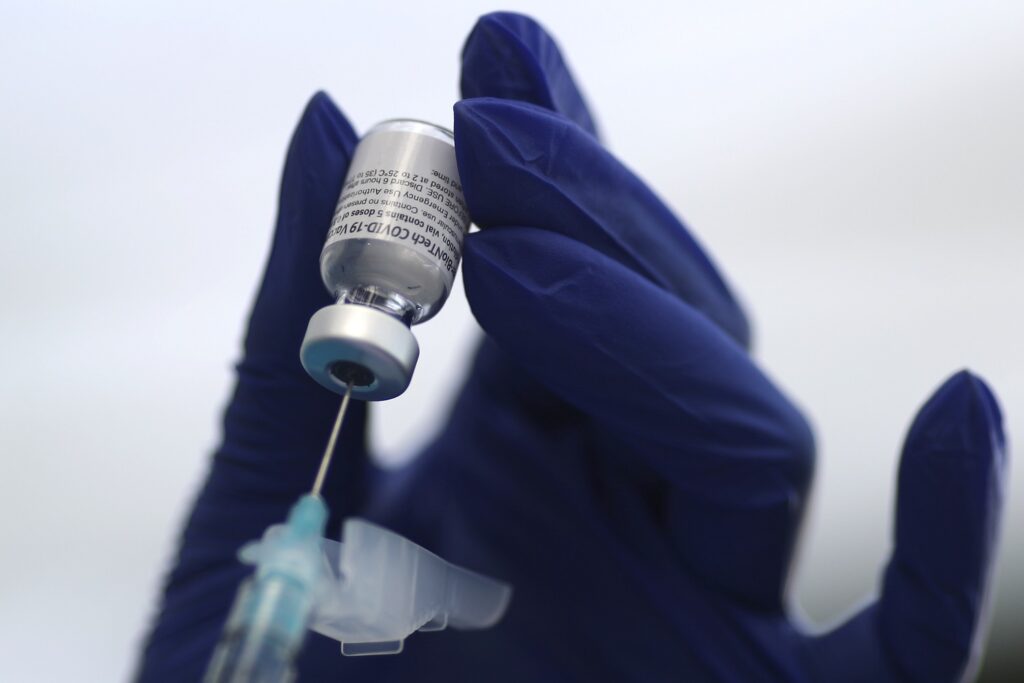
In Israel, 275 cases of myocarditis were reported between December 2020 and May 2021 among more than 5 million vaccinated people, the ministry said in disclosing the findings of a study it commissioned to examine the matter.
Most patients who experienced heart inflammation spent no more than four days in the hospital and 95 per cent of the cases were classified as mild, according to the study, which the ministry said was conducted by three teams of experts.
The study found “there is a probable link between receiving the second dose (of the Pfizer) vaccine and the appearance of myocarditis among men aged 16 to 30,”.
According to the findings, such a link was observed more among men aged 16 to 19 than in other age groups.

A United States Centers for Disease Control and Prevention (CDC) advisory group last month recommended further study of the possibility of a link between myocarditis and mRNA vaccines, which include those from Pfizer and Moderna Inc.
In a May 24 meeting, the CDC advisory group said that the data from the Vaccine Adverse Event Reporting System (VAERS) – which relies on individuals to report results – showed a higher than expected number of observed myocarditis or pericarditis cases in 16 to 24-year-olds.
However, the group also said data from another database -Vaccine Safety Datalink (VSD) – did not show that rates of myocarditis or pericarditis after COVID-19 vaccination differed from expectations. The VSD has data from nine healthcare organizations and can be used to compare vaccinated populations to unvaccinated ones.

Dr. Paul Offit, director of the Vaccine Education Center at Children’s Hospital of Philadelphia, said that parents should still vaccinate their kids because of the known risks of COVID-19, including multi-system inflammatory syndrome.
“This issue of a transient myocarditis associated with a vaccine is at the moment a theoretical and unproven risk,” Offit said.
“So I think that in the world of trying to weigh relative risks, the disease is a greater risk.”
The European Medicines Agency (EMA) said last week that heart inflammation after receiving the Pfizer vaccine had been no cause for concern as such incidents were similar rate to those in the general population. It added at the time that young men were particularly prone to the condition.

Israel had held off making its 12- to 15-year-old population eligible for the vaccines, pending the Health Ministry report. In parallel to publishing those findings, a ministry committee approved vaccinating the adolescents, a senior official said.
“The committee gave the green light for vaccinating 12- to 15-year-olds, and this will be possible as of next week,” Nachman Ash, Israel’s pandemic-response coordinator, told Radio 103 FM. “The efficacy of the vaccine outweighs the risk.”
Israel has been a world leader in its vaccination rollout. With COVID-19 infections down to just a handful a day and total active cases at just 340 across the country, the economy has fully opened, though restrictions remain on incoming tourism.
About 55 per cent of Israel’s population has already been vaccinated and as of Tuesday (June 1), restrictions on social distancing and the need for special green vaccination passes to enter certain restaurants and venues were scrapped.






Comments