
Keith Duncan: ‘While COVID and inflation are causing problems, we can work on crime’

Al Edwards / Our Today
administrator
Crime in Jamaica continues to increase with the murder rate likely to exceed last year’s numbers.
Economic instability and restrictions brought about by the coronavirus (COVID-19) pandemic are said to be factors behind the surge in crime in Jamaica.
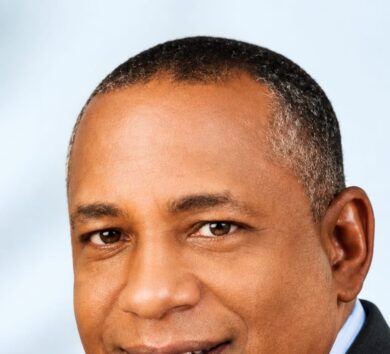
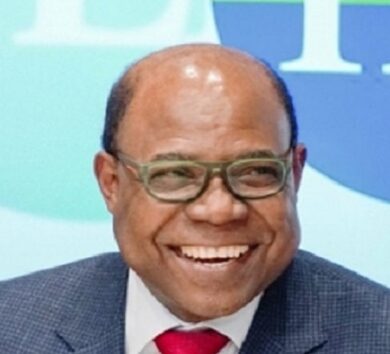
Newly re-elected president of the Private Sector Organisation of Jamaica (PSOJ) Keith Duncan, speaking recently at an Economic Programme Oversight Committee (EPOC) press briefing, stressed the importance of addressing crime in the country despite the ravishes of COVID and inflation.
He views the issue as going simply beyond an impediment to economic growth.
“There are other supply-side constraints we can work on to significantly improve Jamaica. We can work on crime, which has an impact of around five per cent on GDP. We have the Consensus Monitoring Oversight Committee that is looking closely at this. There are the social programmes that we must focus on and there is the legislation aspect that must be addressed. Jamaica has been in a low-consequence environment for years in that “If you do the crime, you are not doing the time,” he said.
“Jamaica must find answers to all this unexplained wealth in the country. The Bail Act has to be reviewed. We see people committing repeat criminal acts and are still being able to get bail. The Firearms Act needs to be overhauled. The maximum sentence in the parish courts for illegal possession of firearms is just three to five years. The legislation environment has to be dealt with so that there are consequences for those who commit crimes. Jamaicans have to be disincentivised before they commit crimes,” said the PSOJ boss
He added that the spend on social programmes has not been effective as borne out by the Caribbean Policy Research Institute (CAPRI) study. Duncan sees the need for a coordinated effort placed in the marginalised communities. He noted that only 20 per cent of Jamaican communities are responsible for 70 per cent of the country’s crimes.
“For so long the social programmes have been lacking in these communities. This is where Jamaica has to pay some attention to,” Duncan contended.

“We also have to address energy costs in the country. It is much too high with Jamaica being in the top five in the world and this impacts the cost of doing business,” Duncan, who is also chairman of EPOC, added.
Duncan is calling for more attention to be paid to the education of Jamaicans with 63 per cent of the workforce remaining untrained.
Here, he declared: “There are 2 million people eligible for the workforce and of that, 1.3 million have made themselves available. There are 767,000 outside the workforce of which 215,000 are in school full-time. That means there are 500,000 eligible for the workforce who choose not to do so. A part of this is the “at-risk” youth. At least 63 per cent of people working have no certification and so human capital development becomes very important.”
“When we look at the spend on early childhood education, we see it is lower than our peers. But when you look at the spend on primary and secondary education we are on par with those same peers. It’s not that we are not spending the money—we are just not getting the value because we are not giving our children the foundation in early education and so they just pass through the system becoming untrainable. This, in turn, means that 67 per cent of your workforce is not trained,” Duncan noted further.
“Now if I am an investor contemplating coming into Jamaica which has high crime, an untrained workforce, high energy costs, low literacy rates, what do I think?” he argued.
The PSOJ boss maintains there are other areas that the country can work on to shift its fortunes without solely focusing on the top line. Some of these will assist with investments thus making Jamaica a more favoured destination.

Comments