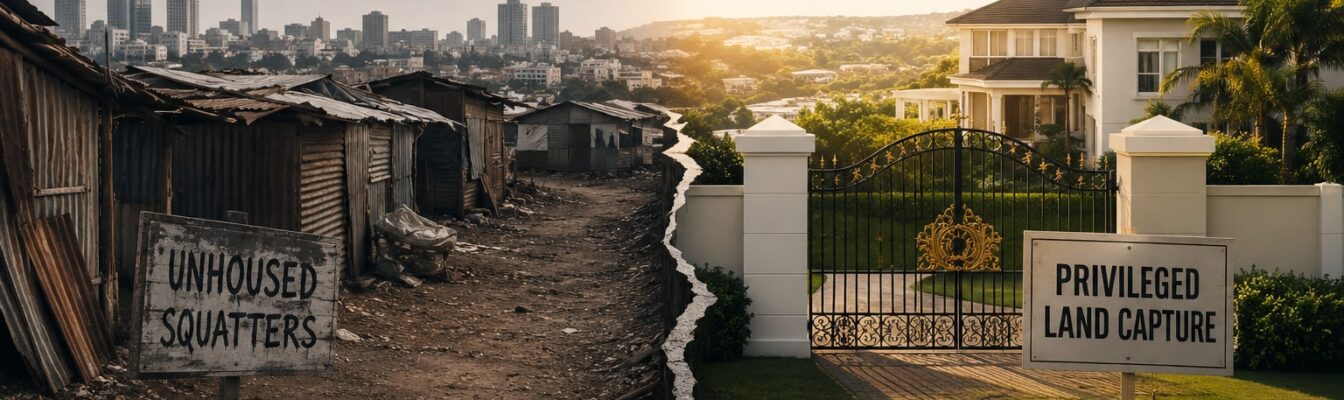
Pamela Redwood | Unhoused “squatters” versus the privileged land capture: The Jamaican conversation we keep avoiding

/ Our Today
administrator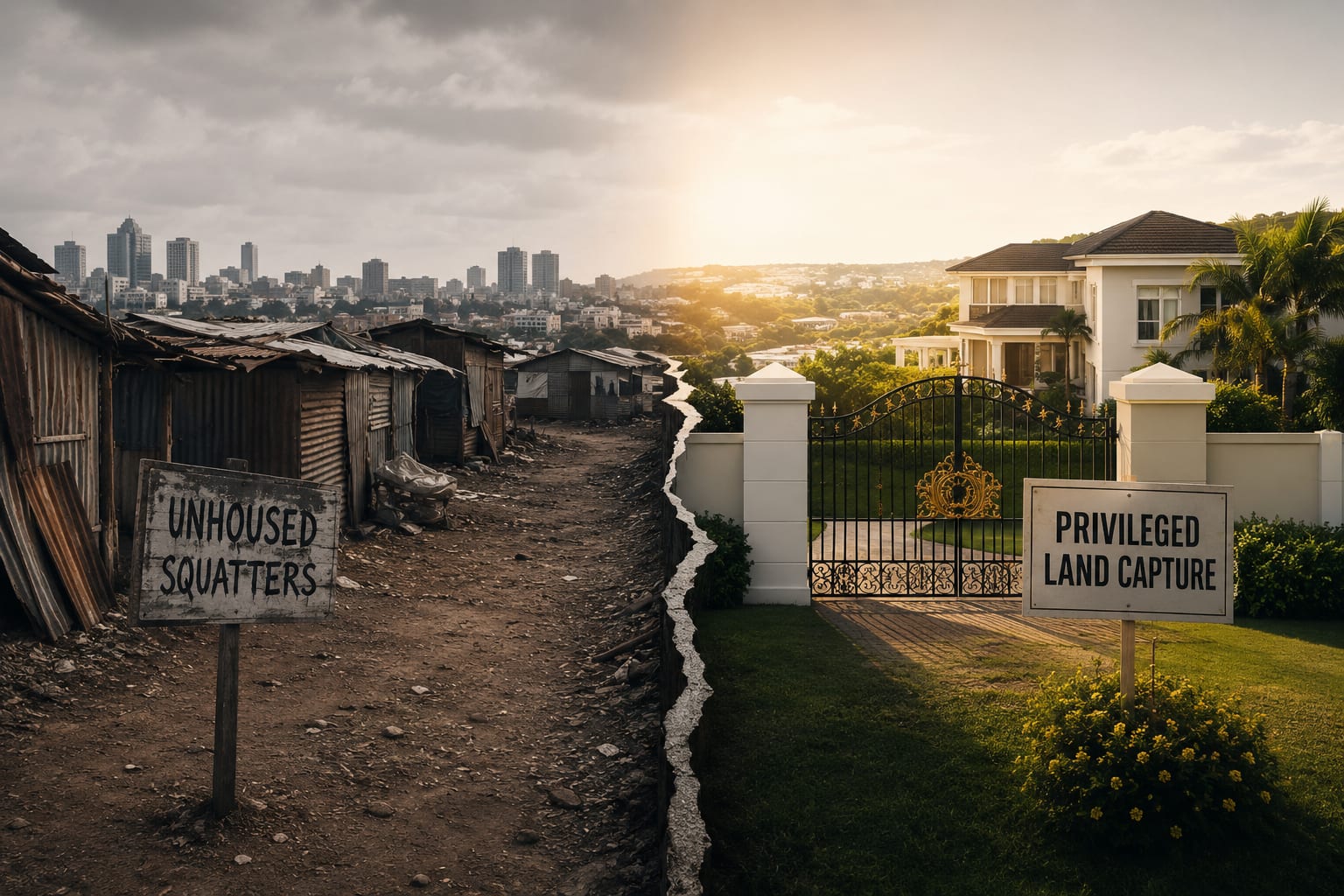
There is a conversation about land in Jamaica that we desperately need to have, but too often we avoid it.
We speak loudly about “squatters.” We condemn people who occupy land without formal title. We call them illegal occupants. We talk about evictions, demolition and enforcement.
But there is another side of Jamaica’s land story that deserves the same level of scrutiny.
What happens when land is captured not by the poor and unhoused, but by the powerful, the privileged, the politically connected and those with access to information, influence and decision makers?
That is the conversation that is missing.
Jamaica’s land problem did not begin with today’s squatter settlements. It is deeply rooted in our history. After emancipation, many newly freed Jamaicans, having received no compensation, were forced by economic necessity to occupy Crown and marginal lands.
So when we speak about squatting today, we cannot pretend that every person occupying land arrived there because of greed, criminal intent or disregard for the law.
Some are simply unhoused Jamaicans trying to house themselves in a country where land ownership has historically been unequal and affordable housing has never matched the demand.
This does not mean illegal occupation should be encouraged. It should not. Public land belongs to the people, private property rights must be respected, and land intended for schools, hospitals, roads, parks and other public purposes must be protected.
But the same principle must apply up the social ladder as well as down.
There must be no special category of Jamaican who is considered too connected to be questioned.
Land records should not become mysterious when the beneficiary is influential.
Public land should not become private opportunity through political access.
And the phrase “political connection” should never become an unofficial title deed.
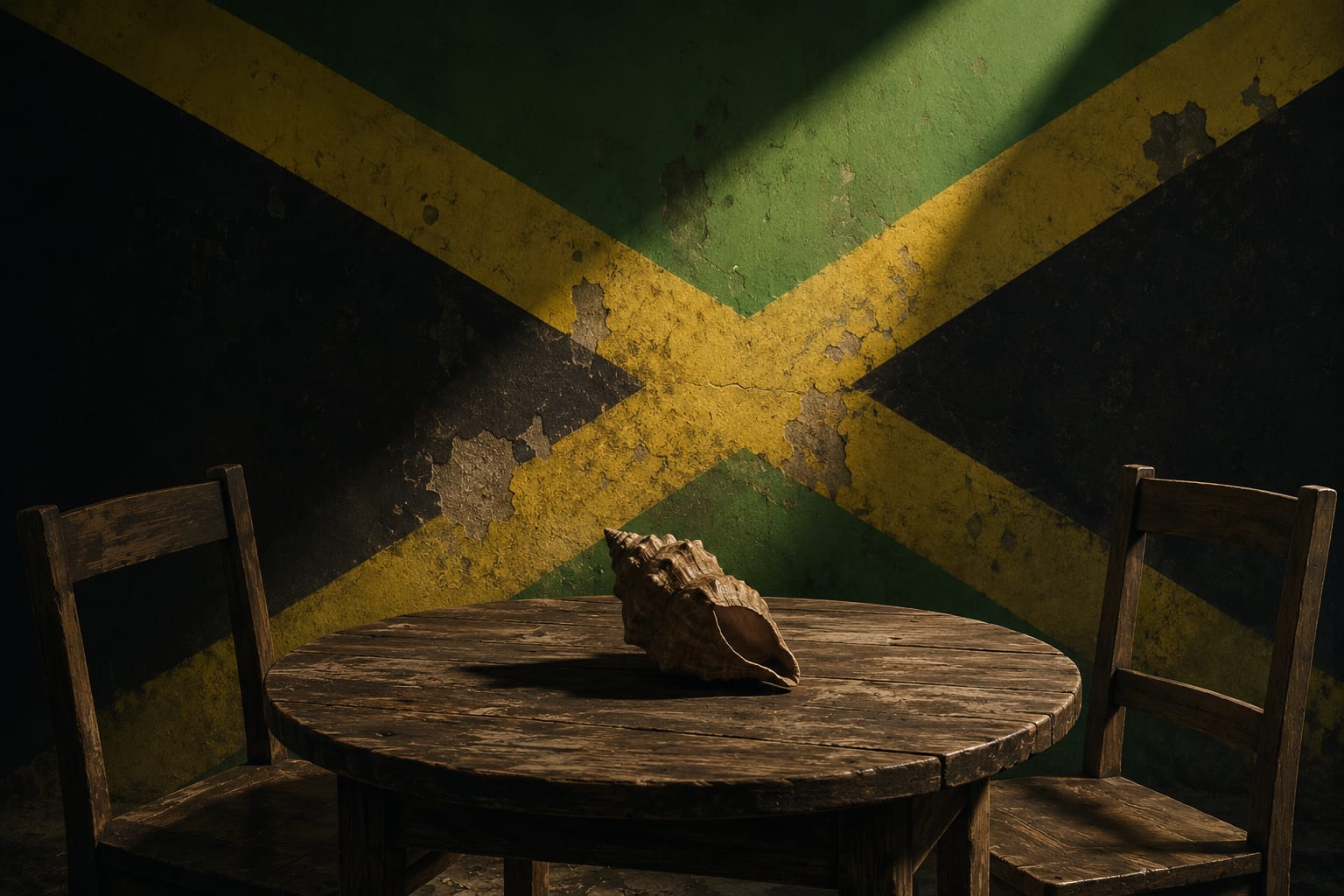
We must also distinguish between squatting, regularisation and land theft.
A person who has lived on a piece of land for decades, built a home, raised children and maintained the property may have a complicated legal situation. But that person is not necessarily equivalent to someone deliberately orchestrating the fraudulent transfer of another person’s property.
There are Jamaicans who have occupied land for decades without ever receiving the documentation necessary to establish secure ownership. Some inherited land through generations where their ancestors had no formal title. Others entered informal settlements because they simply could not afford the cost of purchasing land and building through the formal system.
That reality deserves compassion, but it also demands a serious national policy response.
Because without secure tenure, a family can spend decades building a home and still have no legally recognised asset to pass to its children.
Without a title, it can be difficult to use property as collateral.
Without proper documentation, families can become vulnerable to disputes, displacement and land grabbing.
And when the property is eventually developed and its value increases, those who were once invisible can suddenly find themselves competing with people who have money, influence and access.
That is where the conversation becomes bigger than “squatters.”
It becomes an issue of social justice.
Who gets to own Jamaica?
Who gets access to information about land becoming available?
Who gets the opportunity to purchase?
Who gets regularised?
Who gets displaced?
Who gets heard?
And perhaps most importantly:
Does political affiliation or social influence determine who gets treated as a citizen with rights and who gets treated as a problem to be removed?
We cannot build a just Jamaica if land justice depends on who you know.
The solution cannot simply be to remove poor people from land and declare victory. Nor can it be to tolerate endless illegal settlements.
Jamaica needs a transparent and comprehensive land policy that protects legitimate property rights while creating genuine pathways for landless and unhoused Jamaicans to become legal landowners.
And transparency must apply to everyone.
Every allocation of public land should be traceable.
Every beneficiary should be identifiable.
Every valuation should be defensible.
Every concession should be explainable.
Every potential conflict of interest should be disclosed.
And every allegation of improper land acquisition, whether the person involved is poor, powerful, politically connected or socially privileged, should receive the same independent scrutiny.
We cannot demand accountability from the man who builds a board house on Crown land while looking away when someone with influence acquires valuable public assets through questionable arrangements.
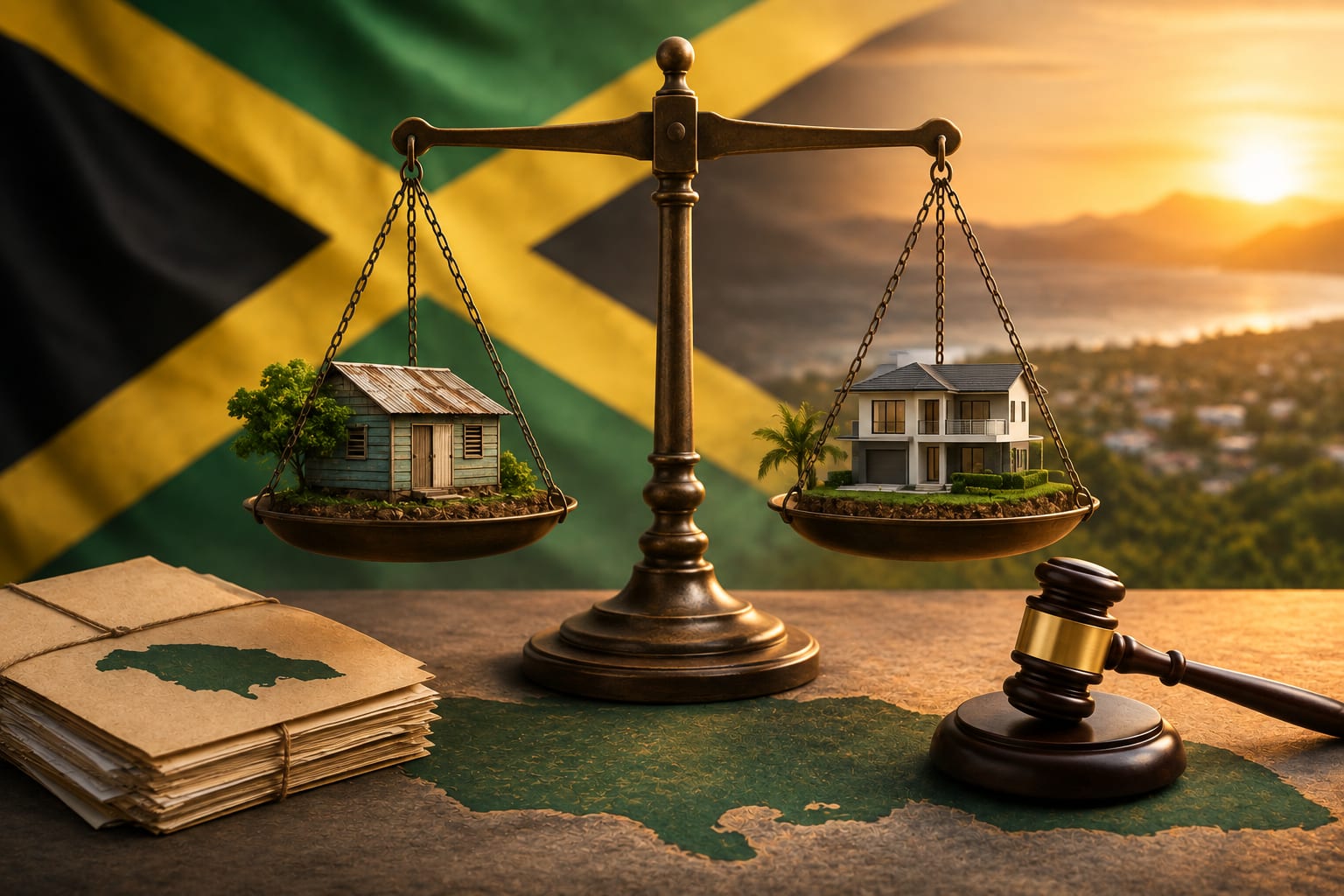
That is not justice. That is selective enforcement.
Jamaica has spent generations talking about land ownership without fully confronting the historical inequalities that helped create today’s crisis.
We cannot continue to treat landlessness as merely an individual failure when there are historical and structural causes behind it.
The poor Jamaican who occupies land because he has nowhere to go must obey the law.
But so must the powerful Jamaican.
The unemployed mother must be accountable.
But so must the politically connected businessman.
The ordinary citizen must not capture public land.
But neither should anyone with influence be able to manipulate access to public land for private benefit.
One Jamaica must mean one standard.
The real question is not simply, “Why are people squatting?”
The deeper question is:
“Why, after more than six decades of Independence, does a Jamaican still have to fight, capture, squat, plead, protest or find a political connection to secure what should be a fair opportunity to own a piece of the rock?”
Until we are prepared to have that conversation honestly, we will continue treating the symptoms while protecting the disease.
Jamaica does not merely need a response to squatting.
Jamaica needs a national reckoning with land injustice, wherever it occurs, whoever commits it, and regardless of who they know.
Until we confront unequal access to land, historical dispossession, political influence and the systems that allow the privileged to benefit while the vulnerable remain without secure homes and ownership, we will continue treating the symptoms while protecting the disease.
Land justice must mean one standard for every Jamaican. No political connection, social status or economic privilege should place anyone above the law.


Comments