
PSOJ demands unified approach to COVID-19 response vax programme lags

/ Our Today
administrator
With less than 20 per cent of the country fully or partially vaccinated, the Private Sector Organisation of Jamaica (PSOJ) has declared that Jamaica’s COVID-19 vaccination programme has underperformed and that the country is desperately behind in achieving its target of 65 per cent of the population being immunised by March 2022.
In a statement Thursday, the PSOJ said vaccines are the best proven method to save lives and recover economically and that continued restrictions and lockdowns are not sustainable.
“The Opposition recently announced that it is not in support of vaccine mandates at this time and the prime minister has signaled that a policy will be implemented after the Government’s public education campaign,” the PSOJ said.
“We are in an economic and health crisis and Jamaica cannot afford for the vaccination programme to become politicised. When we consider that the country recently discarded thousands of doses of vaccines and, based on the continued low take up, is on track to discard even more, it is disheartening. As such, the Government, which includes the Opposition must demonstrate the required political maturity to consult and determine a unified approach to salvaging our vaccination programme and accelerate the country’s social and economic recovery.”
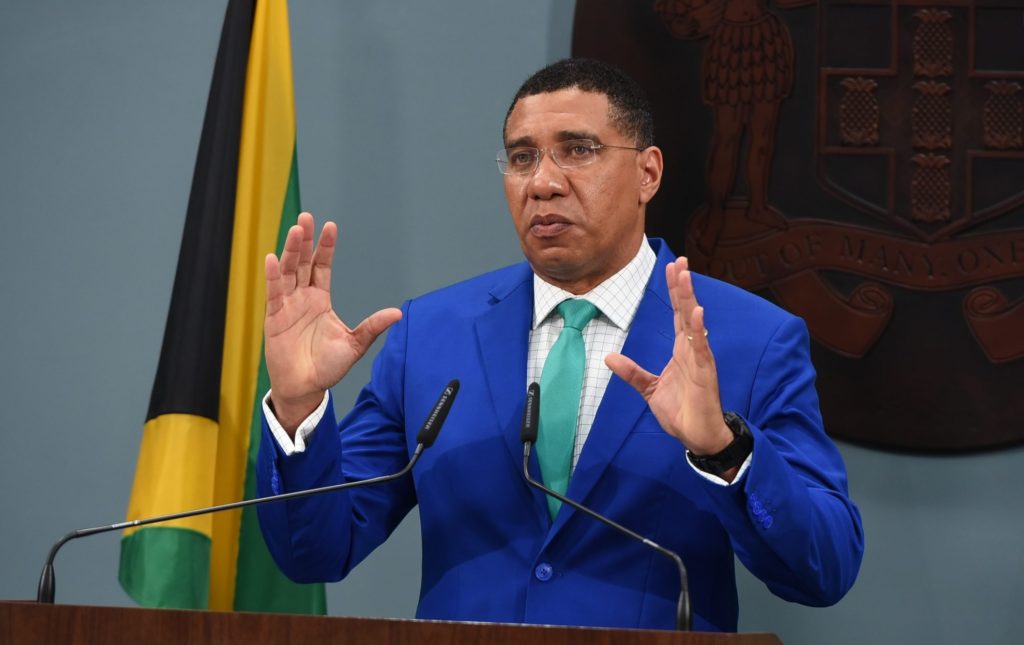
The PSOJ’s comments came as Prime Minister Andrew Holness signalled that he remained unwilling to label any future action a vaccine mandate as he considers implementing a policy to spur take up and return the country to normalcy. Holness however warned that once the country has seen 50 per cent of targeted individuals receiving a COVID-19 vaccine, his administration would begin looking at removing restrictions for those who have been inoculated.
“When we pass the 50 per cent mark then there will be no question about the need for having a vaccine option. Some people want to call it mandate, I not mandating and forcing anybody. If you don’t want to take it, it is your business, but don’t expect the rest of the society to bear the consequences of your hesitancy,” Holness said.
With 54 per cent of the population indicating they are not willing to take the vaccine at this time, the PSOJ said the Government, private sector and civil society were grappling with how, if and when what it called a mandate should be introduced.
“Both parties need to jointly determine and inform the country of a common position on a national COVID-19 vaccine policy,” the PSOJ said.

Agreeing that there needs to be a change in the strategies being used to manage the pandemicm the private sector body said that, in moving in this direction, it was recommending the use of creative strategies such as the introduction of ‘safe zones’, similar to what has been implemented in Trinidad and Tobago and Barbados, as a possible option.
The PSOJ noted that private sector leaders and entities have already started to take the uncertain but necessary steps to introduce vaccination workplace policies in an effort to protect the health and safety of employees and customers.
“The Government must also recognise the huge responsibility it has as the single largest employer in Jamaica with approximately 120,000 in its employ. The Government must begin the introduction of vaccine workplace policies to keep its workforce and the general public which it serves as safe as possible,” the PSOJ said.

In addition, the organisation said it was looking forward to the recommendations of the National COVID19 Vaccination
Operationalisation Task Force, which should be on the prime minister’s desk next week, being adopted and implemented in the shortest possible time frame to increase the country’s vaccination rate, which was on Wednesday labelled as lagging by the Pan American Health Organization.
Jamaica is among the six countries in the region 20 per cent or fewer of its citizens inoculated.
“We once again reiterate our calls for a unified position from the political directorate on the matter. We are in a crisis situation and if there was a time for a unified and a bipartisan strategy it is now.”




Comments