
Regional leaders, industry experts talk psychedelics at CanEx summit

/ Our Today
administrator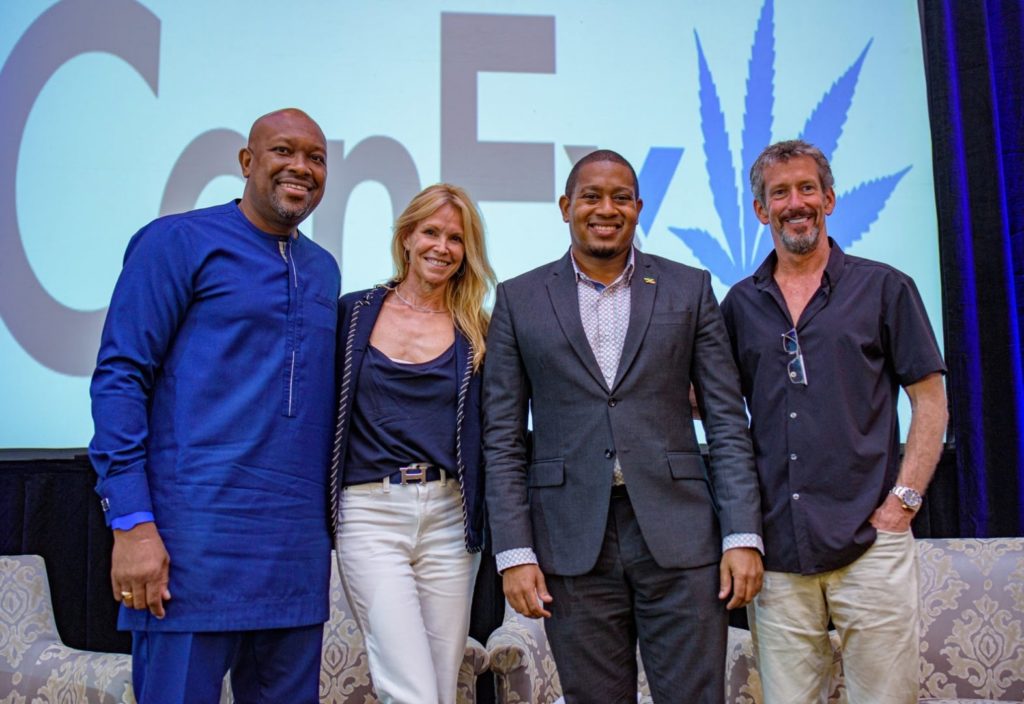
The CanEx Psychedelics Summit held its inaugural staging at the Jewel Grande Montego Bay Resort in Montego Bay, St James, earlier this month, where a host of regional leaders and experts came together for talks on the industry.
Trinidad-born Douglas Gordon, founder of CanEx Jamaica and CEO of Silo Wellness -a vertical mushroom company that grows its mushroom in Jamaica- said he felt it necessary for the discussion surrounding the emerging industry to start in Jamaica. This as the island is one of the few places where producing magic mushrooms is still legal and is also one of two locations – the other being Oregon- where Silo Wellness hosts its mushroom retreats.

Psychedelics are a class of hallucinogenic substances that produce changes in perception, mood, and cognitive processes of which include magic mushrooms otherwise known as Psilocybin Mushrooms. Researchers say extracts from mushrooms have a strong track record in treating psychiatric and psychosomatic illnesses.
Gordon said: “There are a lot of folks struggling out there. And we have access to this wonderful plant medicine that can make a material difference in their lives. And so, the commercialisation of our business is first and foremost to be able to facilitate getting that medicine to as many people as can get it. Consumers are increasingly interested in incorporating mushrooms into their wellness routines. Through our [Silo Wellness] propagation operations, wellness retreats and upcoming retail location, it’s our aim to make mushroom-based products, experiences and education accessible at a time when so many people are struggling with mental health and other issues.”

Also present as a panellist was Minister of Agriculture and Fisheries Floyd Green, who signalled that the Jamaican Government has already put in place interim protocols to facilitate the cultivation and processing of psilocybin mushrooms -also called Magic Mushrooms- in the island.
“What we have been doing with the team is really looking at how can work with those who want to participate in the industry at least let them know the protocols that are involved. We have been putting in interim protocols for people who want to interact [with the industry]. You would go through our Plant Quarantine Division just as you would if you are trying to import any plant into Jamaica,” he said.
“Again, we will have to do our best risk analysis as we have to ensure that what is being delivered is safe and does not pose a threat to our local plant industry,” Green shared as he was spoke on day one the inaugural Summit which ran from July 15 to July 16.

Saboto Caesar, St Vincent and the Grenadines’ minister of agriculture, forestry, fisheries, rural transformation, industry and labour, who was also a panellist, shared insights on his country’s intentions.
“St Vincent is aiming to have a modern competitive extraction industry which not only focuses on extraction but also patient access. It will be a new medical frontier,” he said.
“St Vincent is also one of the few island states that do not have laws prohibiting the production of Psilocybin Mushrooms. It is my intention that we are not left out of this emerging space.”
“There are many opportunities for the use of psilocybin locally. It has the potential to change the lives of patients with all kinds of mental illnesses, such as depression and anxiety. It has the ability to reduce the effect of a patient’s disability while improving their quality of life.”
Dr Winston De La Haye, medical director of Aion Therapeutic
Dr Winston De La Haye, medical director of Aion Therapeutic, the first international treatment centre for psychedelic psychiatry in Jamaica, and deputy dean in the Faculty of Medical Sciences at The University of the West Indies (UWI), Mona, spoke with great excitement but also cautioned stakeholders.
“With Psilocybin the results were immediate and sustainable after one or two does, lasting as long as six months. Most drugs take one to two weeks before having an effect. We (psychiatrists) haven’t seen a new drug of such significant value in psychiatry in the last 20 years; not since Prozac.”
He was quick to caution that mushrooms aren’t the silver bullet that will solve all, however, the results were promising enough to warrant further study and application. He further stressed that a therapist should always be present, and those patients should start with micro-doses and then gradually step up as required.
“There are many opportunities for the use of psilocybin locally. It has the potential to change the lives of patients with all kinds of mental illnesses, such as depression and anxiety. It has the ability to reduce the effect of a patient’s disability while improving their quality of life,” said De La Haye.

Levaughn Flynn, chairman of the Cannabis Licensing Authority (CLA) was also on hand and was quick to praise Douglas Gordon and CanEx for staging the first annual Psychedelics Summit. He explained that he and his team were present to learn more about the magic mushroom industry versus contributing to the discussion.
“There are many synergies between Mushrooms and Cannabis which have been documented in ancient medicine with both having a profound impact on mental health,” he said.
Flynn expressed that the CLA at this point has no regulatory framework or jurisdiction in the mushroom space, and the authority’s presence was more geared towards research and awareness.
Further corroborating the CLA’s position and Flynn’s statements, Green added: “As the industry awaits promulgation of regulations, we have no regulations now in relation to growing mushrooms… In Jamaica, the reality is that we never promulgated any laws to make psilocybin illegal here and as such, it is legal to grow psilocybin.”



Comments