
Richard Byles | Macroeconomic outlook for Jamaica remains positive

/ Our Today
administratorGovernor of the Bank of Jamaica Richard Byles and his team went before the Jamaican Parliament’s Standing Finance Committee earlier this month to give an update on the Central Bank’s performance and its price stability mandate. Below are his remarks:
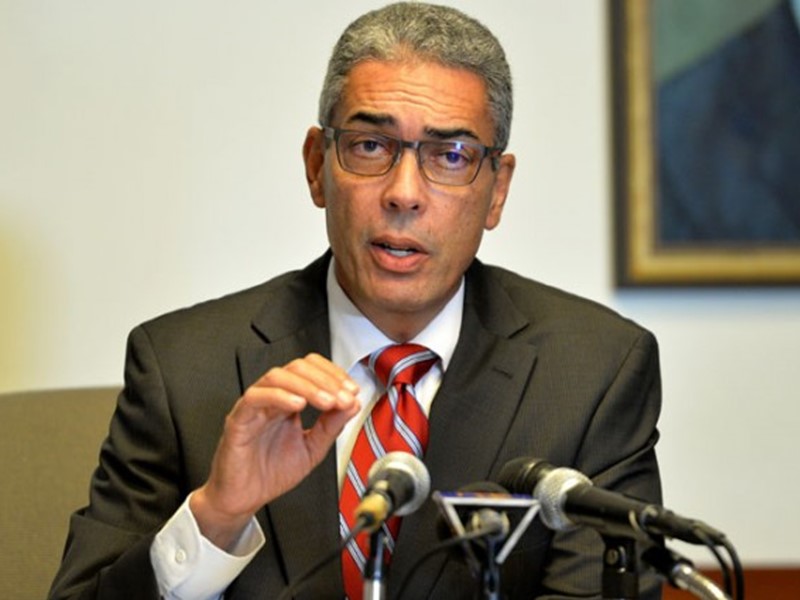
It is a pleasure for me to be invited to participate in this inaugural meeting of the Standing Finance Committee on the Bank’s price stability mandate. As per the requirements of section 34FG of the Bank of Jamaica (Amendment) Act, I submitted to the Minister a report on the Bank’s performance with respect to monetary policy and its inflation target in early September 2021. The report and the two attachments that accompanied it highlighted the major economic developments in Jamaica and the Bank’s performance for the first half of 2021. My brief remarks here this afternoon will therefore be focussed on the Bank’s updated view of the outlook for the Jamaican economy as well as our recent monetary policy decisions.
By way of context for my remarks, it is important to note that the macroeconomic outlook for the Jamaican economy remains generally positive following the sharp contraction in economic activity in FY2020/21 because of the COVID-19 pandemic. The local third wave of the COVID-19 pandemic appears to be receding and, with it, some of the government-mandated restrictions. These developments happily support increased economic activity, which already is showing some strong positive signals in the form of rising employment levels, buoyant inflows into the foreign exchange market and strong reserves. There are concerns that new variants of the COVID-19 virus and a fourth wave could hamper the economic recovery.
BOJ’s latest assessment is that GDP growth for FY2021/22 will still fall in the range of 7.0 per cent to 10.0 per cent but the risk to the outlook is skewed to the downside. Our forecast also indicate that GDP growth will moderate to the range of 2.0 per cent to 4.0 per cent for FY2022/23.
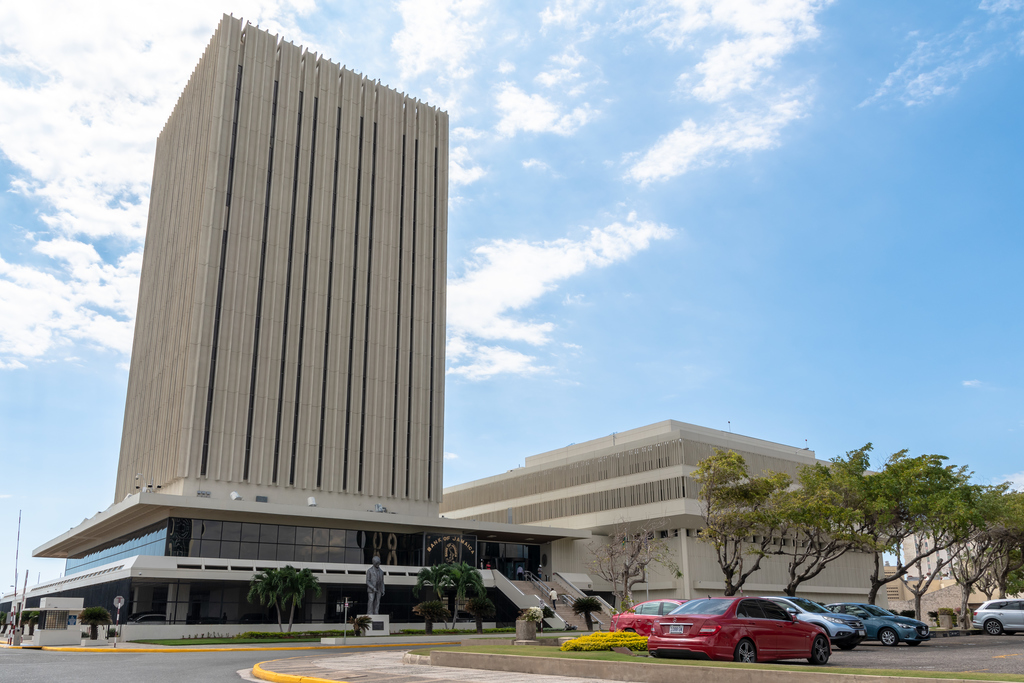
BOJ’s main area of concern has been the recent inflation performance and outlook. As you are aware, between August and October 2021, inflation has trended above the upper limit of the Bank’s 4 to 6 per cent target range. The primary reason for the higher inflation has been large increases in international commodity and shipping prices. While BOJ has no control over these external prices, the Bank has some control over the second-round effects of these increases and has implemented a suite of policy measures aimed at managing inflation expectations and returning inflation to the target in the shortest time possible. These policy actions include (1) increases in the Bank’s policy rate from the record low of 0.5 per cent to its current level of 2 per cent, (2) measures to contain Jamaica dollar liquidity expansion, and (3) while not targeting a specific rate, the Bank seeks to ensure that movements in the exchange rate do not threaten the inflation target. The Bank is also prepared to consider further increases in the policy rate and could intensify the accompanying measures at subsequent policy meetings.

The Bank’s policy actions have been designed to limit the second-round effects of the shocks and to guide inflation back within the target range over the next two years. These measures will cause market-based interest rates to rise, which will make savings more attractive relative to spending, and borrowing in Jamaican dollars more expensive. These measures are intended to temper the demand for foreign currency and moderate the pace of depreciation in the exchange rate. They will also reduce demand in the economy and with it the ability of businesses to pass on price increases to consumers. The suite of actions was however calibrated to ensure that the impact on GDP growth is minimised. In any event, at current levels, the real rate of interest attached to Bank of Jamaica’s policy instrument is still negative. That is to say that at 2.0 per cent, the interest paid to deposit taking institutions by BOJ is still far below actual inflation and therefore still supportive of GDP growth in that DTI’s would much rather lend than to leave funds with the BOJ.
Members, I assure you that Bank of Jamaica will continue to closely monitor the economic environment each month and is prepared to take further actions to ensure that inflation returns to the target range. Our actions are designed to protect the welfare of all 3 million Jamaicans and not that of any particular interest group or sector.





Comments