

Move aimed at limiting price stability risks
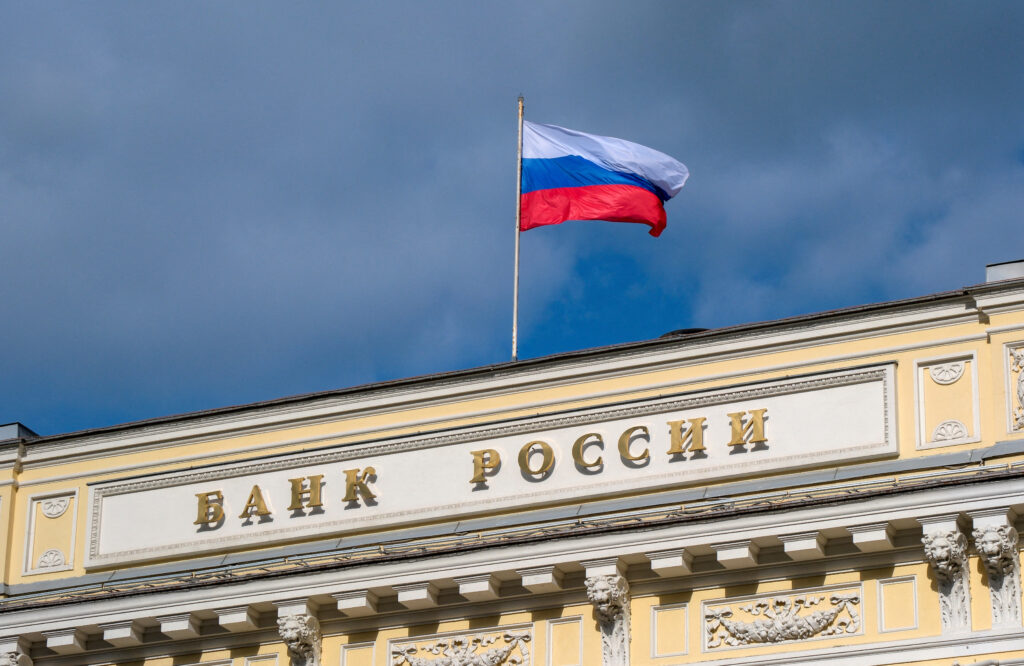
Russia’s central bank has hiked its key interest rate by 350 basis points to 12% after its currency, the ruble plummeted past the 100 threshold against the dollar yesterday.
The decision to raise the key rate from 8.5% to 12% was announced after an extraordinary meeting of the bank’s board of directors was called after the ruble plunged past the psychologically key level of 100 to the dollar on Monday morning. The Bank of Russia in a statement said the decision to hike the key lending rate is “aimed at limiting price stability risks.”
The plummeting of the ruble is said to be primarily due to the impact of Western sanctions on Russia’s balance of trade and as military spending soars. The Bank of Russia also made the point that the primary reason behind this plunge is the country’s shrinking balance of trade.
The Russian central bank noted that the country’s current account surplus fell 85% year-on-year from January to July. According to the bank, “inflationary pressure is building up. As of August 7, the annual rate of inflation rose to 4.4% while current price growth rates continue to increase. Over the last three months, current price growth amounted to 7.6% on average in annualised terms on a seasonally adjusted basis. The same core inflation measure went up to 7.1%.”
“Inflationary pressure is building up. As of August 7, the annual rate of inflation rose to 4.4% while current price growth rates continue to increase. Over the last three months, current price growth amounted to 7.6% on average in annualised terms on a seasonally adjusted basis. The same core inflation measure went up to 7.1%.”
Russian Central Bank
Analysts contended that the move appeared to “underwhelm” markets, with the currency falling in value on Tuesday morning, and cautioned that financial stability would be hard to achieve while Western economic sanctions on Russia remained in place. In an op-ed for state news agency, Tass, Russian President, Vladimir Putin’s economic adviser, Maksim Oreshkin blamed the weak ruble on “loose monetary policy”
He argued that a strong ruble is in the interest of the Russian economy and that a weak currency “complicates economic restructuring and negatively affects people’s real incomes.” Oreshkin said Russia’s central bank has “all the tools necessary” to stabilize the situation and said he expected normalization shortly.
The rouble has had a period of turbulence since Russia invaded Ukraine in February 2022, dropping to a record low of 150 to the dollar two weeks after the start of the war before sharply recovering after the central bank imposed strict capital controls that limited the flow of money out of the country.



Comments