Edmund Bartlett moving to restructure J’can tourism industry to increase retention of visitor spend

/ Our Today
administrator
Jamaica’s Tourism Minister, Edmund Bartlett, is moving to restructure the local sector to ensure that more of the earnings from the sector go to the small and medium tourism enterprises.
This is being done using three main methods, which include capacity development of people in the sector to organise and set up structures, especially ones that will allow them to benefit from corporative activities.
The second method, as articulated by Barlett seeks to broaden the scope and perspective of the sector to develop more indigenous products.
The third method is predicated on setting up financial arrangements to give smaller players access to finance. Minister Bartlett articulated his plan yesterday during a Ministerial Debate on Policies to Foster Tourism for Rural Development during the 24th session of the United Nations World Tourism Organization (UNWTO) General Assembly in Madrid, Spain.
He also spoke of credit being extended to small players in Jamaica’s tourism sector. According to Minister Bartlett, “We have put J$1 billion into our EXIM Bank that is on-lend to small and medium tourism enterprises. That funding is provided to them at some four per cent interest over five years with a maximum amount of J$25 million.”
Marketing crucial part of restructuring plan
The minister cited marketing as another critical component of his restricting plan. “Another key aspect is marketing, and we have provided the marketing arrangements in what we call Village Tourism. Within this village structure, we are establishing artisan villages and the purpose of that is to allow the artisans to operate in situ,” he added.
He admitted that there are inequities pointing out that globally 80 per cent of tourism is driven by the small and medium players, but only 20 per cent of the returns go to them.
“We have to rebalance that asymmetry, and I think that the policy that Jamaica has adopted in this regard will go a long way in enabling this rebalancing,” Bartlett posited.
He added that research has shown that people travel to experience culture not traditionally found in the resort areas but in rural communities. Therefore, the ministry will be focusing heavily on leveraging community tourism experiences, especially those focusing on the country’s rich biodiversity.
Bartlett told the panel, “We have developed a programme to drive community tourism through the very rich biodiversity which Jamaica has. We have more than 30,000 species of plants which generate for us enormous nutraceutical values. It is the rural folk that provides for us the herbs and spices and the paramedical applications that are so useful for health and wellness.”
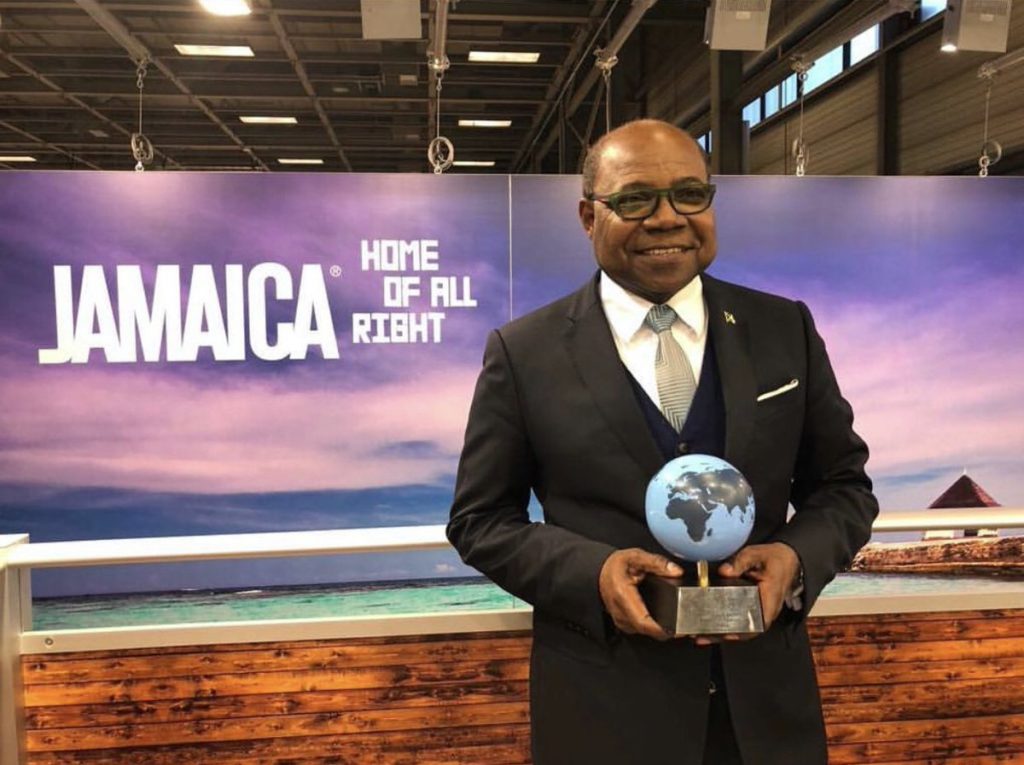
The discussion was moderated by Sandra Carvao, UNWTO Chief of Market Intelligence and Competitiveness. The panellists included Ricardo Galindo Bueno, Vice Minister of Tourism, Colombia; Dato’ Sri Nancy Shukri, Minister of Tourism, Arts and Culture, Malaysia; and Sofía Montiel de Afara, Minister – Executive Secretary, National Secretariat of Tourism (SENATUR), Paraguay.
Also on the panel were Simon Zajc, State Secretary, Ministry of Economic Development and Technology, Slovenia; Maria Reyes Maroto Illera, Minister of Industry, Trade and Tourism, Spain; Dr Damas Ndumbaro, Minister of Natural Resources and Tourism, Tanzania; and Özgül Özkan Yavuz, Deputy Minister, Ministry of Culture and Tourism, Turkey.
The World Tourism Organization’s General Assembly is the body’s main gathering. Delegates from UNWTO Full and Associate Members, as well as representatives from UNWTO Affiliate Members, attend its ordinary meetings every two years.
Comments