
UWI professor says climate change adaptation can no longer be a choice

Juanique Tennant / Our Today
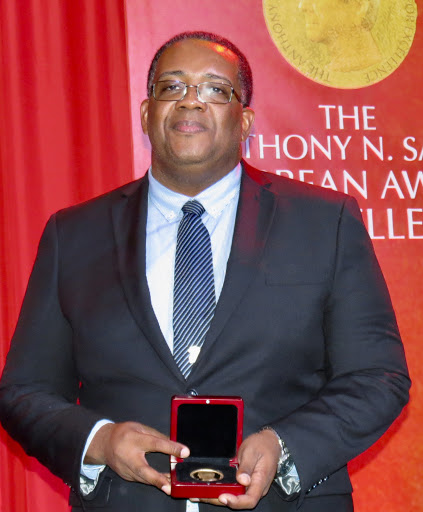
Given the current state of climate affairs globally and in particular, within the Caribbean, Professor Michael Taylor, dean of the Faculty of Science and Technology at the University of the West Indies, Mona and climate expert, says the region’s stance against climate change must be fuelled by an unavoidable adaptation agenda.
According to Taylor, who spoke during day one of the Caribbean Regional Climate Conference on Tuesday (June 1), in taking “a count” of climate change in the Caribbean, action must include strong mitigation, unavoidable adaptation, sustained education and deliberatively collaborative agendas.
For his first point, Taylor noted that in acting to thwart the effects of climate change in the region, emphasis must be placed on mitigating against worsening climate outcomes.
“The Caribbean having put 1.5 degrees on the table, in my opinion, cannot excuse itself from the actions and the reduction of greenhouse gases nor should they want to….”.
Professor Michael Taylor, Climate Expert
“The truth is the Caribbean put 1.5 degrees on the table as a global target…and if 1.5 is to be achieved then global carbon emissions have to fall by about 45 per cent by 2030 and we have to come down to that net-zero mark by mid-century…” said Taylor.
“The Caribbean having put 1.5 degrees on the table, in my opinion, cannot excuse itself from the actions and the reduction of greenhouse gases nor should they want to… .”
In articulating his second point, Taylor stated that in mitigating against worsening climate change outcomes, “we have to adapt”.
He furthered that the region’s adaptation ought to be characterised as “comprehensive, it can’t be in one sector and not in another. It must be contextual, our adaptation must be driven by our needs and how we define our problems. It must not be adaptation hoisted onto us…”.

For his third point, the professor highlighted the importance of a sustained education agenda in engendering behavioural change.
Taylor said, this education agenda “must not be here today and gone tomorrow”.
In closing, he indicated that in order to truly effect change as far as reversing the debilitating effects of climate change goes, action must be deliberatively collaborative.
He said: “The challenge that climate change is posing for the Caribbean dwarfs any single Caribbean country. We simply do not have the resources individually to deal with climate change, however, we have proved over and over again…that a collective approach where you make partners out of everybody, government, private sector, academia, civil society, youth…is the only way that we’re going to achieve the resilience… .”



Comments