
30 schools targeted under solar energy pilot project

/ Our Today
administrator
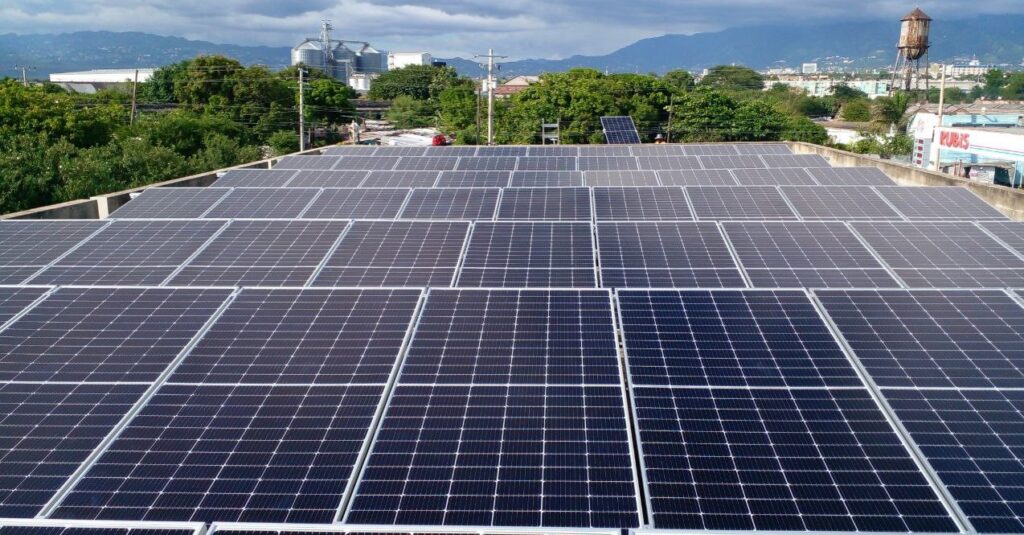
Jamaica College and José Martí Technical High School are set to benefit from two of the largest solar systems being provided under the Schools Energy Efficiency and Solar Energy Public-Private Partnership (PPP) pilot project.
Executive Director of the National Education Trust (NET), Latoya Harris-Ghartey, revealed that this is because the two schools have the highest energy costs. They are among 30 schools selected for the pilot, which commenced in March 2022.
The average energy cost for the 30 schools under the pilot is approximately J$8,347,350 per annum.
“The target is to reduce energy consumption by 40 to 70 per cent across all 30 schools, with a simple payback calculated for all 30 schools at between three to five years,” said Harris-Ghartey.

The pilot project also aims to establish an educational programme on energy conservation and efficiency, along with showcasing a replicable model for the broader school system.
Harris-Ghartey clarified that the solar photovoltaic system being implemented in the schools is grid-tied and does not involve battery storage. This system will cater to lighting, cooling, plug loads, and all other energy needs of the institutions during their regular operating hours.
“The system will be tied into the JPS (Jamaica Public Service) grid so that when the solar system is low in production, for example at nights, there will be an automatic changeover to JPS. During the summer months when schools are closed, the excess production from the solar system will be sold to JPS under a standard offer contract net billing system arrangement between the Ministry of Education and Youth, through NET,” Harris-Ghartey said.
The pilot project extends over a 15-year period, a duration commonly seen in public-private partnerships of this nature. A scale-up evaluation is scheduled for year three, post the complete installation and commissioning of the solar systems.
Harris-Ghartey highlighted the existence of a pre-drafted scale-up plan, ready for implementation pending approval from the Ministry of Finance and the Public Service.
The Energy Savings Performance Contract (ESPC) of US$5 million was officially signed on March 29, 2022, with the Energy Savings Company (ESCO).





Comments