Guyana is becoming particularly interesting from a diaspora-policy perspective

/ Our Today
administrator
Most Caribbean governments talk about their diaspora the way a company talks about a mailing list they’d like to reactivate. Guyana has been doing something a bit more concrete about it lately, and the latest piece of that is a plan to send government offices out to where Guyanese people actually live, rather than waiting for them to fly home.
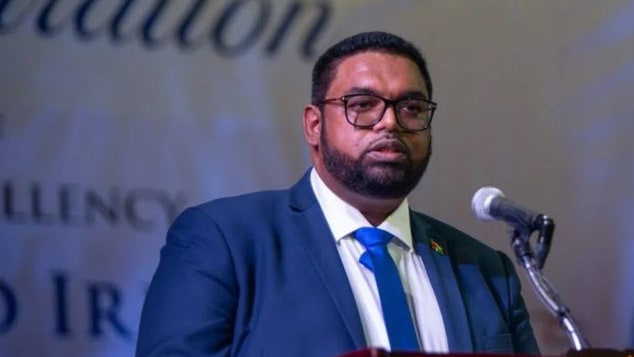
President Irfaan Ali laid out the idea during a town hall in Saint Lucia in July, while he was in the country for the CARICOM heads of government meeting. The pitch was simple: mobile units that would travel, at least once a year to start, into countries with large Guyanese populations, setting up shop long enough to process the kind of paperwork that normally forces someone to either fly home or wrestle with an embassy queue. National Insurance matters, birth certificates, replacement documents. Ali described wanting “one unit” capable of handling all of it in a single visit, and said a mobile team would also begin offering biometric passport services abroad, cutting out one of the more common reasons Guyanese overseas end up booking a flight home they didn’t really want to take.
Part of a bigger pattern, not a one-off
What makes this worth paying attention to is that it isn’t standing alone. It’s landing on top of a domestic push to consolidate government services into one-stop centres across Guyana itself, which the administration says has already cut wait times noticeably. The mobile diaspora units are being framed explicitly as an extension of that same logic: if bundling services together works at home, take the bundle on the road.
It also follows a diaspora bond that Ali announced back in May, aimed at giving overseas Guyanese a direct financial stake in the country’s infrastructure build-out, and it sits alongside a broader digital identification rollout, the e-ID card, that’s meant to link citizens abroad and at home into a single system regardless of where they’re physically standing when they need a service.
Put together, the sequence looks less like scattered announcements and more like a government building out an actual diaspora-facing bureaucracy: a way to pay in from abroad, a digital identity that works from abroad, and now physical service delivery for the moments that still require an in-person process.

Why now
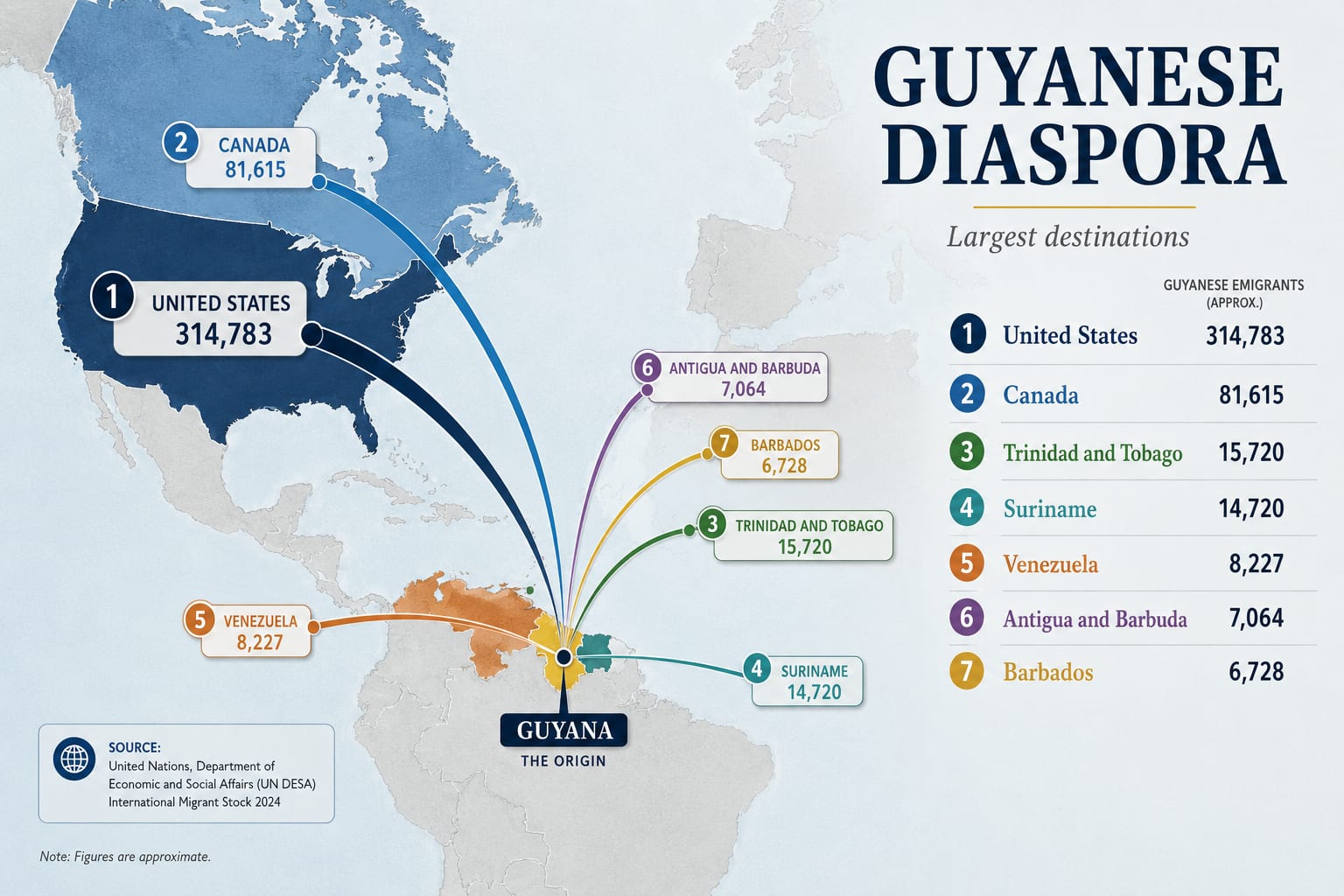
The obvious backdrop is money and manpower. Guyana’s economy has expanded at a pace few small countries have ever matched, driven by offshore oil production, and that growth has created a labour and skills gap the domestic population can’t fill on its own. Bringing skilled Guyanese back, or at least keeping them financially and administratively tied to the country while they stay abroad, has become a genuine economic strategy rather than a sentimental gesture. A diaspora member who can renew a passport, register a birth, or sort out an NIS matter without booking a flight home is a diaspora member with one less reason to let the paperwork lapse, and one fewer barrier if they ever do decide to return.
There’s a political angle too, of course. Diaspora communities in places like Toronto, New York, and now the Eastern Caribbean are natural audiences for a government keen to show that oil wealth is translating into something tangible for Guyanese wherever they live, not just those inside the country’s borders.

Execution will be the real test
None of this is complicated in concept. Plenty of countries run consular outreach days or mobile registration drives. What’s different here is the ambition to make it a recurring, near-annual fixture across multiple countries with meaningfully large populations, rather than a one-time roadshow timed to an election or anniversary. That’s a logistics and staffing commitment, not just a policy announcement, and it will take a couple of cycles to see whether the “once a year” promise holds up in practice once the novelty wears off.
Still, for a region where diaspora engagement often amounts to little more than a minister’s visit and a photo opportunity, Guyana’s approach- bond, digital ID, and now mobile service delivery- adds up to something with more institutional weight behind it. Other Caribbean nations with sizeable populations abroad may find it worth watching closely.




Comments