
Three Years On: St. Ann communities see lasting change from sustained VPA – Sandals Foundation partnership

/ Our Today
administrator
There is a transformation taking shape in two St. Ann communities following a three-year social intervention programme implemented by the Violence Prevention Alliance (VPA) and the Sandals Foundation.
Valued at some JA$21,000,000, the initiative saw a strategic investment in the people of Steer Town and Chalky Hill through five interconnected programmes of psychosocial support, child and youth resilience, economic empowerment, community engagement and positive masculinity programming to strengthen resilience, expand livelihood opportunities and promote safer, more supportive environments.
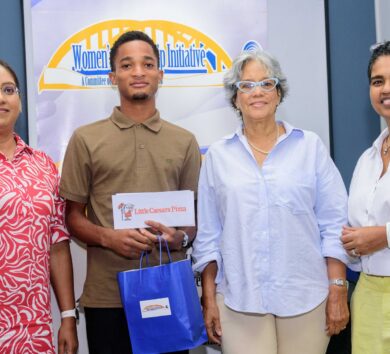
Delivered consistently from July 2023 to June 2026, the results, detailed in VPA’s newly released end-of-project report, show 42 young people completing job readiness training, with eleven already securing employment. Eight residents were trained as entrepreneurs, with 6 who have since launched active businesses, including Tallecia Murphy, founder of Fam’s Printery and More, the first person in her family to formally register a company. More than 50 men and boys took part in the Big Man Ting Positive Masculinity workshop, a positive-masculinity programme built around honest conversation rather than lectures. Two Peace Gardens, built with students’ own hands, remain in daily use at Steer Town and Chalky Hill primary schools, and 31 parents completed parenting workshops alongside a Child Resiliency Programme.

“I see them thinking before they act now — especially one child who would usually storm out of class,” shared Joan Brown, a participating teacher.
Each programme was designed to reinforce the others: children in psychosocial support also took part in Peace Garden activities, youth who completed job readiness training moved into entrepreneurship support or job placements, and schools and families stayed engaged throughout. When Hurricane Melissa struck, the project didn’t pause, it expanded psychosocial support to meet the moment while keeping every other component on track.
That approach echoes where national policy has been heading. Jamaica’s murder rate hit a 31-year low in 2025, with government officials crediting social intervention and community-based prevention, alongside enforcement, as key to the results. The Steer Town project offers a community-level example of that principle in action: addressing root causes, unemployment, trauma, limited opportunity — rather than responding to incidents after the fact.

Karen Zacca, Director of Operations at Sandals Foundation and project manager, says the programme’s success was built on three years of consistent presence. “Real change in a community takes time and trust. Three years in, we’re seeing it in the classroom, in the development of these new businesses, and in the way our men are showing up for their families.”
Speaking to why the Foundation committed to a multi-year investment, Zacca says, “We wanted to invest in something that would still be standing after we left — not just an event, but a system of support the community could carry forward. Three years later, that’s exactly what we’re seeing.”
For VPA Project Coordinator, Jonelle Llewellyn, a major success of the programme came through a positive shift in how men understood how they could show up for themselves, their family and community.
“One of the most meaningful aspects of this project was seeing how conversations around masculinity could move beyond the traditional expectations placed on men. Through Big Man Ting, men were encouraged to look honestly at how they communicate, respond to conflict, show up in their families and the kind of role models they want to be in their communities. For me, positive masculinity is not about telling men how they should behave; it is about creating a safe space where they can reflect, challenge behaviours and beliefs they may have grown up with and recognise that there is always an opportunity for growth. That kind of self-reflection is an important part of preventing violence and building healthier relationships.”

Myles, a participant in the Big Man Ting programme, echoed this shift, noting, “For a long time, I measured my worth by my silence. I thought being a man meant being an immovable structure that didn’t flex, didn’t complain, and certainly didn’t show cracks. I performed strength like a role in a play, convinced that if I ever let my guard down, the people around me would lose their respect, or worse, lose their sense of safety. It started when I realised that the silence was actually a form of isolation. I was exhausted from holding everything up alone. Many of us struggle with that. I began testing the waters, starting with small things — admitting I was overwhelmed at work, or telling a friend I was struggling with a specific failure, rather than brushing it off. I expected judgement, but what I received was connection. I found that when I dropped the armour, others felt invited to drop theirs, too. I learnt that true strength isn’t the ability to withstand pressure without changing; it’s the resilience to adapt, to be vulnerable, and to be honest about where I am. It allowed me to trade the frantic, lonely need to ‘be the man’ for the much quieter, steadier confidence of simply being a human.”
Now, with Peace Gardens sustainably being maintained by the schools themselves, teachers trained in trauma-informed approaches showcasing new skills in the classrooms, and former participants continuing to run the businesses and pursuing the careers the programme helped them start, lasting change is taking shape.
“I never even knew how to start looking for a job. Now I have a plan, I have confidence, and I have work. Three years ago, I couldn’t have told you that,” says Dwayne, a Job Readiness Programme participant.


Comments