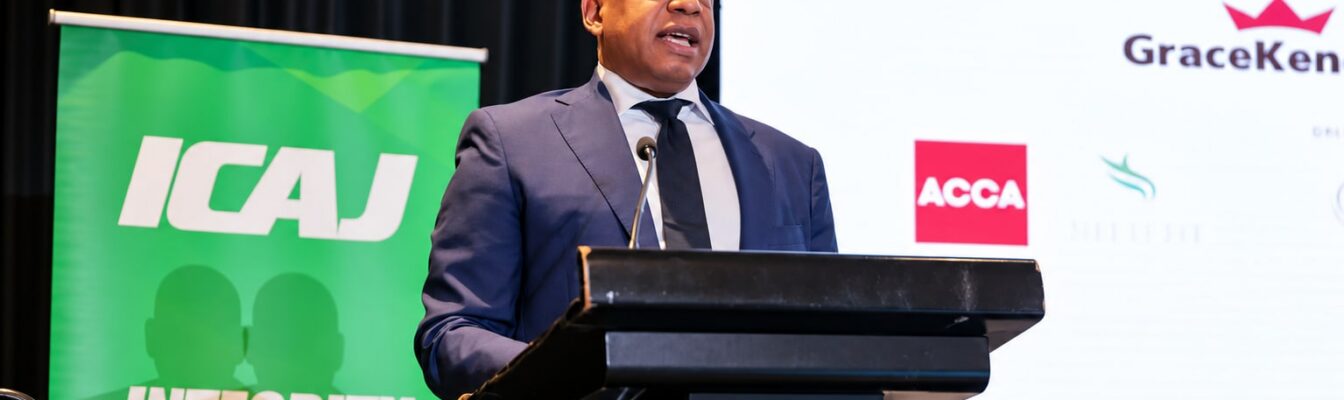
Brian Langrin | Keynote speach at the Institute of Chartered Accountants of Jamaica 2026 Business Conference, Integrity in Action. Value in Motion.

/ Our Today
administrator
Resilience and Innovation Post-Hurricane Melissa
Thursday, 8 October 2026
President of the Institute of Chartered Accountants of Jamaica, Mrs. Sharon Donaldson-Levine; members of the Council; distinguished members of the profession; colleagues joining us here and online; ladies and gentlemen: good morning.
Thank you for inviting me to deliver the keynote address. I am especially pleased to speak to the Institute so early in my tenure as Governor. Accountants and central bankers share a reliance on information that can be verified, reconciled and explained. In that sense, “Integrity in Action. Value in Motion.” speaks directly to Jamaica’s recovery, our monetary credibility and the digital infrastructure needed to move value more quickly without weakening trust.
In a little under three weeks, Jamaica will mark one year since Hurricane Melissa made landfall. On the 28th of October last year, a Category 5 storm crossed the southwest of our island and changed the lives of hundreds of thousands of our people. Many in this profession lost homes, offices and clients; some lost people they loved. Before I speak about economics, I want to acknowledge that loss, and everyone who has spent the past year rebuilding.
According to the Inter-American Development Bank’s post-disaster assessment, total damage and economic losses from Hurricane Melissa were approximately US$12.2 billion, equivalent to nearly 57 per cent of Jamaica’s gross domestic product. By any measure, it was an extraordinary shock to our economy and to our people.
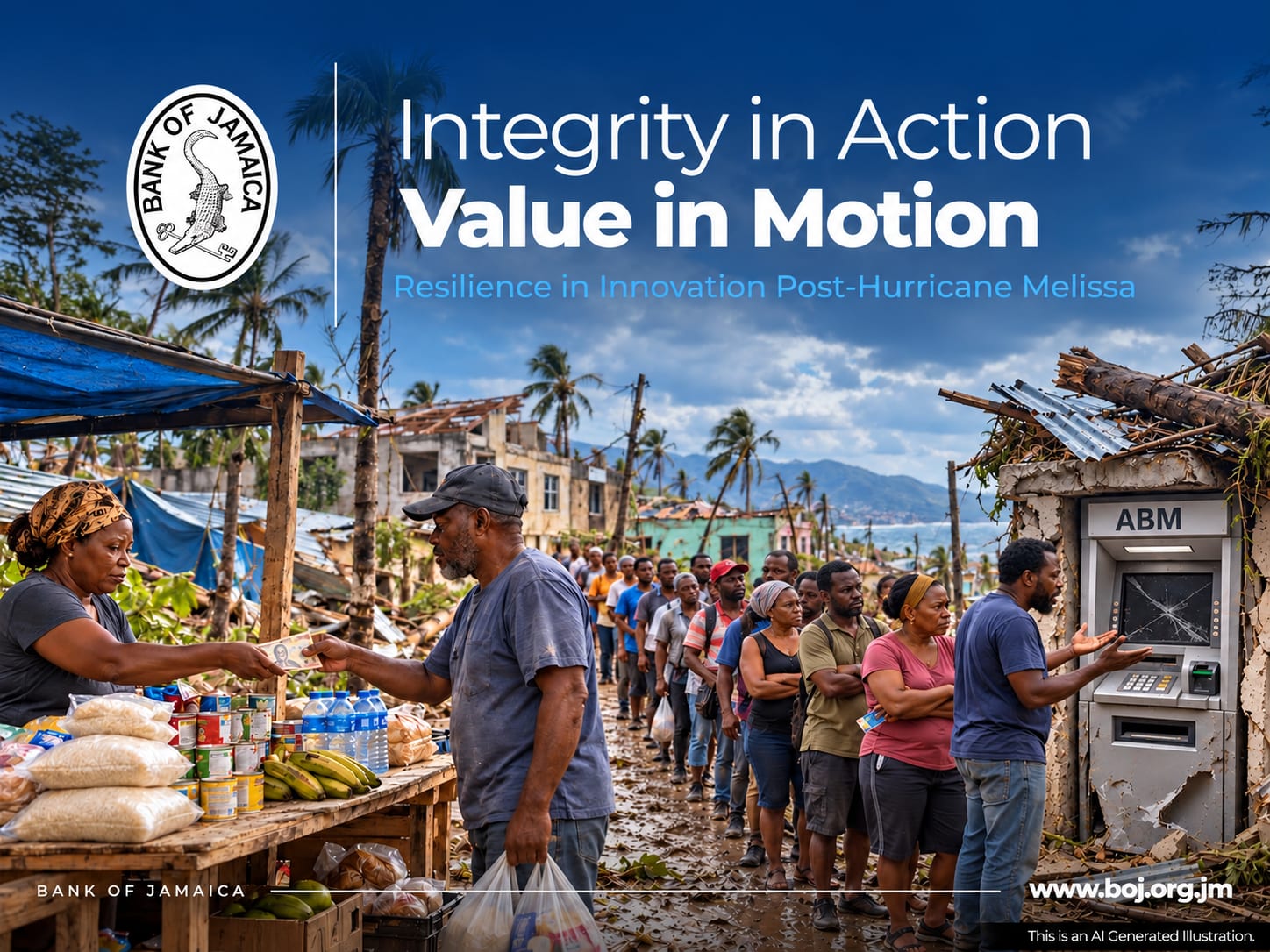
And yet the financial system held, not by luck, but because Jamaica had built credibility, strong reserves and financial buffers before the storm. The renewed US$150 million catastrophe bond was triggered in full, deposit-taking institutions remained comfortably above prudential capital and liquidity thresholds, and non-performing loans recorded only a modest hurricane-related increase.
The lesson is simple. Resilience begins long before a storm arrives. Much of it depends on the quiet work of this profession: accounts that are accurate, ledgers that reconcile and disclosures that are made honestly and on time. That is integrity in action. When Melissa came, decision-makers could rely on the numbers, and that helped capital, insurance and assistance to move.
My argument this morning is straightforward: Jamaica’s next stage of resilience requires trusted value in motion. The Bank must maintain price stability and continue developing JAM-DEX, Jamaica’s central bank digital currency, as part of a wider digital-payments ecosystem that can provide a trusted payment rail for merchant transactions and, where the responsible authorities choose, verified public transfers and disaster relief. This profession, for its part, has an important role in strengthening the integrity of the financial records, reporting and assurance on which that ecosystem will depend.
Integrity also has a monetary meaning. Every ledger in this country is kept in Jamaican dollars, and a ledger is only as reliable as the unit in which it is measured. Maintaining price stability is central to the Bank’s mandate, and so I must speak plainly this morning about prices.

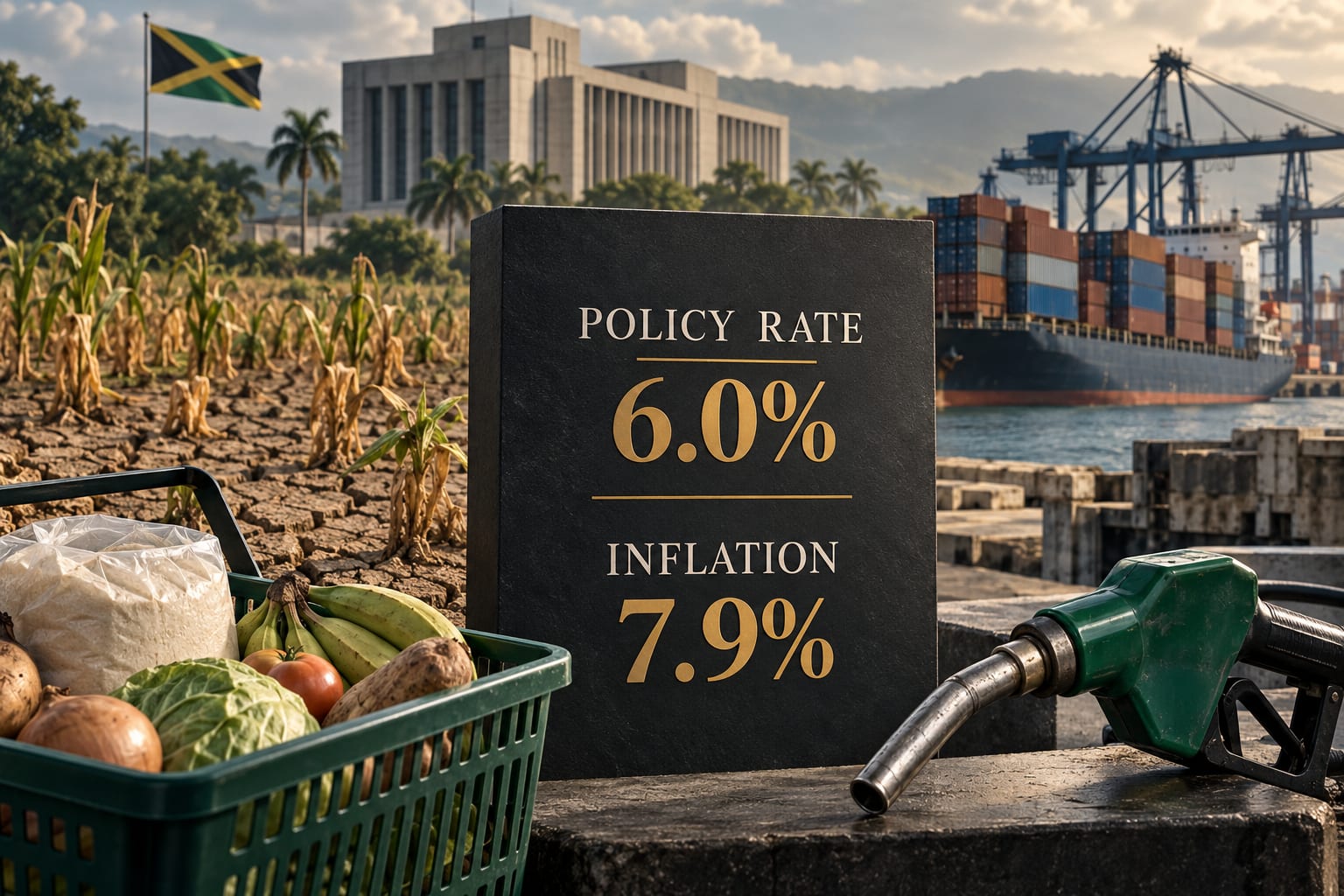
On the 29th of September, the Monetary Policy Committee raised the policy rate by 50 basis points to 6.0 per cent. That decision was taken in an unusually uncertain environment. Headline inflation reached 7.9 per cent in August, the third consecutive month above our target range. Some of that pressure comes from abroad, as conflict in the Middle East and between Russia and Ukraine keeps energy prices high; some from El Niño’s damage to crop yields at home; and some from the recovery itself, as rebuilding lifts import demand. These are supply-side pressures, but they are no longer isolated disturbances. They are recurring, overlapping and increasingly persistent.
Central banks traditionally look through temporary supply shocks because interest rates cannot produce fuel, food or freight capacity. But temporary shocks can be looked through; persistent shocks cannot. When pressures become broad based, last longer than expected and begin to influence wages, prices and inflation expectations, monetary policy must respond to the effects it can influence.
We are now seeing early second-round effects. Businesses expect inflation to remain above our target range over the next twelve months and anticipate wage pressures. The danger is that households and businesses begin to treat higher inflation as the new normal, embedding it in wage-and price-setting behaviour and making stability more costly to restore. The September rate increase was not intended to reverse the supply shocks themselves. It was a timely, measured step to prevent their effects from becoming entrenched and to keep expectations anchored to the Bank’s inflation target.
That judgment requires humility and resolve. We expect inflation to remain elevated in the near term before returning to the target range by mid-2027, subject to domestic and external developments. The Monetary Policy Committee will continue to assess the data, distinguish temporary pressures from threats to the inflation anchor and act if upside risks materialise. Jamaica entered the Melissa shock with monetary credibility, strong reserves and a stable foreign exchange market, and we intend to preserve those buffers. Gross international reserves stand at US$7.1 billion, well above the adequacy measure.
Here, too, your profession has a direct part to play. You advise the businesses that set prices, negotiate wages and prepare budgets. The assumptions built into those decisions help determine whether today’s inflation fades or becomes entrenched. I encourage you to help clients distinguish temporary cost pressures from the medium-term inflation outlook and to avoid treating today’s rate of price increase as a permanent feature of tomorrow’s contracts.
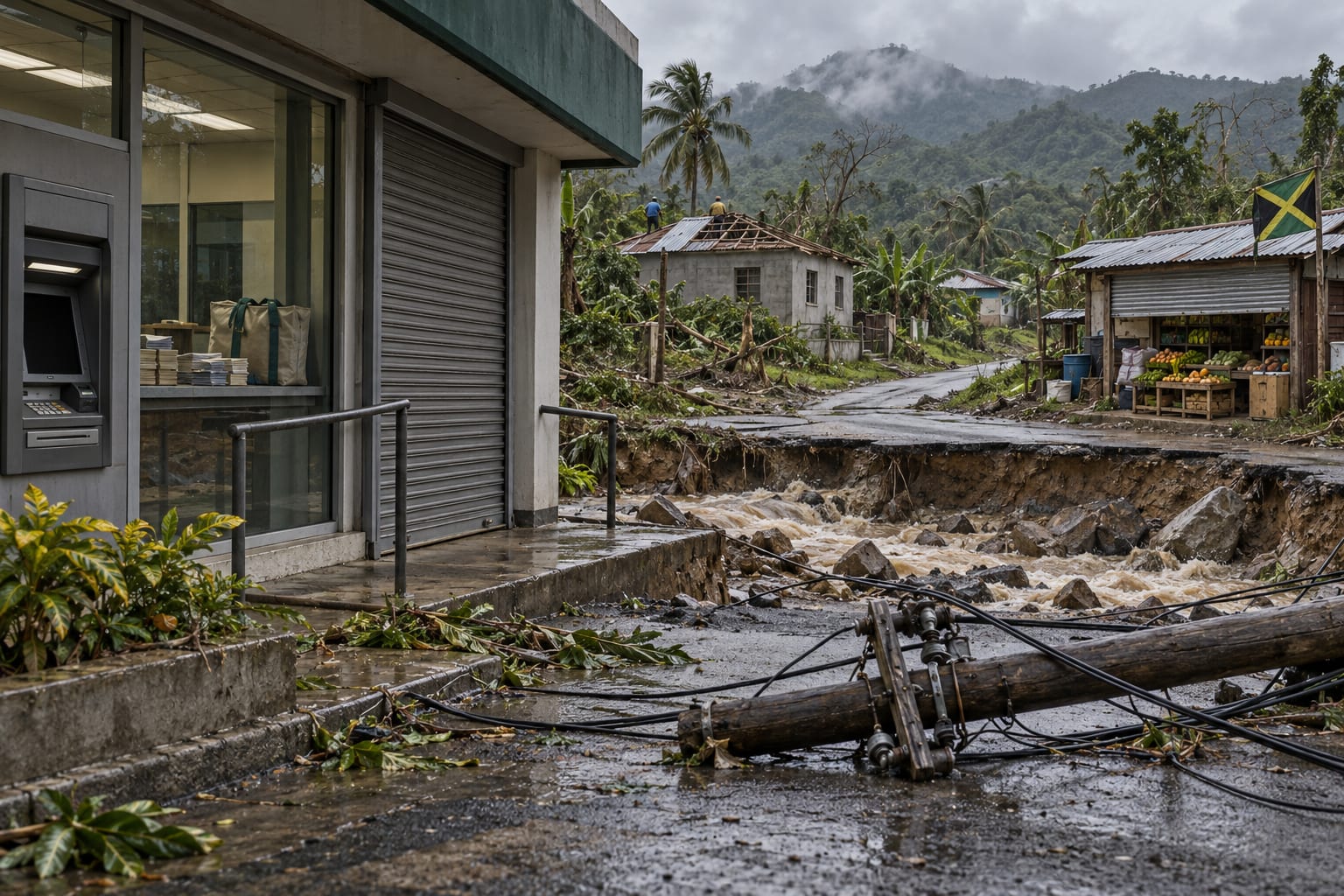
Let me return, then, to Hurricane Melissa. The discussion of inflation has focused on one dimension of resilience: preserving monetary stability after a major shock. But Melissa also tested something more immediate: whether households and businesses could access and move money when normal channels were disrupted. Power and telecommunications failed, roads closed and branches could not open. Cash became both essential and scarce. Remittances arrived with added cost and delay, while small businesses without reliable records struggled to demonstrate their losses to insurers and lenders.
Melissa did not break the core of our financial system; it exposed the gap between liquidity and delivery. Financial buffers, insurance proceeds and public resources were available, but damaged roads, interrupted telecommunications and closed access points prevented value from reaching households and businesses with the speed a crisis demanded. The last mile became the hardest mile. That is “Value in Motion” in its most practical sense. For the Bank, it identifies where the next phase of payment system resilience must begin.
The lesson from Melissa is that disaster financing is only as effective as the payment arrangements through which it is delivered. A catastrophe bond can release liquidity at the sovereign level, but resilience is not achieved until support reaches the farmer replacing a roof, the family buying food and the small business reopening its doors. From the Bank’s perspective, shock-responsive payments should be part of the national framework for managing disaster risk, alongside reserves, insurance and contingent financing. The Bank’s role is to ensure that the payment system is capable of supporting timely delivery once the relevant public authorities authorise its release.

JAM-DEX can play an important role in that architecture, but it cannot do so alone. Where the responsible public authorities choose digital disbursement, the wider ecosystem will need reliable arrangements for identifying beneficiaries, moving funds across interoperable payment rails and giving recipients practical places to spend them. Banks, credit unions, payment service providers, wallet providers and merchants all have roles in making that possible. JAM-DEX can provide trusted central bank money, while the automated clearing house (ACH), the real-time gross settlement (RTGS) system, and regulated accounts serve other use cases. The objective is not one rail for every purpose, but several reliable routes when one is disrupted.
The Bank is working with the World Bank’s Finance, Competitiveness and Innovation team and the International Finance Corporation on these practical problems. We are examining how public infrastructure and private providers can deliver available financing to the people who need it, expand merchant acceptance, connect institutions outside the main payment infrastructure, and reduce cost, compliance and operational barriers. Public authorities will determine policy and programme choices within their respective mandates. The Bank role is to maintain trusted payment infrastructure, support common standards and convene the institutions needed to make the system work. Financial institutions and payment service providers will be essential to developing suitable products, serving customers and expanding the acceptance network.
Within its mandate, the Bank can help keep the core payment network ready between emergencies. Working with participating institutions, periodic small-value transactions could confirm that accounts and wallets remain reachable, reconciliation works, and merchants can accept payments. Testing could also cover low-connectivity and offline operation, cash-out, fallback channels and customer recourse. The responsible public authorities and delivery agencies would retain responsibility for beneficiary identification and the validation of beneficiary records. This agenda also supports monetary resilience. A hurricane can destroy productive capacity, interrupt distribution, raise prices and weaken incomes. Better payment systems cannot rebuild a road, restore a crop or substitute for monetary policy, but they can help households, businesses and supply chains recover faster, reducing the risk that disruption develops into persistent pressure on wages, prices and inflation expectations.
Faster and more resilient government and merchant payments are an immediate focus for the Bank’s payment system work. At the same time, our statutory role in fostering the development of Jamaica’s money and capital markets requires us to consider how financial-market infrastructure may evolve over the longer term. Whether based on existing arrangements or emerging technologies, any future infrastructure would need to support the safe, efficient and resilient movement of value among financial institutions and market participants. This longer-term perspective does not signal an immediate initiative; it establishes the principles that should guide any future consideration of next-generation settlement.
Any BOJ consideration of next-generation settlement infrastructure would be guided by three tests. First, singleness: one Jamaican dollar, always at par, whether it is cash, a bank deposit or JAM-DEX. Second, integrity: transactions must be secure, legally sound, traceable and final. Third, resilience: the system must continue to move value when electricity, telecommunications or a single payment rail is disrupted. Innovation that weakens any one of these tests is not progress.
For now, the Bank’s priority is to make better use of the infrastructure Jamaica already has: the ACH, the RTGS system and JAM-DEX, supported by a growing community of banks, credit unions, public agencies and payment service providers. The practical task is to connect these systems so that value can move securely and efficiently across the ecosystem. Better connections can lower participation costs, widen access and give the relevant public authorities more than one reliable route for reaching households and businesses when a shock occurs.
Within that continuing work, one potential Jamaican use case under discussion would assess what a public agency or financial institution would need to connect to JAM-DEX. The proposed tool would compare systems, identify technical, operational, legal and control gaps, and produce an investment-ready roadmap. It could reduce months of preparatory work while leaving the final integration and investment decisions to the government agency or financial institution.
JAM-DEX is therefore a practical starting point. From the Bank’s perspective, the near-term priorities are to deepen wallet onboarding, merchant acceptance and offline capability; support testing of government-to-person payments where the responsible authorities choose that use case and payment-ready beneficiary data are available; and reduce the technical barriers facing banks, credit unions and future payment service providers that may wish to connect. These priorities do not displace the safeguards already in place: cash will remain legal tender, participation in digital money will remain voluntary, and the ACH, RTGS and other regulated payment rails will continue to serve the use cases for which they are best suited.
The next test must be operational. The Bank’s responsibility is to ensure that payment infrastructure can support a national disaster-disbursement simulation if the responsible authorities and delivery partners decide to conduct one. JAM-DEX could be one payment rail within a broader multi-rail response. Such an exercise could test whether accounts, wallets, reconciliation and merchant acceptance continue to function during outages, limited connectivity and other conditions Melissa exposed. The Bank’s objective would be to identify payment-system bottlenecks before they delay assistance in another emergency.

Returning to the longer-term agenda, tokenised finance may warrant study as part of Jamaica’s financial-market infrastructure. It could make the issuance, transfer and settlement of financial instruments faster and more transparent. Any consideration would require a clear market need, legal authority, sound governance, effective risk controls and measurable public benefit. Our first task remains addressing Jamaica’s current payment and settlement frictions. Tokenisation should build on that foundation, not distract from it.
These immediate priorities and longer-term questions lead directly to the role of this profession. Digital public transfers, disaster payments and tokenised financial instruments make assurance more, not less, important as systems become faster and more connected. How should tokenised assets be recognised, measured and disclosed? What evidence will auditors need when records are shared and settlement is nearly instantaneous? How should emergency transfers be reconciled and reported when speed is essential but accountability must be maintained? These are questions of financial integrity, and the profession must address them alongside standard setters, regulators, public authorities and market participants.
Answering these questions will require practical collaboration. I invite ICAJ to work with the Bank and other partners to develop assurance approaches for digital payments; shape the controls, reconciliation and reporting for any national disaster-disbursement simulation; help businesses maintain payment-ready, disaster-resilient records; and guide clients towards affordable digital payment options supported by sound cash-management and business-continuity arrangements. Our shared objective should be to build governance and assurance into payment and settlement systems from the outset.
That collaboration matters because the next shock will test our infrastructure, records, controls and professional judgment. We cannot choose when it will come, but we can prepare by ensuring that records are ready, payment rails are connected, and safeguards are tested. Melissa taught us that liquidity at the top is not enough. Resilience is achieved only when support reaches the last mile.
Our task, then, is clear: build trust into the payment and settlement systems we strengthen today and those we may develop tomorrow. If the Bank, this profession and our partners each fulfil their respective roles, Jamaica will be better able to keep value moving when it matters most, from the financial system to the households and businesses that depend on it. That is integrity in action. That is value in motion.
Thank you.
October 8, 2026




Comments