Ricardo Smith | Longer school days alone will not fix Jamaica’s education problem

/ Our Today
administrator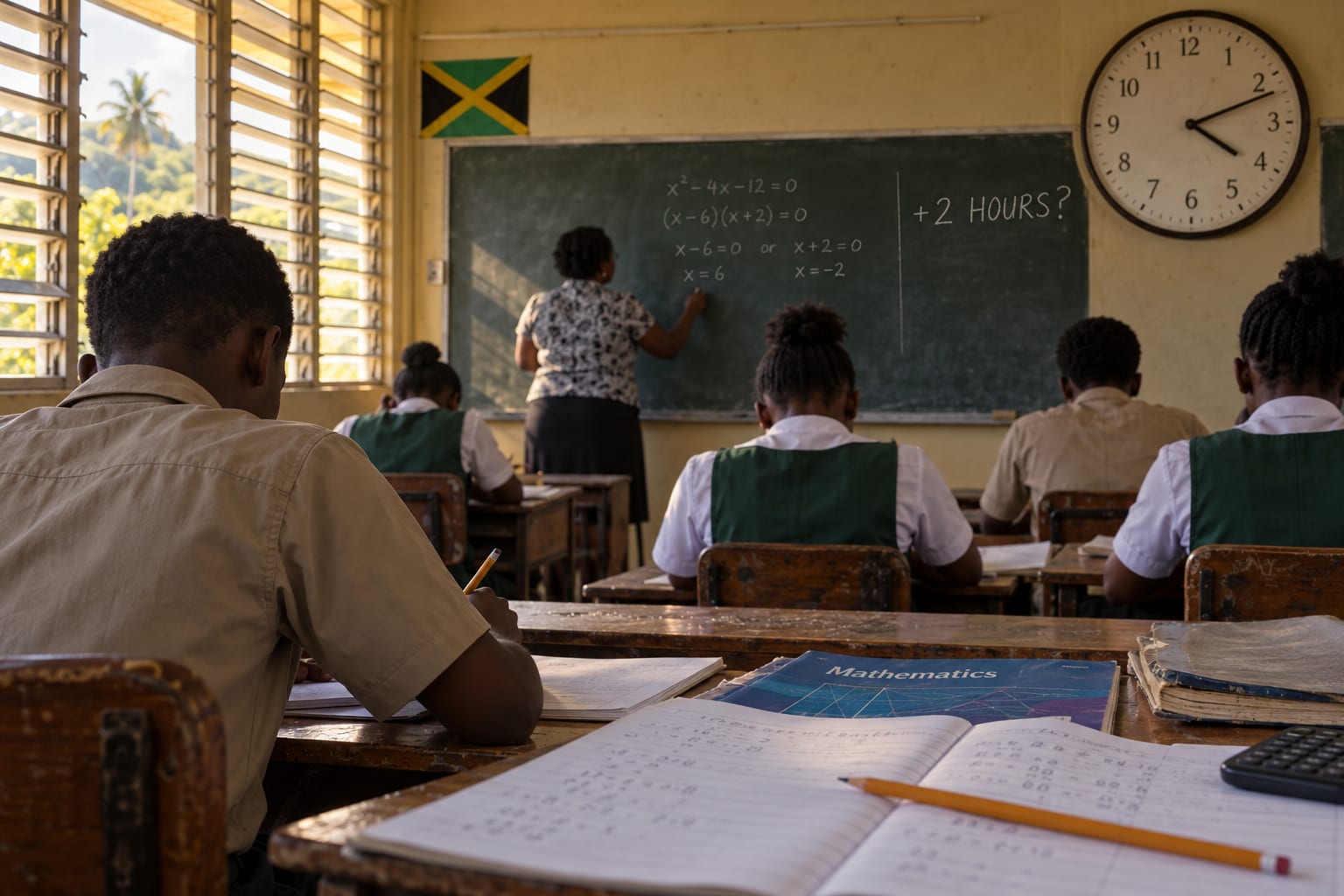
Jamaica’s education system is facing serious challenges, and there is no shortage of ideas about how these challenges should be addressed. One proposal that has again entered the national conversation is the extension of the school day by two hours.
At first glance, the proposal may appear reasonable. If students are not performing as well as they should, giving them more time in school may seem like a logical response. However, education is not simply a matter of adding hours to the school day. The more important question is whether those additional hours will result in better teaching, stronger learning and improved outcomes for students.
The available evidence suggests that we should be cautious about assuming that more time automatically means better results.
Jamaica’s participation in the Programme for International Student Assessment (PISA) in 2022 provides an important starting point. PISA measures how well 15-year-old students can use what they have learned in mathematics, reading and science to deal with real-life situations. Only 26 per cent of Jamaican students reached the basic Level 2 standard in mathematics, compared with 69 per cent across the Organisation for Economic Co-operation and Development (OECD). In reading, 50 per cent of Jamaican students reached Level 2 compared with 74 per cent across the OECD, while in science the figures were 45 per cent for Jamaica and 76 per cent for the OECD.
These figures should concern all of us, but they should also encourage a more careful examination of the problem. If students are underperforming, we need to understand why before deciding that the answer is simply to keep them in school for another two hours.
We need to look at what students are learning
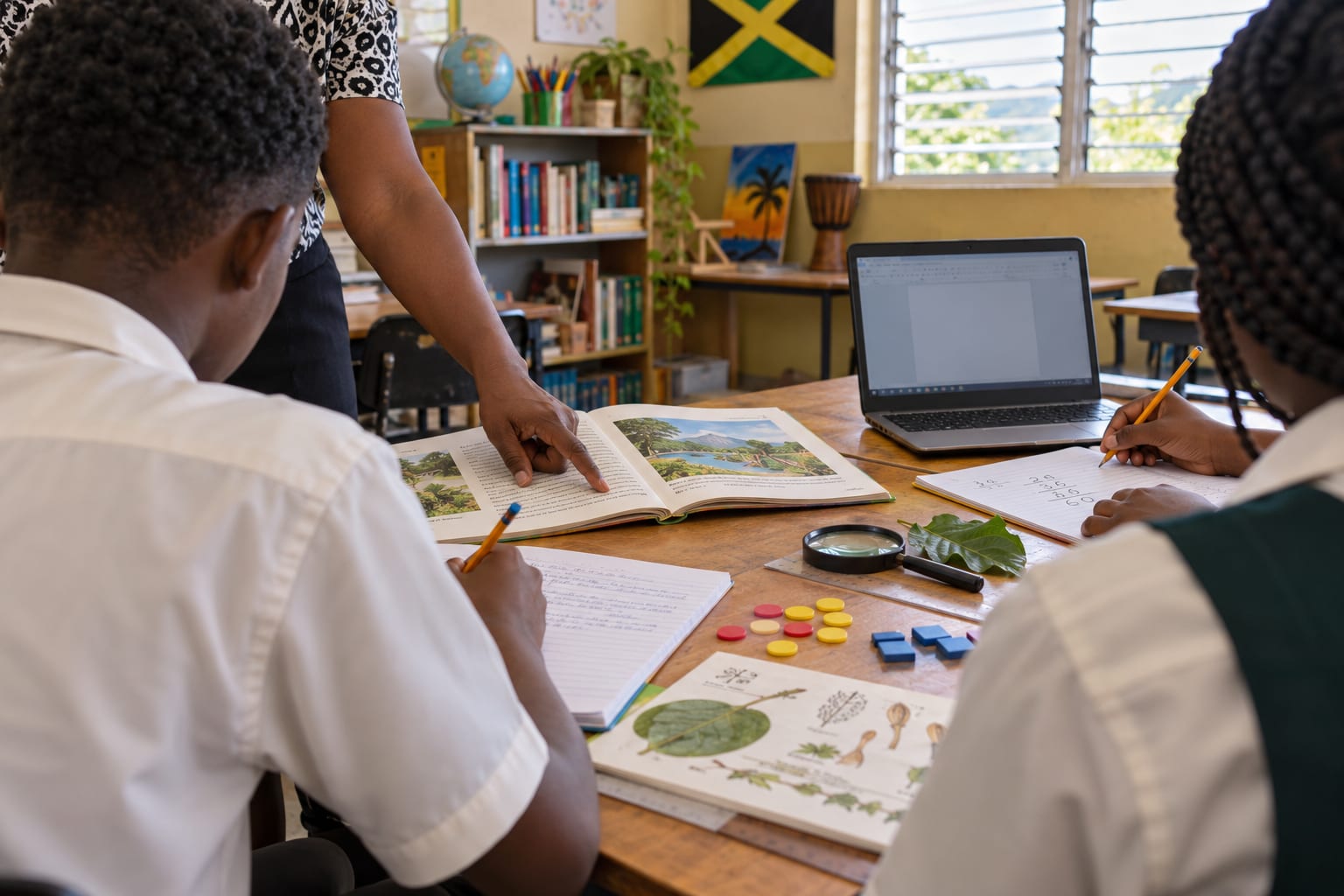
One part of that discussion must involve the curriculum and the number of subjects students are expected to manage. There is considerable value in exposing young people to different areas of knowledge, and Jamaica should continue to provide students with opportunities in academic, technical, vocational, creative and practical subjects. However, there must also be a balance between covering a wide range of subjects and ensuring that students actually master the fundamentals.
A student who is still struggling to read with understanding, write effectively or perform basic mathematical operations will not necessarily benefit from being introduced to more subjects or spending more time covering them. The foundation has to be secure first.
This is why greater emphasis should be placed on literacy, numeracy, communication, science and digital skills, while students are gradually given opportunities to explore other areas based on their abilities and interests. The objective should not be to reduce what children learn, but to ensure that they understand what they are being taught and can apply that knowledge.
This brings us to another important consideration: more classroom time is not necessarily the same as more learning.
The quality of the time matters
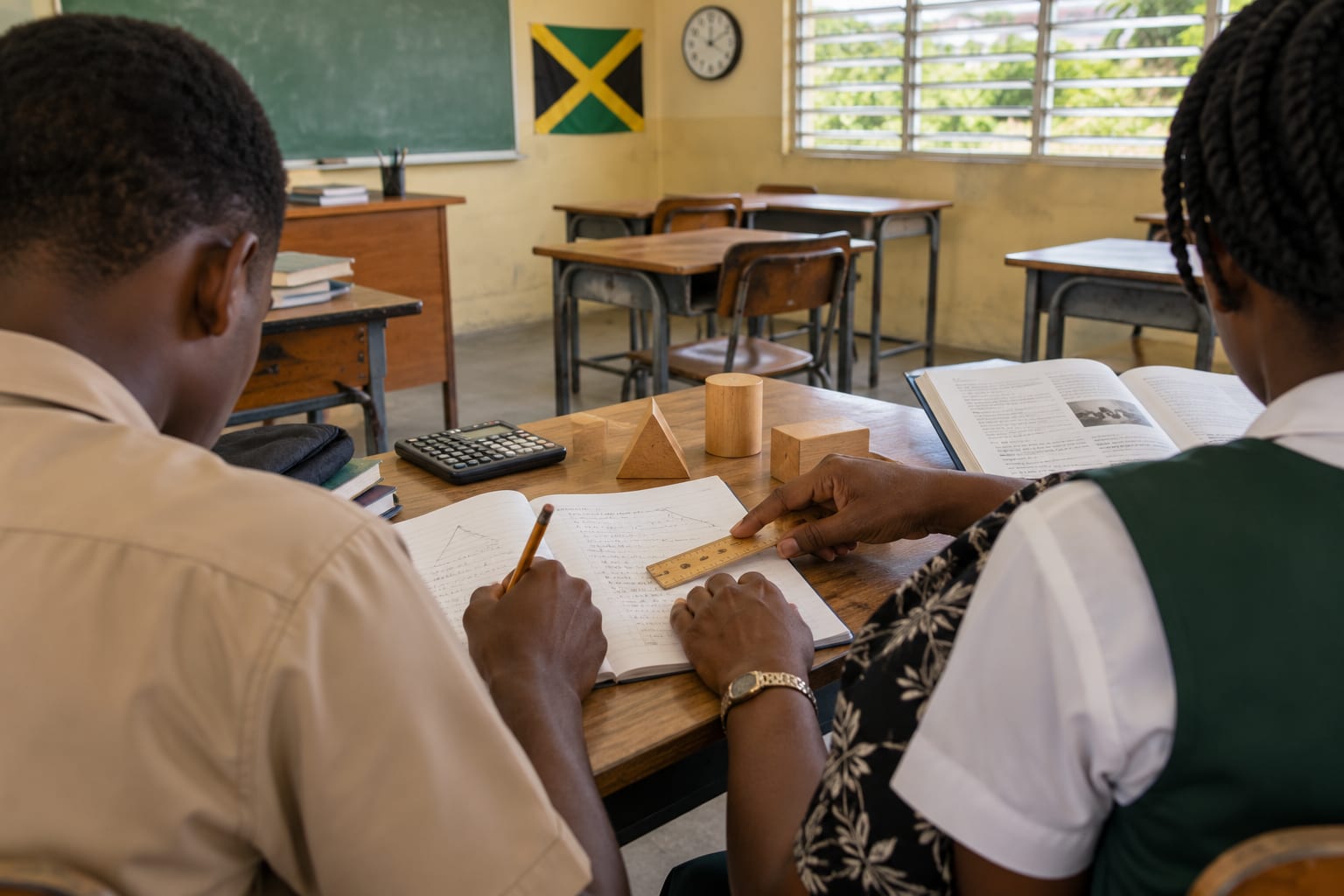
A student can spend eight hours in school and still leave without understanding the material if the lesson is poorly delivered, the class is overcrowded, the student is tired or the teacher does not have the resources needed to support effective teaching.
This is not an argument against Jamaican teachers. Many teachers continue to perform admirably despite difficult circumstances. Rather, it is a reminder that teachers cannot be expected to solve every educational problem simply by spending more hours in the classroom.
The OECD’s international comparisons provide useful context. Its research has found that systems where students spend very long hours in regular classroom lessons do not necessarily produce the strongest academic results. In some cases, students in systems with more moderate amounts of regular classroom instruction perform better than those spending substantially longer periods in lessons.
The implication for Jamaica is not that we should reduce learning time. It is that we should be much more deliberate about how that time is used.
There is certainly a place for additional hours when they are connected to a specific need. A student struggling with mathematics may benefit from an additional period with a qualified teacher. Another student may need intensive reading support. Others may benefit from supervised homework, counselling, sports, the arts or technical and vocational activities.
That is very different from simply extending the regular school day for every student and expecting better results because they are spending more time on the school compound.
The question of how we use additional time is therefore closely connected to another weakness in our system: we often try to correct problems at the secondary level that should have been addressed much earlier.
We need to intervene earlier
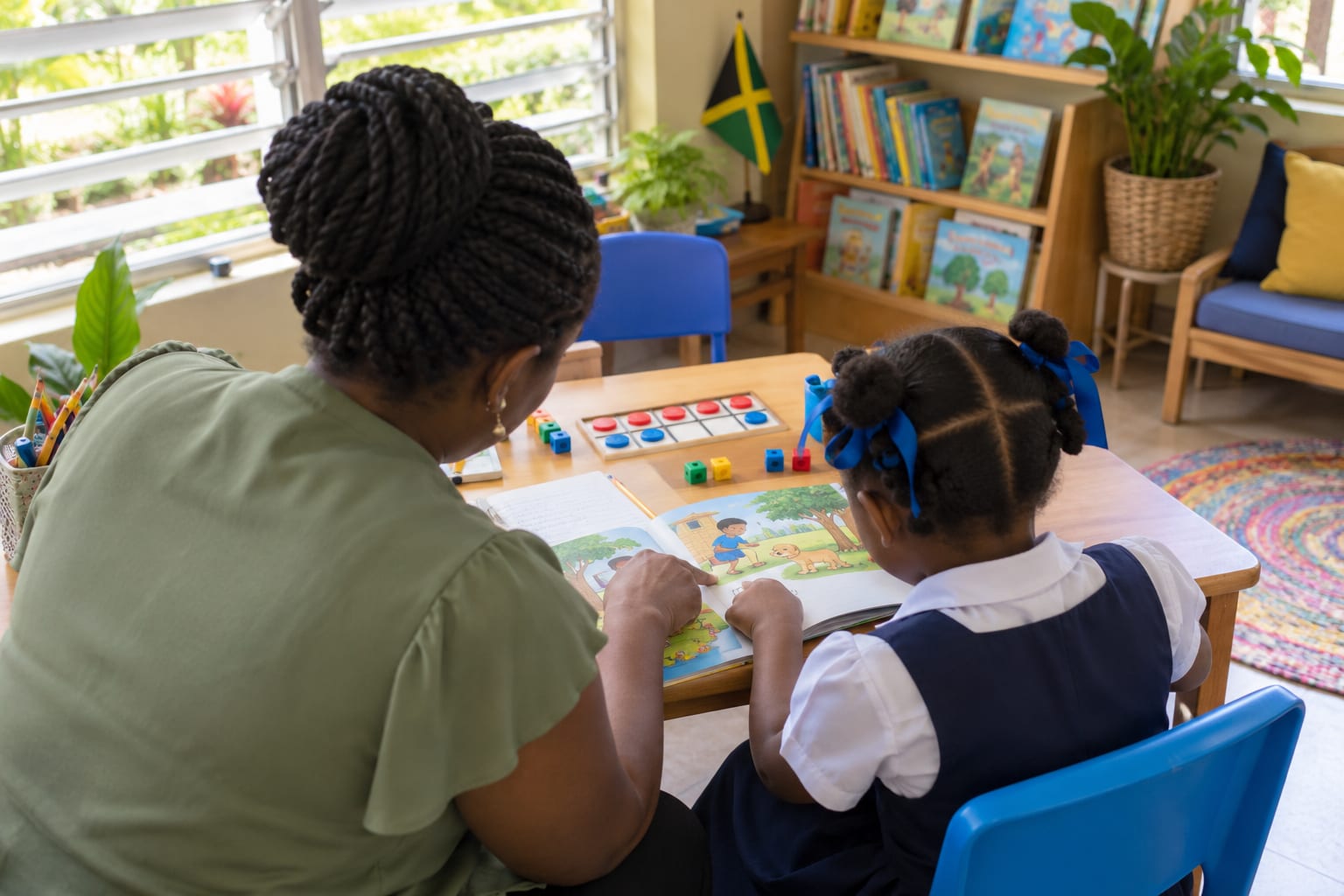
If a child reaches high school unable to read fluently, understand what is being read or perform basic mathematical operations, adding two hours to the secondary school day is unlikely to address the root of the problem.
This is why greater attention must be given to what happens during the early-childhood and primary years. By the time a student reaches secondary school with significant gaps in literacy or numeracy, teachers are often being asked to address those gaps while also preparing the student for a much more demanding curriculum. That places additional pressure on both the student and the teacher.
Our experience in schools also shows why early intervention matters. Students who receive help when difficulties first become apparent have a better opportunity to catch up than those whose challenges are allowed to continue from one grade level to the next. A child who is struggling to read in the early primary years should not have to wait until Grade 6 or secondary school before receiving specialised assistance.

This means that Jamaica needs more trained literacy and numeracy specialists at the early-childhood and primary levels, along with special-education professionals, guidance counsellors and other support personnel who can identify learning difficulties and provide timely assistance.
The principle is straightforward: it is generally more sensible to address a learning gap when it first appears than to wait until it becomes a much larger problem.
This also brings us back to the question of how we measure educational improvement. If students are struggling because they have not mastered foundational skills, the answer should be targeted support that addresses those specific weaknesses rather than simply adding more hours to the school day.
The Ministry of Education and Youth’s reported improvements in Grade 4 literacy and numeracy provide an example of why this approach deserves attention. In 2025, approximately 70 per cent of Grade 4 students achieved mastery in numeracy, while 67 per cent achieved mastery in literacy. More recent results have also shown improvement.
Rather than simply celebrating these numbers, we should examine what contributed to the gains and determine which interventions can be sustained and expanded. Where focused teaching, additional practice and early support are helping students to improve, those approaches should receive greater attention.
The lesson is not that additional time has no value. Rather, additional time should be used to address a clearly identified learning need. A child who needs reading intervention does not necessarily need two more hours of the regular timetable. That child may need a specialist teacher, a smaller instructional group, additional reading practice or another form of targeted support.
This is why the conversation about extending school hours must also become a conversation about what kind of support students actually need.
The condition of our schools matters
Jamaica already spends a significant proportion of national resources on education. UNESCO data indicate that public expenditure on education was approximately 5.5 per cent of gross domestic product in 2024, which falls within the international benchmark of between 4 and 6 per cent often used for education spending.
The issue, therefore, cannot simply be whether money is being spent. We must also ask whether schools are receiving the resources they need and whether those resources are being directed towards the areas that will have the greatest effect on teaching and learning.
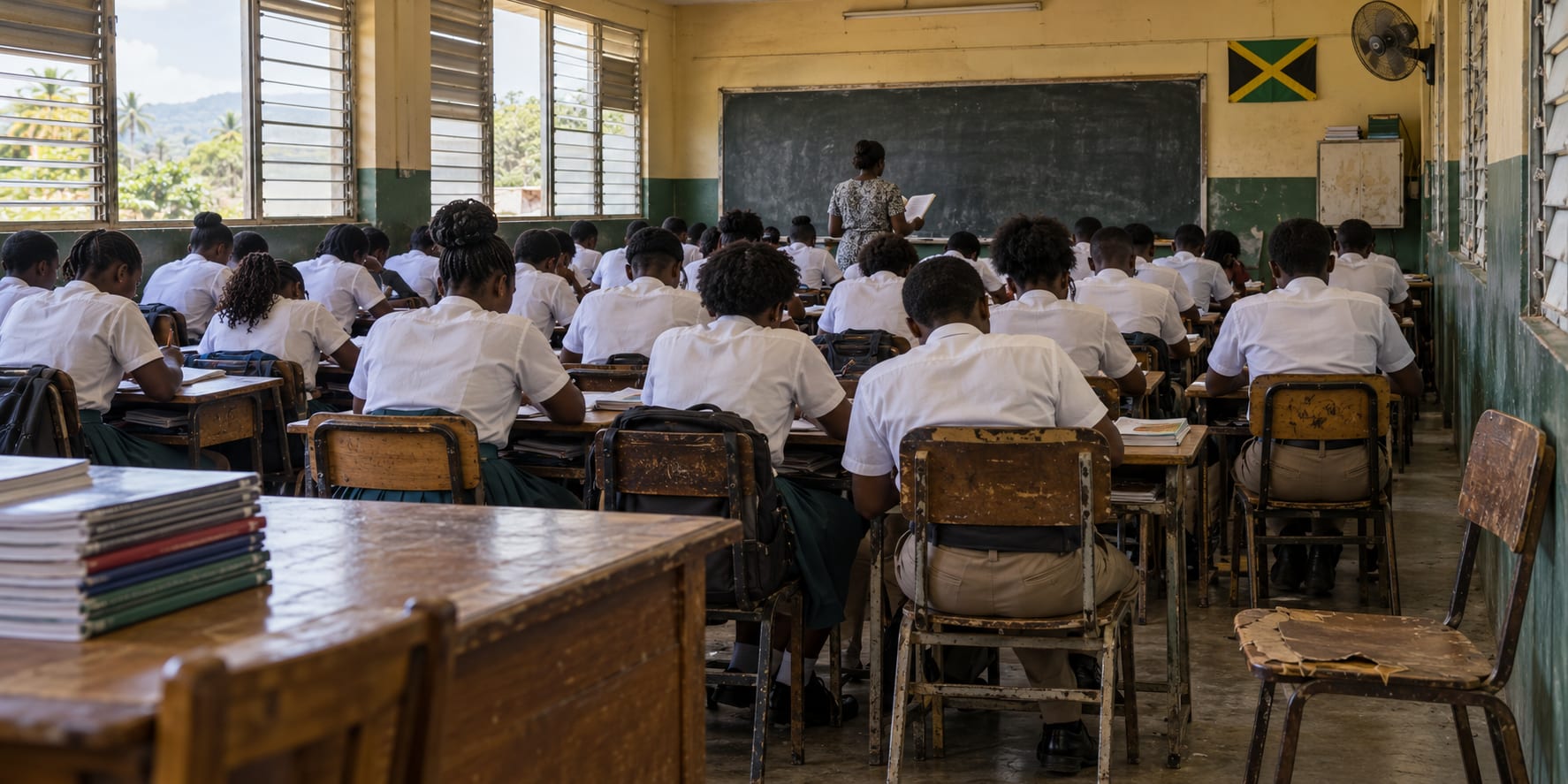
A classroom with 40 or 45 students and one teacher faces different challenges from a classroom with 20 or 25 students. If that classroom also has inadequate furniture, limited technology, poor ventilation, insufficient teaching materials or staffing shortages, simply adding another two hours to the school day does not address the underlying problems.
The same consideration applies to teachers. Additional hours require additional planning, supervision and preparation. If schools are already struggling with staffing and teachers are carrying heavy workloads, a national extension without proper investment could place further pressure on the very people we are depending on to improve educational outcomes.
This is why the conversation about school hours must also become a conversation about the kind of schools we want our children to attend.
We need to modernise the school experience
Education has changed considerably over the last 50 years, but some of our classrooms and teaching practices have not changed at the same pace. Today’s students are preparing for a world that requires communication, problem-solving, creativity, digital skills, collaboration and the ability to learn independently.
Our schools therefore have to provide more than preparation for examinations. They must prepare young people for further education, employment, entrepreneurship, citizenship and life beyond school.
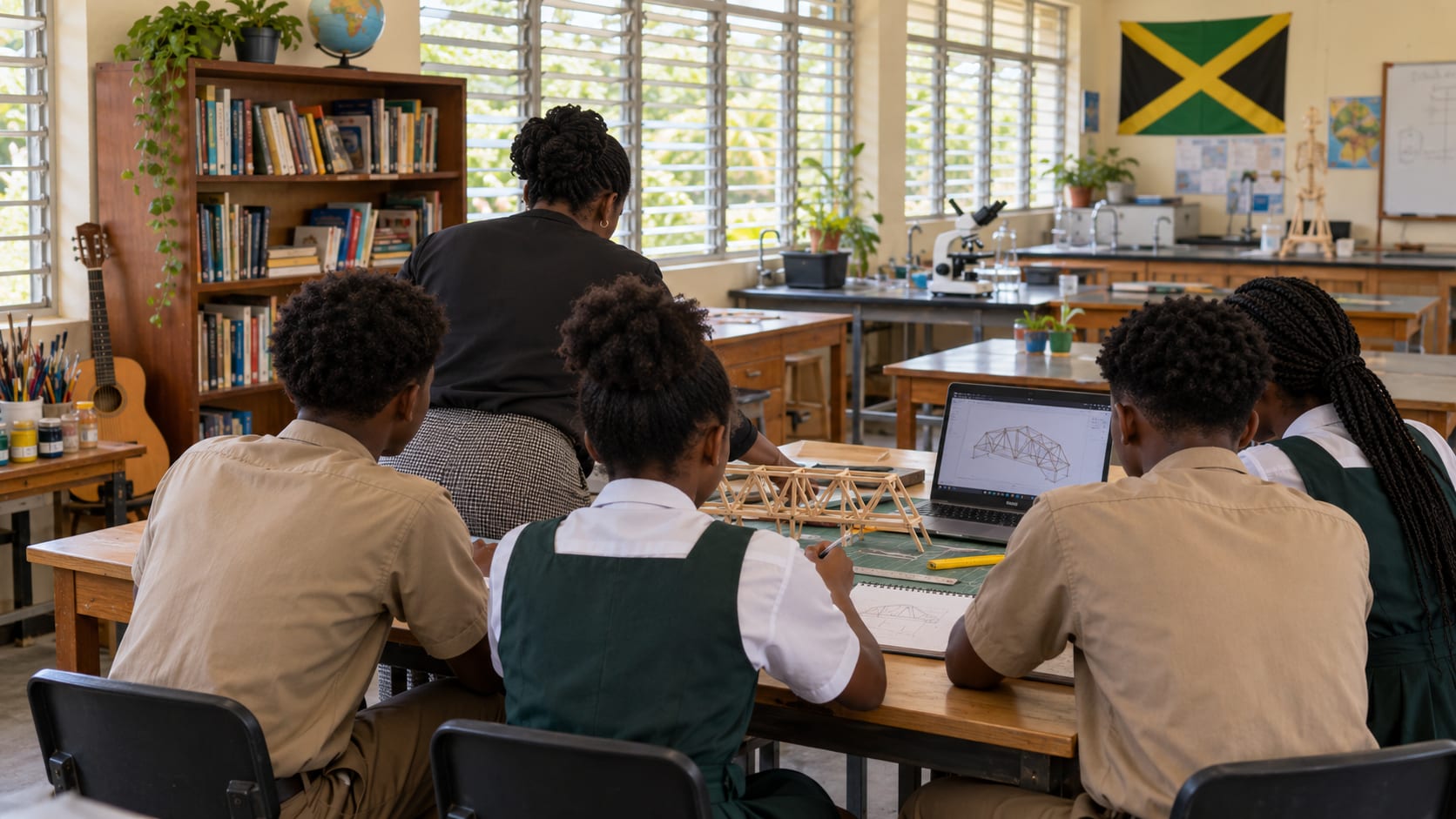
That requires better-equipped classrooms, greater access to technology, stronger technical and vocational programmes, functional libraries and laboratories, counselling services, specialist support and meaningful opportunities in sport, music, the arts, leadership and other areas.
It also requires us to recognise that different students learn in different ways. A national education system should have enough flexibility to provide additional support where it is needed rather than assuming that every child will benefit from exactly the same approach. This is why the proposal for extended school hours needs to be carefully considered.
Additional hours can have a place, but they must have a purpose
There is a reasonable case for additional learning opportunities in some schools and for some students. Schools with significant literacy or numeracy gaps could receive funding for after-school intervention. Students preparing for major examinations could receive additional academic support. Schools in communities where children need safe and structured activities after the regular school day could offer programmes involving homework assistance, sports, counselling and enrichment.
The important point is that these programmes should be targeted, properly funded and evaluated.
Before making an extended school day a national policy, Jamaica should first pilot the approach in selected schools and establish clear measures of success. We should ask whether students are performing better, whether attendance is improving, whether teachers can manage the additional workload, whether students are more engaged and whether the improvement in results justifies the additional cost.
That would allow us to move beyond assumptions and determine what actually works in the Jamaican context.
Jamaica’s education challenges are too important to be reduced to a debate about whether students should spend two more hours at school. We need to look more carefully at what children are learning, how teachers are supported, when learning difficulties are identified, how schools are resourced and whether our teaching methods are keeping pace with the needs of today’s students.
There is no single solution to Jamaica’s education challenges. However, there is a clear need for better early intervention, stronger literacy and numeracy support, more specialists, better-equipped schools, properly supported teachers and a curriculum that balances breadth with mastery.
If additional time is necessary for particular students, let us provide it. But that time should be connected to a clearly identified need and a programme that can demonstrate results. The objective should not simply be to keep children at school for longer. It should be to ensure that the time they spend at school produces better learning.
Jamaica therefore needs to move beyond the idea that extending the school day is, by itself, an education reform. The real work is to improve the quality of teaching, strengthen the foundations of learning and give schools the people, resources and flexibility needed to meet the needs of their students. That is the kind of reform that can move our education system forward.
Ricardo E. Smith, JP is a Senior Educator & Social Scientist with Manchester High School, Board Chairman, Porus Infant, Principal Director, R.Smith Scholars Institute, an Author, and Researcher





Comments