
Build here or leave: Jamaica’s crypto law puts offshore exchanges on the clock

/ Our Today
administrator
Jamaicans who buy and sell cryptocurrency do most of that business on platforms based outside the island.
Under the Virtual Assets Service Providers Bill 2026, which Finance Minister Fayval Williams brought to the House for debate on September 22, those platforms would commit a criminal offence by serving Jamaican customers without a licence from the Financial Services Commission (FSC).
A market that foreign exchanges have served at almost no cost is about to come with a bill attached.
The law applies to any business that handles digital assets for others on a commercial basis, and a firm’s location offers no shelter. Once licensed, a provider would take on the anti-money laundering duties that apply to commercial banks, including verifying customers and reporting suspicious transactions under the Proceeds of Crime Act and related legislation.
The FSC is still finalising the detailed rules that will sit beneath the bill. Those rules will set the real price of staying: how much capital a licensee must hold, whether it must be incorporated in Jamaica, what local staff and governance it needs, and how often it must prove that customer assets are safe.

For a global exchange, capital is rarely the sticking point. The larger expense is building a real presence: a local entity, a board, compliance officers, auditors and the reporting systems a supervised financial institution is expected to run.
Against that cost, each platform will weigh what its Jamaican customers are worth. The island’s crypto market is active but small beside the volumes the largest exchanges handle worldwide. Jamaica’s crypto transaction volume per year was estimated to be US42.10 billion back in 2024.
Large exchanges have walked away from other markets when licensing demands outweighed the revenue on offer, while rivals in the same markets chose to register.
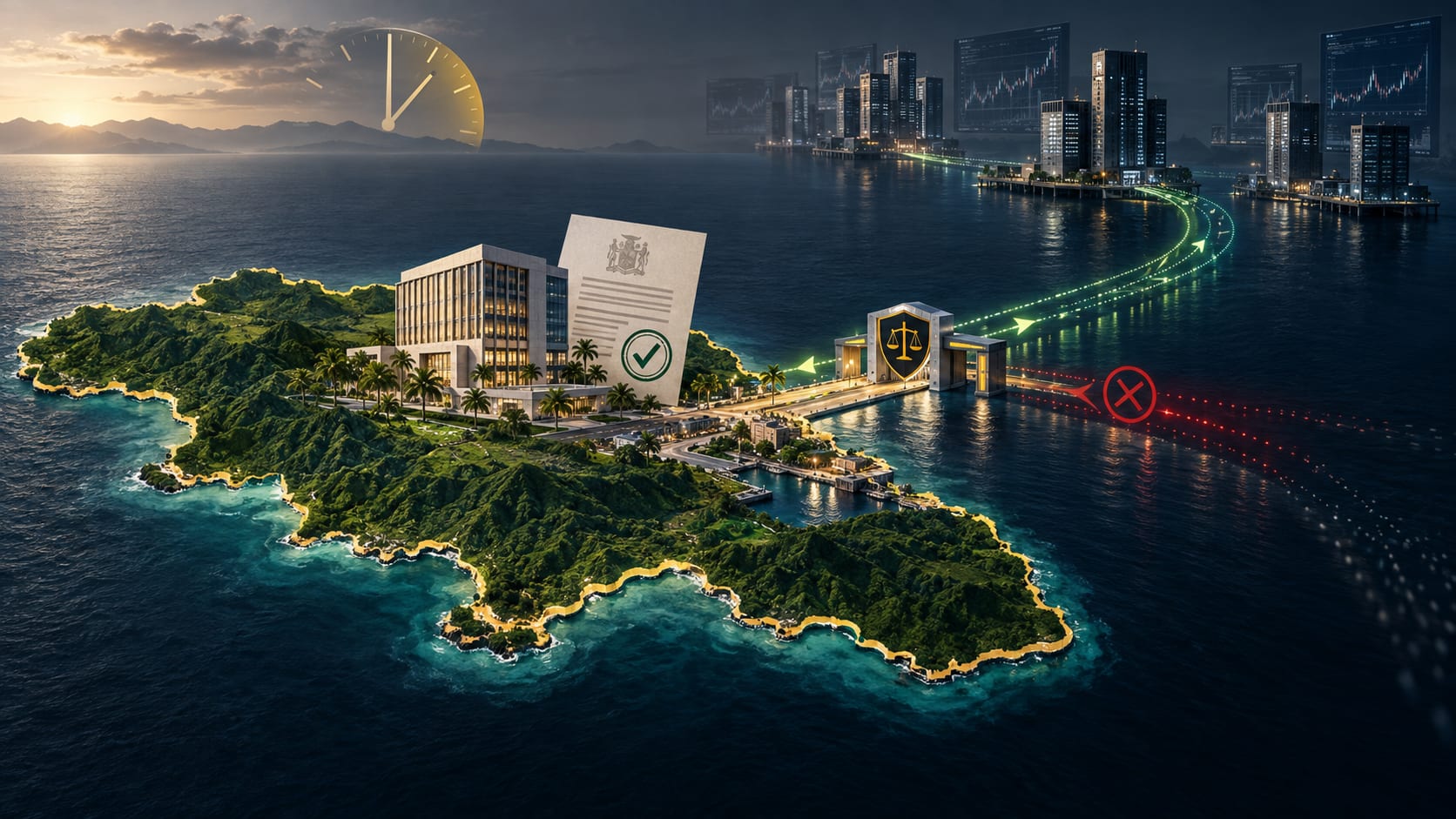
That leaves offshore providers with three choices. They can set up a licensed local operation. They can block Jamaican users and exit. Or they can carry on unlicensed and see whether the FSC can act against a firm with no footprint on the island. Criminal liability makes that last option riskier than before, particularly if local banks come under pressure to stop processing payments to unlicensed platforms.
Domestic firms could gain ground. Securities dealers and fintechs already supervised by the FSC have much of the compliance machinery a licence requires, and fewer foreign competitors would give them room to grow.
Consumers face the opposite risk. If major exchanges pull out, some users may turn to peer-to-peer deals or small unlicensed sites, unprotected trading the minister said the bill was designed to stop.
The bill still has to pass the Senate. After that, the FSC is expected to set a start date and an application window, and that window will show which exchanges plan to stay.





Comments