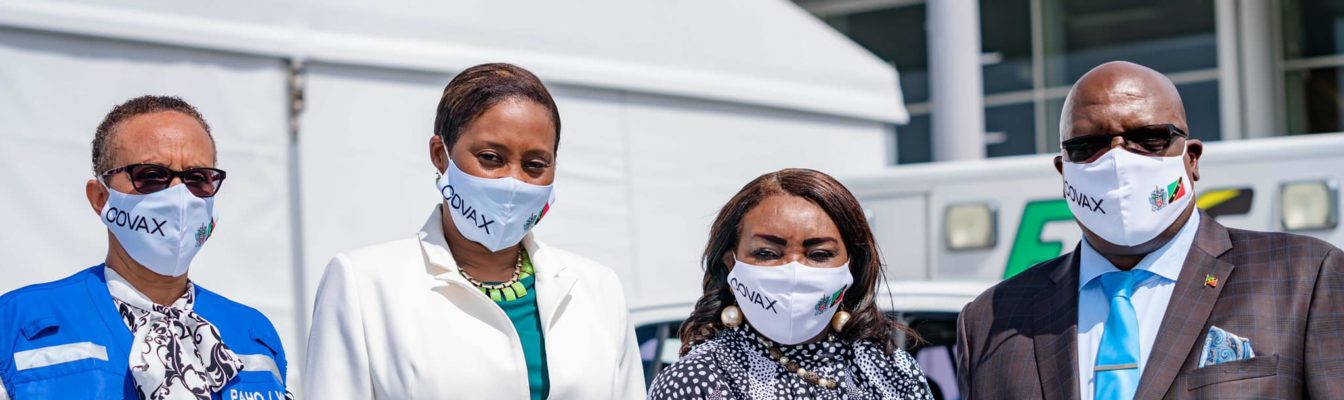
Calls for vaccine equity amplify as COVAX suffers supply shortage

Juanique Tennant / Our Today

COVAX, the global COVID-19 vaccine equity scheme, announced on Monday (May 17) that it will in the coming days deliver its 65 millionth dose of vaccine, noting that this number represents a shortfall in its vaccine supply as earlier vaccine delivery projections suggested it should have at least been at its 170 millionth.
In a statement released by the United Nations Children Emergency Fund (UNICEF) on Monday, the organisation relayed that “repeated warnings of the risks of letting down our guard and leaving low- and middle-income countries without equitable access to vaccines, diagnostics and therapeutics” had been made and it is “concerned that the deadly spike in India is a precursor to what will happen if those warnings remain unheeded”.
Recognising that the situation in India is not unique and COVID-19 cases have been exploding in countries near and far, the statement noted that “the longer the virus continues to spread unchecked, the higher the risk of more deadly or contagious variants emerging”.

In light of this, the statement brought to attention the issue of COVAX’s vaccine supply shortage, noting that “among the global consequences of the situation in India, a global hub for vaccine production, is a severe reduction in vaccines available to COVAX”.
The statement indicated that “soaring domestic demand has meant that 140 million doses intended for distribution to low- and middle-income countries through the end of May cannot be accessed by COVAX, (and) another 50 million doses are likely to be missed in June”.
Given this, the statement emphasised that “the clearest pathway out of this pandemic is a global, equitable distribution of vaccines, diagnostics and therapeutics”, a pathway that is epitomised by the Gavi, WHO-led COVAX facility.

Calling on the G7 leaders who will be meeting next month to discuss a potential emergency stopgap measure, the organisation emphasised that “an immediate collective commitment to pool excess supply and share the burden of responsibility could buttress vulnerable countries against becoming the next global hotspot”.
The statement closed by indicating that “the global vaccination race will (only) be won when member states make sustainable plans to fully fund and supply the COVAX Advance Market Commitment, while supporting the expansion of vaccine manufacturing capacity, including through proactive intellectual property licensing and technological transfer”.




Comments