
Caribbean nations commit to tackle waste management at workshop in Kingston

/ Our Today
administrator
In an effort to address the growing challenges of waste management and environmental sustainability within the Caribbean, a regional training and technical exchange activity took place in Kingston.
This initiative aimed to strengthen waste information systems and enhance the capacity of participating countries to generate accurate waste management statistics.
Local Government Minister Desmond McKenzie opened the workshop saying “Public education has played a key role in the sensitisation of Jamaicans on waste disposal and the risks associated with poor waste management.”
“At the same time, the provision of over 100 trucks to the National Solid Waste Management Authority is helping to keep the streets of Jamaica clean. Through both of these tools, the Ministry of Local Government and [Rural] Development is proving that waste management is high on the country’s agenda,” he added.
The Caribbean region faces unique challenges when it comes to waste management and environmental conservation. As the demand for resources continues to rise, the responsible management of waste becomes increasingly vital. To address these challenges effectively, the Zero Waste in the Caribbean initiative was launched to promote integrated and sustainable waste management in the context of a circular economy in the Caribbean.
The Zero Waste in the Caribbean project is funded by the European Union, in collaboration with CARIFORUM, co-financed by the German cooperation, and implemented by AFD, GIZ, and UNEP, in partnership with the OECS.
EU Ambassador Marianne Van Steen underlined the importance of solid waste management strategies in the Caribbean, stating that, “Small island developing states are facing particular challenges when seeking how to best handle solid waste, because of their limited size and because of their limited waste management capacities. In order to face these challenges, waste data collection and management are key and the sharing of good practices and exchange of experiences during this workshop are essential and extremely valuable.”
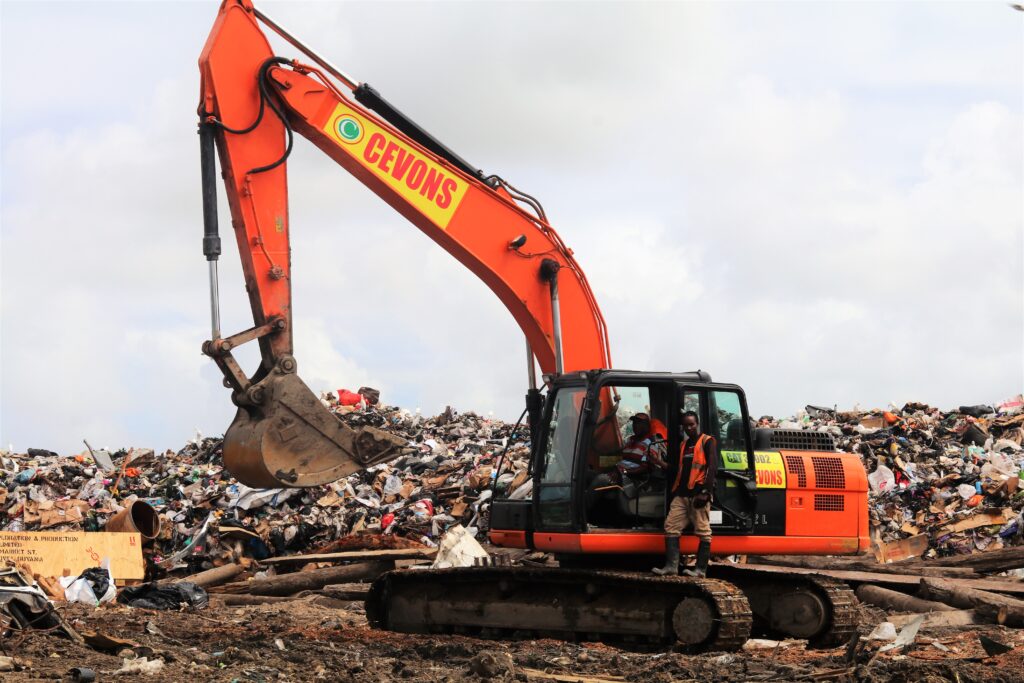
The workshop, which focused on strengthening waste information systems and the capacity to generate waste statistics, included the following key objectives:
- To share good practices and lessons learned in the Caribbean for the improvement of waste data and statistics and associated indicators, especially from the four case study countries of the project.
- Strengthen waste information systems and capacity to deliver waste statistics by facilitating the integration of the Caribbean countries in the Waste and Circular Economy Hub for Latin America and the Caribbean.
- Promote the harmonisation of waste information systems in the Caribbean, strengthening their sustainability and enhancing regional cooperation in this field.
- Prepare draft workplans to improve the availability and reliability of data related to waste management and the circular economy.
- Network with peers, experts, and organizations involved in waste management and environmental conservation, fostering collaboration and information exchange.
The workshop included virtual and in-person sessions and participants will include government officials, environmental professionals, waste management experts, and representatives from relevant organizations and institutions from across the Caribbean region.
This initiative was made possible through collaboration with the EU, CARIFORUM, German Development Cooperation, United Nations Environment Programme (UNEP), German Agency for International Cooperation (GIZ), French Development Agency (AFD), Organisation of Eastern Caribbean States (OECS), and Inter-American Development Bank (IDB), who all committed to supporting sustainable waste management practices in the Caribbean.
As facilitator, the UNEP says it expected the workshop to have a lasting impact on waste management practices and environmental preservation efforts in the region.

Jordi Pon, UNEP programme management officer, declared “Within the Caribbean region there is a need to strengthen waste information systems, in order to guide informed policy development and decision making. By sharing experiences and best practices between the different countries, we can also facilitate a harmonised approach across the region”.



Comments