Dominican Republic’s “decentralisation” push still runs through hotel rooms and beaches

/ Our Today
administrator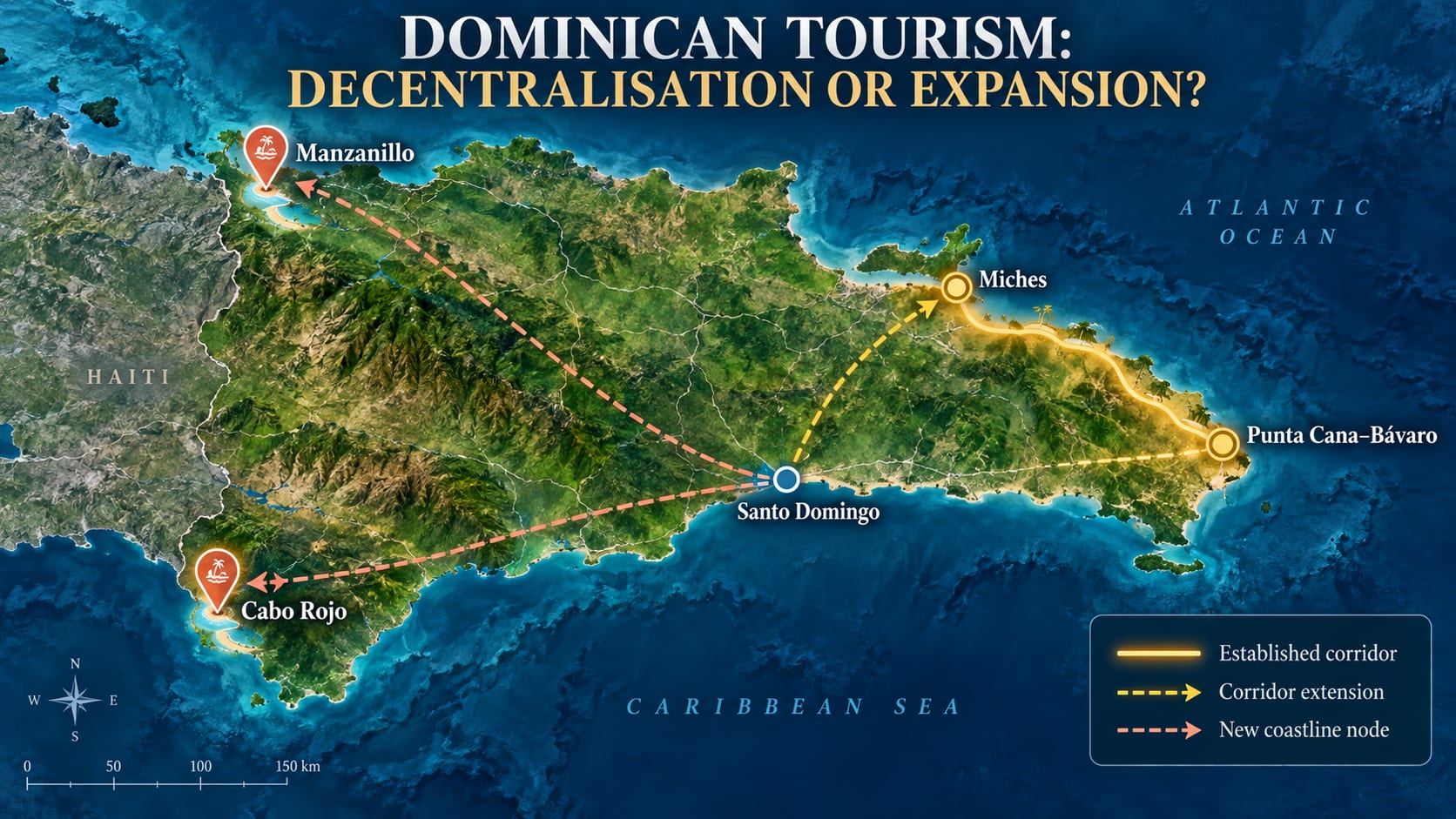
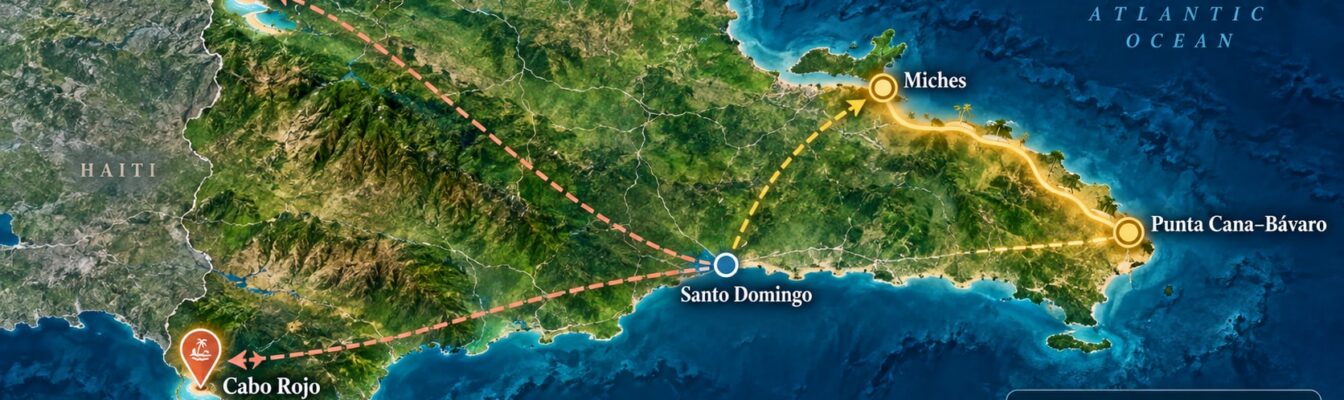
The Dominican government describes Manzanillo, Cabo Rojo and Miches as a coordinated effort to decentralise tourism growth away from Santo Domingo and to establish the Punta Cana-Bávaro corridor. The label fits one of the three. The other two extend the same tourism model to a new coastline.
Manzanillo, in Montecristi province on the northwest border with Haiti, is the outlier. The Inter-American Development Bank has financed a port rehabilitation and expansion program there aimed at agro-industrial exports and free-zone manufacturing rather than visitors, and a separate US$1 billion-plus liquefied natural gas terminal and power plant complex reached financial close earlier this year with backing from a dozen international and regional banks. The stated goals- container capacity, banana exports, industrial parks, energy generation- sit outside tourism entirely. If the government’s regional strategy has a genuine diversification component, this is it.
Cabo Rojo and Miches are a different case. Cabo Rojo, the flagship of the Pedernales tourism master plan, is built around roughly 12,000 planned hotel rooms, an international airport due in 2027, a marina and a cruise terminal already drawing tourist traffic, all financed through an estimated US$2.2 to 3 billion in investment led by hotel brands including Hilton, Marriott and Iberostar. Miches, roughly an hour from Punta Cana International Airport, follows the same sequence that built Punta Cana itself: Club Med arrived first, and Four Seasons, Marriott, Wyndham and Hyatt have since committed more than US$1 billion combined toward over 4,500 rooms. Government officials have described Miches explicitly as the next Punta Cana.
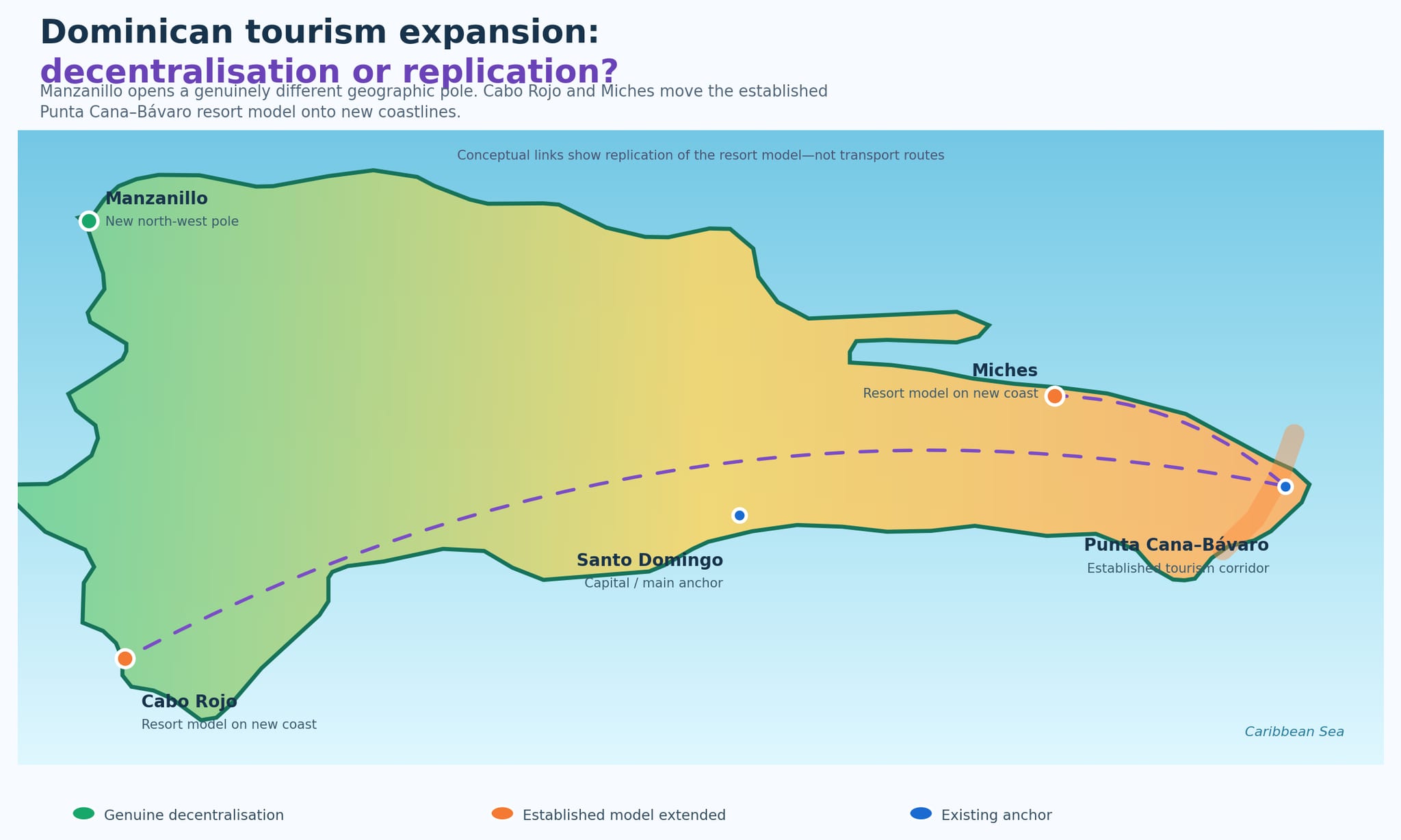
Both projects are coastal, resort-led and dependent on the same all-inclusive and luxury hotel operators driving growth in the country’s existing tourism belt. The economic activity they generate- construction jobs, hospitality employment, ancillary services- mirrors what Punta Cana and Bávaro already produce rather than introducing a distinct sector. Officials at the Pro-Pedernales Trust have themselves framed Cabo Rojo’s ambition as becoming the country’s “second Punta Cana,” a goal that assumes replication rather than diversification.
That distinction matters for how exposed the Dominican economy remains to a single external variable: international arrival volumes. Record tourism and export figures this year reflect strong demand, but concentrating new investment in additional beachfront hotel capacity, even in new provinces, does not reduce the sector’s sensitivity to the same shocks- travel disruptions, regional competition, currency swings in source markets- that would affect Punta Cana. Manzanillo’s port and energy investments, by contrast, connect to trade flows and industrial capacity that move independently of visitor arrivals.




Comments