Mexico’s economy rebounds amid mixed investment outlook

/ Our Today
administrator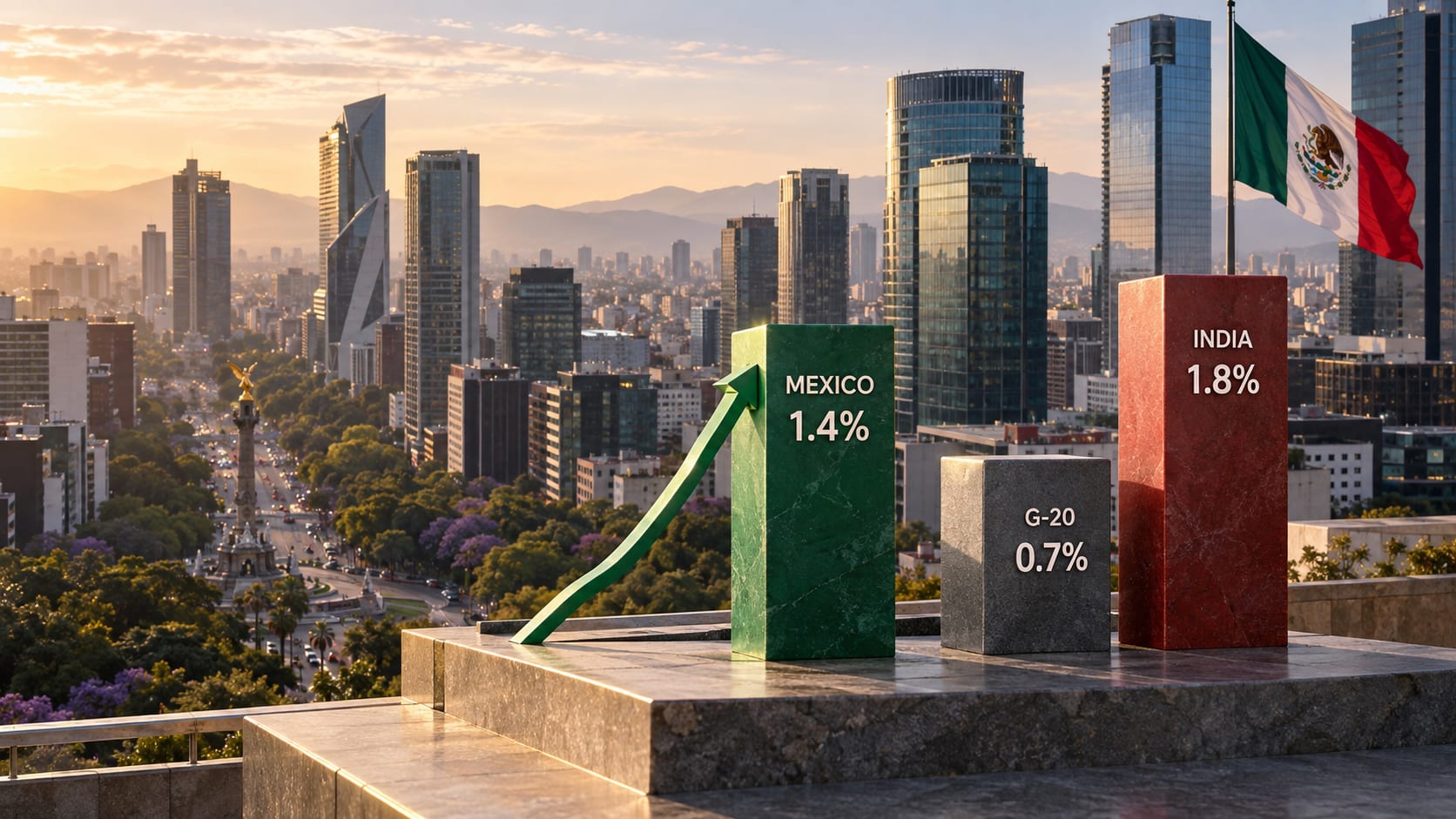
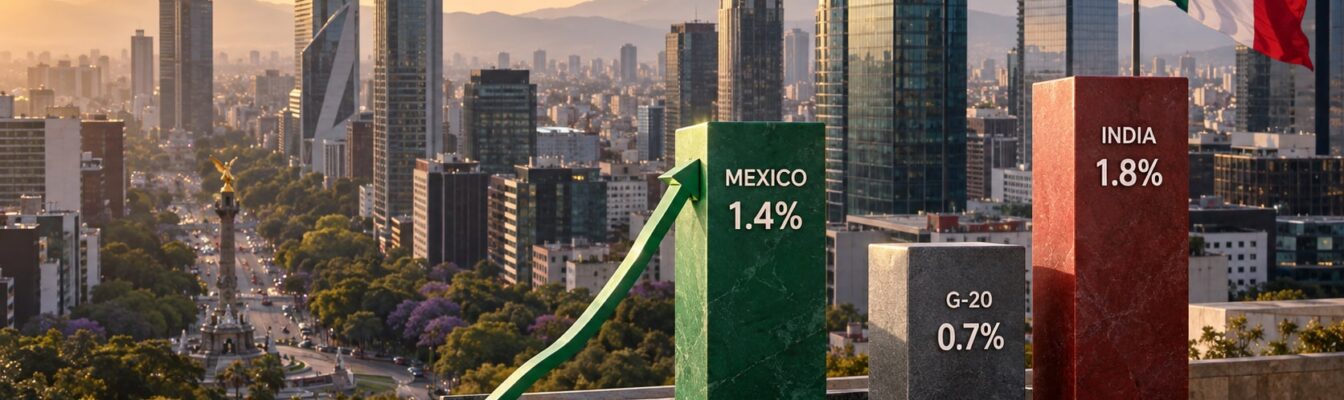
Mexico’s economy rebounded strongly in the second quarter of 2026, expanding by 1.4 per cent and outperforming the 0.7 per cent average recorded across G-20 economies.
The Organisation for Economic Co-operation and Development (OCED) is reporting that based on this data, Mexico is the second-fastest-growing economy in the group, behind India at 1.8 per cent. This latest performance marks a sharp turnaround from the 0.3 per cent contraction recorded in the first quarter.
The improvement came as growth strengthened across several G-20 economies, although performance remained uneven. Indonesia expanded by 1.3 per cent, while Turkey and Canada also recorded stronger quarterly growth.
Saudi Arabia, by contrast, contracted sharply as lower oil production weighed on activity.
Mexico’s resilience on show
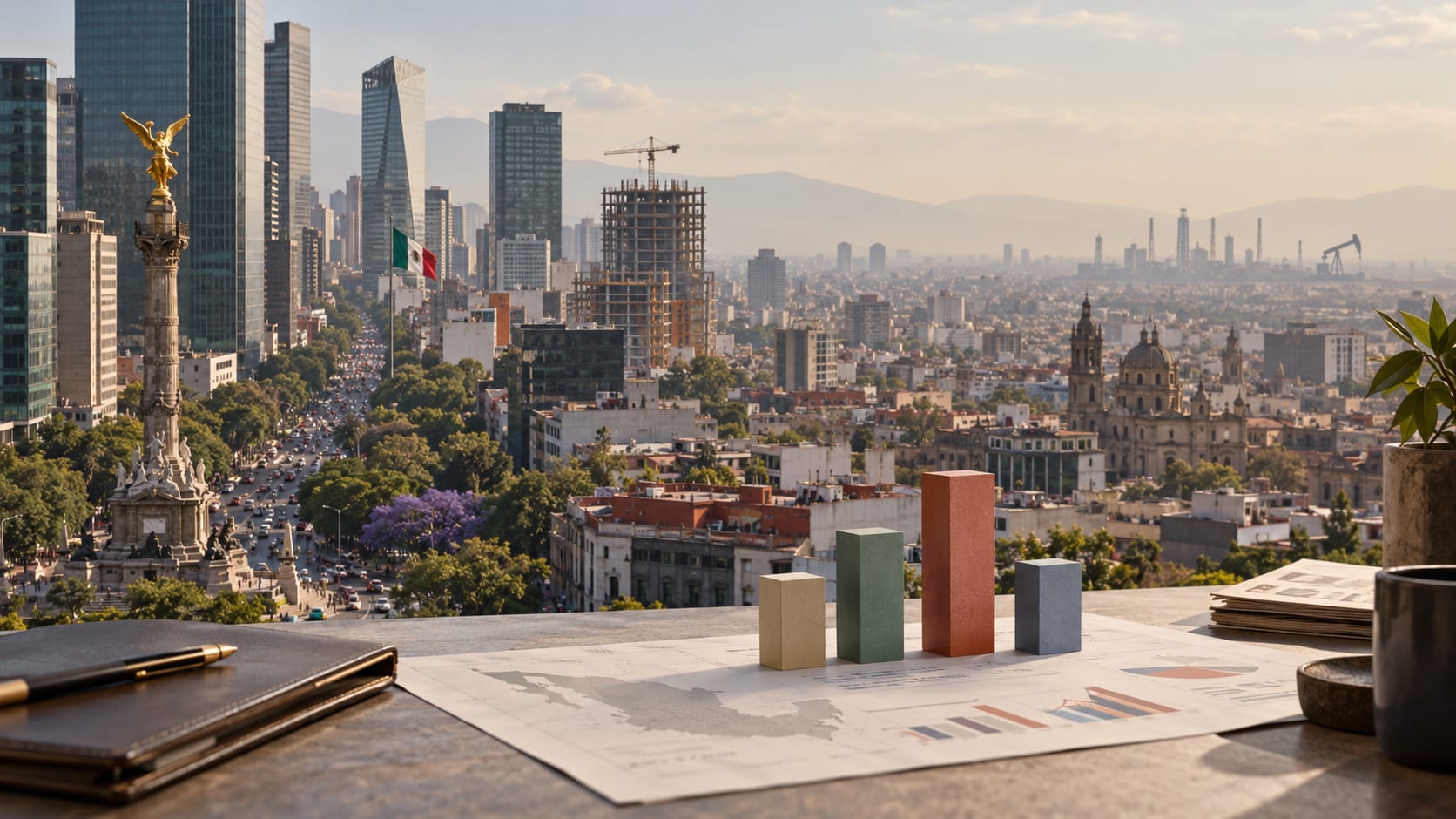
Mexico’s relative resilience also reflects the declining importance of oil to the broader economy. Oil and gas extraction accounted for only 2.2 per cent of GDP last year, down from 5.6 per cent in 2000, reducing the country’s exposure to swings in global energy production.
Petroleum revenues have also become less important to public finances, representing 12.2 per cent of government receipts between January and July compared with 19.6 per cent in 2014. Despite the strong second-quarter performance, there remains considerable disagreement over Mexico’s full-year outlook.
The Ministry of Finance continues to forecast growth of 2.3 per cent in 2026, while other institutions remain considerably more cautious. The World Bank expects growth of 1.3 per cent, Banco de México projects 1.1 per cent, and the OECD has forecast just 0.8 per cent.
The divergence reflects differing views on the strength of domestic demand and investment. Government projections assume continued support from public spending and activity associated with the 2026 FIFA World Cup.
Concerns about weak capital formation
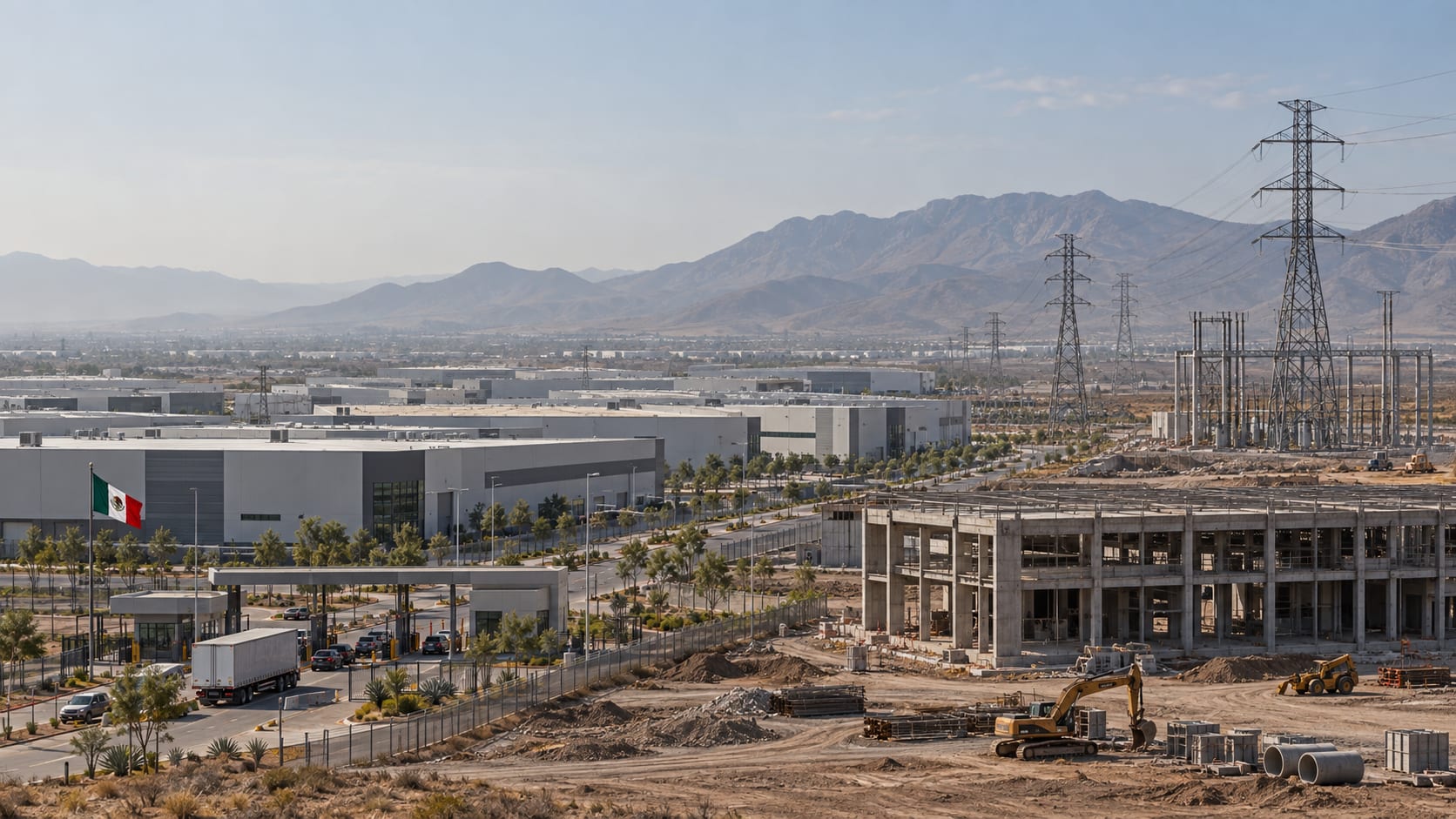
By contrast, private and multilateral forecasters remain concerned about weak capital formation with gross fixed investment having declined for an extended period. At the same time, nearshoring continues to provide an important source of support.
Mexico attracted a record US$23.6 billion in foreign direct investment during the first quarter, with the United States contributing US$10.2 billion. Investment has been concentrated in sectors including automotive manufacturing, financial services, pharmaceuticals, medical devices, digital technology, energy and logistics.
Mexico’s appeal to international investors has also improved, with the country rising to 19th place globally in Kearney’s 2026 FDI Confidence Index. However, strong investment announcements have not yet translated into a broad-based investment cycle, while infrastructure constraints, particularly in electricity transmission and logistics, are becoming increasingly important.
The second-quarter rebound therefore provides evidence of stronger momentum, but uncertainty remains over whether that strength can be sustained. Much will depend on whether nearshoring investment, World Cup-related activity and public spending can offset weak capital formation and infrastructure bottlenecks during the remainder of the year.





Comments