Dr Olivia K. Rose | Capture is not comprehension: In praise of the double-lined exercise book

/ Our Today
administrator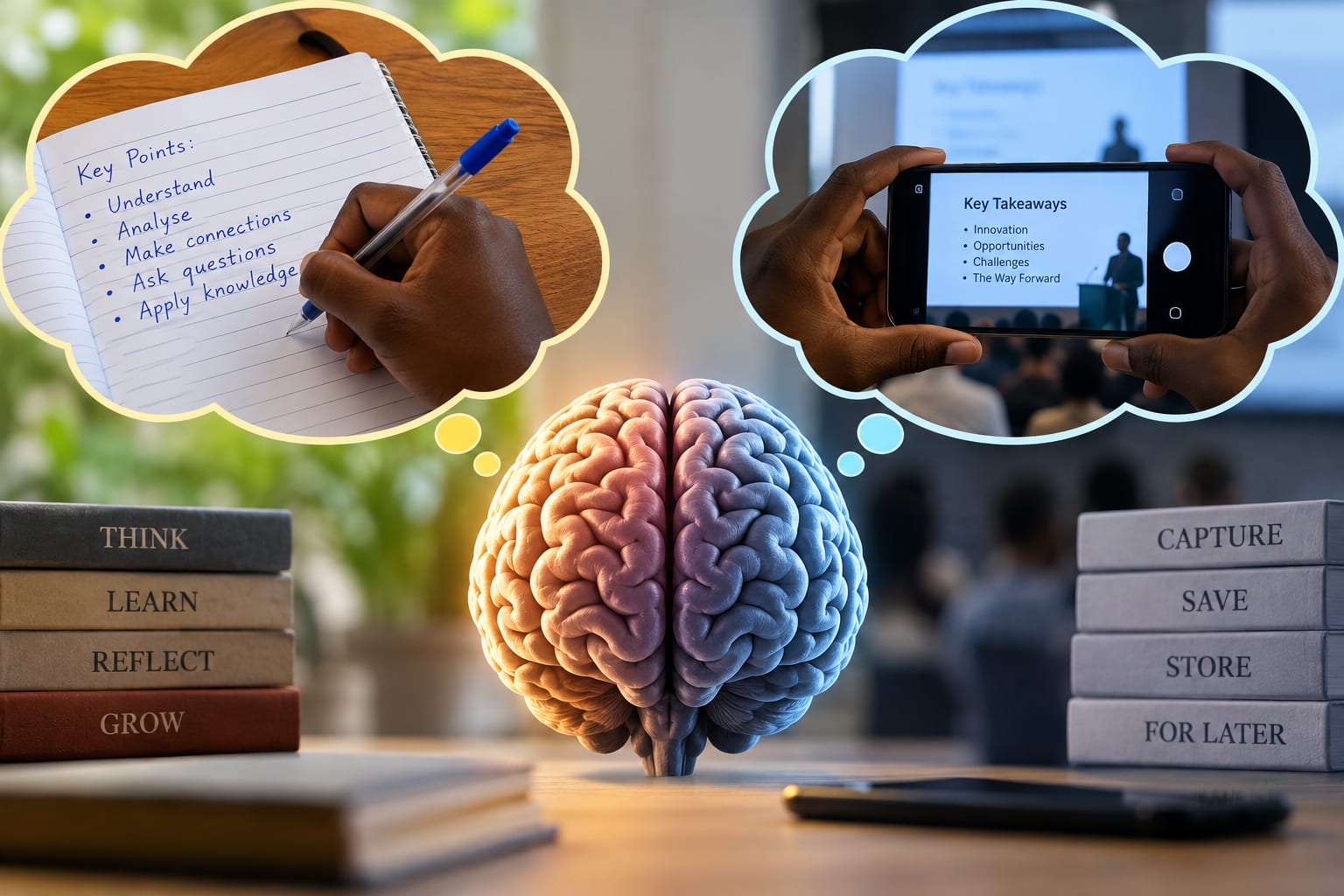
I cannot remember the last time an exercise book made me genuinely happy.
Recently, I walked into a store in Kingston and there it was: a double-lined, or, as some of us will remember it, double-ruled exercise book. I smiled. It brought back fond childhood memories of carefully forming letters between those lines, rubbing out what did not look quite right and trying again. Beyond the nostalgia, however, I felt hopeful. Perhaps there is still room to resuscitate some of the penmanship skills and traditional learning practices that seem to be quietly disappearing as technology becomes more deeply embedded in education.
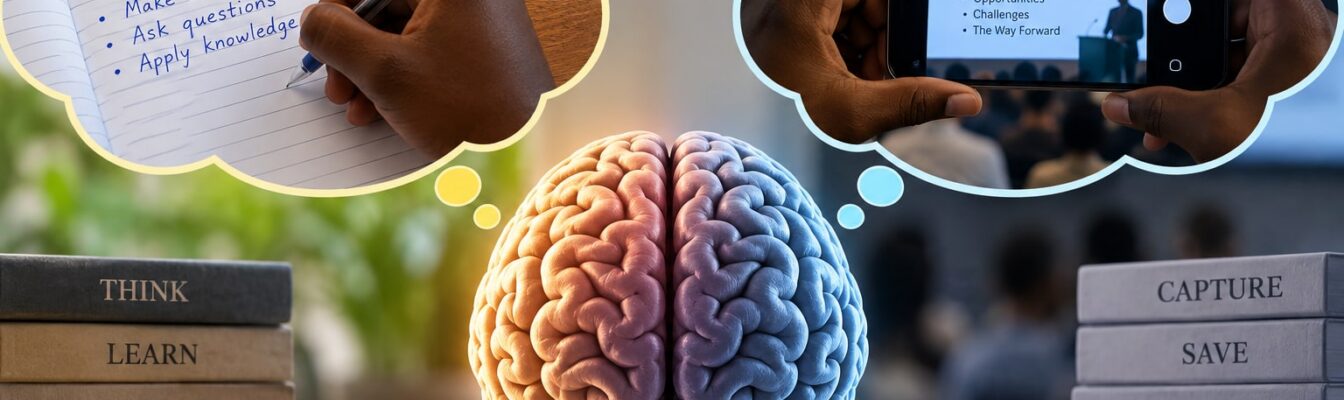
I have been thinking about this for some time because of something I repeatedly observe at conferences, workshops and training sessions. People do not seem to take notes as much as they once did. When I place something important on a presentation slide, participants increasingly reach for their phones rather than a pen. Sometimes comes the familiar request, “Can you please move over a little?” It is not that they cannot see me. I am blocking what they so badly want to capture with one click. I move, the photograph is taken, and the slide disappears into a phone already containing thousands of photographs, screenshots, WhatsApp images and videos. Each time it happens, I wonder whether the person has captured the information or actually learnt from it.
We now have access to more information than at any other point in human history. We photograph slides, save documents, bookmark articles, download books, record lectures and store information in the cloud. Artificial intelligence has moved us further because it can summarise information, identify main points, organise notes, transcribe meetings, structure arguments and produce drafts. These are extraordinary developments, and I am certainly not advocating that we turn our backs on them. My concern is whether, in our enthusiasm for technological convenience, we are paying sufficient attention to what happens cognitively when we engage with information ourselves.

The humble act of taking notes deserves another look. When listening to a teacher, lecturer or presenter, we cannot necessarily write every word. We must determine what is important, select and organise information and, ideally, put some of it into our own words. These actions require engagement rather than simply preserving information for later. Research by Mueller and Oppenheimer (2014) found that students taking notes by hand performed better on conceptual questions in their experiments than laptop note-takers, although later replication work by Urry and colleagues (2021) reminds us that the evidence is more complicated than declaring pens good and computers bad. The important issue is not simply the device, but how actively the learner processes information.
Artificial intelligence makes this question more urgent because it can now perform cognitive tasks that previously required considerable effort. A student can ask AI to summarise a chapter, identify its argument, extract important points, organise an essay and produce a conclusion. Each use may be entirely reasonable when AI supports rather than replaces thinking. The concern arises when so many processes are transferred to technology that we must ask what cognitive work remains for the learner.
Psychologists describe cognitive offloading as using external actions or tools to reduce the mental demands of a task (Risko & Gilbert, 2016). We have always done this through shopping lists, calendars, calculators and GPS. Cognitive offloading is not inherently problematic and often allows us to use our mental resources more efficiently. The educational challenge is deciding which tasks can appropriately be offloaded and which learners still need to practice because performing them contributes to developing the underlying skill.
Our children must be technologically competent, and our schools cannot prepare them for the modern workplace by pretending AI does not exist. Of course we need to teach children how to use AI responsibly, interrogate its outputs, recognise its limitations and employ it to improve productivity and creativity. At the same time, technological competence should not come at the expense of intellectual practices that help children organise their thoughts, express themselves clearly, retrieve information, solve problems and work through difficulty.
Returning to some traditional methods while integrating them intelligently with technology is the case I am making. Children can use tablets and still have exercise books. They can develop keyboard skills while learning to write legibly. Teachers can provide digital resources while asking students to close the screen and explain what they have understood. Students can photograph a complicated diagram while still writing three points explaining what it means. AI can improve a piece of writing after the learner has formulated the central argument independently. The objective is not to preserve old practices because they are old, but to retain those that continue to serve an important educational purpose.
When I think again about that double-ruled exercise book on a shelf in Kingston, I see more than an object from childhood. It reminds me that educational progress does not require us to discard everything that came before. We should use AI confidently, but more importantly, also teach our children to think when it is unavailable. I want them to be competent with a keyboard and with a pen, and able to recognise when technology is supporting their thinking and when it is replacing thinking they need to do for themselves. We can embrace the future without abandoning the practices that help prepare the mind for it.
Capture is not comprehension.
Dr Olivia K. Rose is a Sport and Performance Psychologist






Comments