Elaborate plans for education system unveiled for Easter term

/ Our Today
administrator
Durrant Pate/Contributor
The current Easter academic term of the education system will see the manifestation of some elaborate and upgraded initiatives by the Jamaican Government.
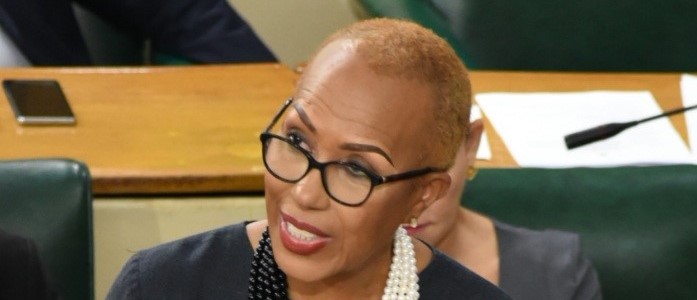
Education Minister Fayval Williams who made the announcement in a statement to parliament this afternoon details that some of these initiatives will fall under the Transforming Education for National Development (TREND) project as well as increased safety and security at schools.
As part of the initiatives unveiled by the minister, there will be more lab tops for teachers, greater internet connectivity among schools, increased school transportation and the roll out of behavioral therapy initiatives.
Minister Williams tells Parliament, “Madam Speaker, this term will see intense preparation for exit and external examinations that include the Primary Exit Profile (PEP), Caribbean Secondary Education Certificate (CSEC), City & Guilds, National Council on Technical and Vocational Education and Training (NCTVET) and Caribbean Advanced Proficiency Education (CAPE) exams. The dates for these examinations are set and schools have been made aware.”
More CCTV cameras for schools
In terms of school safety and security, Williams points to her ministry’s latest survey, which was done in July 2023, showing 154 schools equipped with a total of 1,955 cameras.

“We are preparing the procurement to enable system wide installations and coordination of the security cameras across the education system. This year an additional eight schools have benefited from J$15 million in grants to procure CCTV cameras that will improve safety and security at their schools,” the minister explains in the House of Representatives.
She advised parliamentarians that the Education Ministry is ramping up restorative practices in schools along with conflict resolution.
Approximately 3,600 participants across 120 schools will benefit from this training.
Turning to transportation, Minister Williams reported that a team from her ministry is continuing the dialogue with the Transport Ministry to develop an expanded rural transportation programme.
This system being contemplated will benefit more than the current 7,500 students and is slated to cost J$390M annually.
Regarding behaviour therapy initiatives, the education minister discloses that “150 students across 10 secondary schools will benefit from cognitive behaviour therapy (CBT) training made possible by USAID – Positive Pathways to Guidance Counsellors & Social Workers within the targeted schools. CBT training raises awareness of depression, anxiety, personality disorders and other socio-emotional issues.”
LEAP rolled out in more schools
She shares that that the Literacy Education Acceleration Programme (LEAP) will be provided to six additional high schools and 10 primary schools that will benefit from creative language based learning (CLBL) through the support of the British High Commission.
The results from LEAP thus far shows that 60 per cent of the targeted groups improved at least one grade level, while 29 per cent increased 2+ grade levels and 10 per cent increased 3+ grade levels.
Williams reports that “500 medium and high-risk students from 34 schools under the Inter-Ministerial School Support Strategy, a partnership with the Ministry of National Security, will continue to benefit from targeted interventions: psychosocial support, case management services and behaviour change intervention programmes. This is in tandem with the ongoing efforts to complete the safe school policy with the support of UNICEF.”

More laptops for teachers
She had good news for teachers saying, “I am pleased to share that all remaining teachers and lecturers are expected to receive their laptops this term. There will be more smart/electronic whiteboards, more multimedia projectors and more computer labs in primary and secondary schools that will serve as the basis for the development of critical skills for the digital age. ICT is a major pillar as we transform education for national development.”
The minister expresses her delighted to learn recently the results of a psychometric assessment of those students, who registered for the LIFT programme. In the area of digital literacy simulation and verbal reasoning, the averages were 82 per cent and 79 per cent respectively.




Comments