
Guyana Development Bank to open October 5 with US$100m million targeting small businesses

/ Our Today
administrator
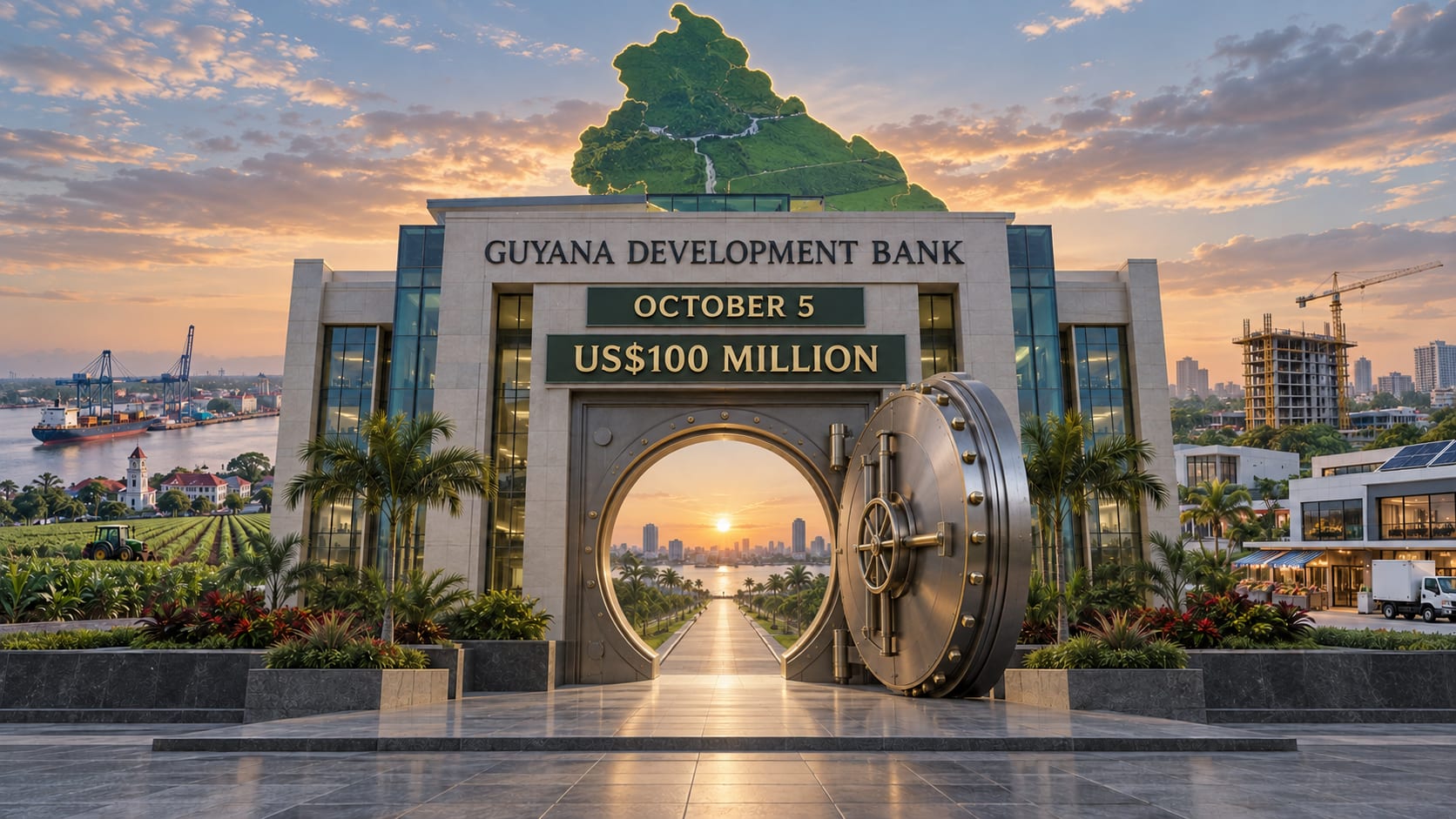
Guyana will launch its long-awaited Development Bank on October 5 with US$100 million in initial capital, President Irfaan Ali said Sunday, positioning the new institution as a financing channel built specifically for small and micro enterprises shut out of conventional bank lending.
Ali outlined the plan during a meeting with senior bankers, private-sector representatives, entrepreneurs and community advocates, according to the Department of Public Information. Eligible borrowers will be able to access financing of up to G$3 million, including loans carrying no interest and no collateral requirement. “This is not a grant. This is your opportunity to earn. This is your opportunity to pay back. This is an opportunity to build your credit,” Ali said.
The bank’s mandate extends past lending. Ali said applicants will get help refining business ideas, preparing proposals, accessing technical expertise and connecting with government programs and existing markets, alongside mentorship support. Target sectors include agriculture, agro-processing, tourism, manufacturing, services and technology, with a particular focus on entrepreneurs in hinterland and riverine communities.
Under a planned co-financing arrangement, borrowers who perform well with the GDB could later access up to G$7 million in additional financing from commercial banks at preferential rates, extending their access to capital beyond the development bank’s own ceiling. Ali described the institution as complementary to, not competitive with, commercial lenders. “The whole intention is to use this opportunity to build something that is long-lasting, strategic, strong, and of course, is not in competition at all with the commercial banks. This is really to unlock more financing,” he said.
A recurring theme in Ali’s remarks was consolidation: helping small, fragmented operators pool resources into larger, more efficient enterprises. He pointed to agriculture as an example, where groups of farmers, single mothers and young entrepreneurs could combine to access modern infrastructure and technical assistance and lift production. Opportunities flagged during the discussions included community-based tourism, food processing, poultry production, dragon fruit farming, eco-lodges and packaged Guyanese food products aimed at domestic, regional and international markets.
Ali also pressed the financial literacy point, arguing entrepreneurs need the skills to manage income responsibly once their businesses start generating profit, not just access to capital. “It’s economic transformation. Financial empowerment. It’s about widening the depth of income, adding more disposable income in your pocket, helping in the diversification of our economy and building the grassroots aspect of the economy stronger,” he said.
Ali said the model depends on cooperation among commercial banks, established businesses, mentors, technical professionals and community leaders. Whether that collaboration holds, and whether uptake matches the ambition, will only become clear once the bank opens its doors on October 5.
The GDB represents one of the more concrete mechanisms yet for channelling Guyana’s oil-driven fiscal windfall into small business credit access, a gap regional lenders have flagged repeatedly as commercial banks favour larger, established borrowers.


Comments