
JSE conglomerates staying ahead through diversification

/ Our Today
administrator
They are becoming more deliberate about what to own and where to invest
Durrant Pate/Contributor
The Jamaica Stock Exchange (JSE) conglomerates have spent the first half of 2026 navigating choppy waters but have remained ahead of the game through diversification.
While being hit by Hurricane Melissa’s aftereffects and weaker consumer confidence, along with rising costs from the surge in global energy prices and a lower share of profits from associates, these conglomerates have managed to stay afloat. The latest results from JSE conglomerates like Massy Holdings, Pan Jamaica Group (PJAM), GraceKennedy (GK) and Jamaica Producers Group (JP) show that diversification helped to keep topline moving.
Market analysts contend that the biggest challenge faced by these companies post-Melissa has been turning their top-line resilience into stronger earnings. As Melissa’s fallout and other external shocks disrupt the conversion of revenues to earnings, the focus is shifting from simply weathering the storms of 2026 to directing capital where it can generate the strongest returns.

Turning diversification into sustainable earnings growth
NCB Capital Market in its latest market guide released last week, examined the June-quarter earnings for these JSE conglomerates, highlighting its revelation about the sector’s ability to turn diversification into sustainable earnings growth. The assessment showed a gap between revenue resilience and earnings conversion.
For Massy, revenues from continuing operations rose 5.6% to TT$4.14 billion. Topline growth was supported by its diversified portfolio, particularly its Motors & Machines operations, where Colombia remained an important growth market.
Improving retail activity in Guyana, Trinidad and Tobago and resilient performance across the Organisation of Eastern Caribbean States also contributed to this growth. However, earnings declined 37.7% to
TT$94.89 million, constrained by higher transformation-related costs toward technology and controls, and the impact of Hurricane Melissa on its Jamaican operations.

GK maintained positive topline momentum with Q2 revenues inching by a modest 1.8% to J$45.61 million. This reflected continued growth across its international Food operations, including stronger distribution of Grace-branded products in the U.S. and solid performances in the U.K. and Canada.
GK Revenues from Insurance and Banking & Investments also increased, though Money Services recorded a modest decline. Unlike its peers, GK converted its modest revenue growth to an 18.0% earnings growth totalling J$2.39 billion, supported by cost discipline and improved performance across key business segments.
PJAM was the exception at the top line with Q2 revenues largely flat at J$11.66 billion (-0.03%). Its Speciality Foods segment continued to benefit from higher volumes at its European juice operations, and Global Services saw increased domestic cargo movements at Kingston Wharves.
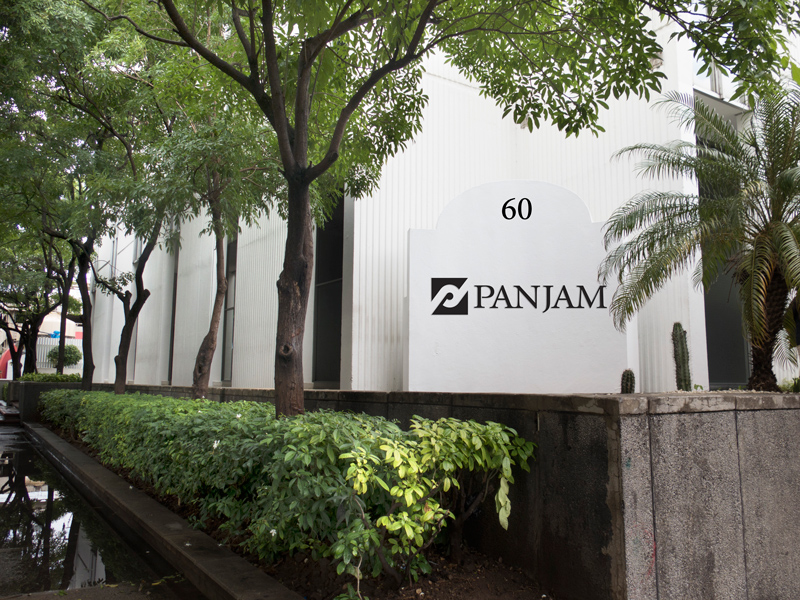
However, these gains were tempered by relatively stable revenues in Property & Infrastructure and lower interest and investment income. However, earnings were markedly weaker (50.4%), reflecting higher cost of sales, lower contributions from associates3 and joint ventures, as well as weaker investment income.
JP, which has a 34.5% stake in PJAM, saw total revenues increasing 13.3% year-on-year to J$43.67 million. Revenue growth was supported by its commercial property portfolio (+10.2%) and higher net investment income (+25.3%).
However, earnings were constrained by a 50.9% decline in share of profits from PJAM, notwithstanding lower operating costs (-4.3%). This drove consolidated net profit down 52.5% to J$316.52 million.
Divergence in earnings
The divergence in earnings was reflected in the share-price movements, while valuation multiples remained more reflective of growth prospects. GK’s share price has risen 4.3% to J$75.974 since it released its financials, as stronger earnings buoyed investor sentiment.

In contrast, weaker earnings have weighed on JP and PJAM, with their share prices falling 18.4% and 10.8%, respectively, since their financial releases. Massy has been comparatively resilient despite its earnings dip with its stock declining by a modest 3.4%.
GK trades at 10.17x trailing earnings and 0.79x price-to-book (P/B). JP trades at 13.30x Price-to-Earnings (P/E) Ratio and 0.49x Price-to-Book (P/B) Ratio, while PJAM commands the highest P/E in the group at 16.41x, indicating that its valuation remains relatively elevated, despite recent earnings pressure.
Massy, meanwhile, trades at lower P/E and P/B multiples of 10.54x and 0.72x, respectively. Notably, some of these valuation multiples are below the sector’s P/E and P/B averages of 11.60x and 1.75x noted 5 years ago.
More deliberate in location investment
It has been observed that JSE’s conglomerates are becoming more deliberate about what they own and where they invest, while some macroeconomic pressures are easing. Massy’s decision in 2025 to dispose of its Jamaican distribution business as one of the clearest examples of this shift.
The sale supports the company’s strategy of concentrating capital in businesses where it believes it can achieve more attractive long-term returns, despite the TT$109.7 million accounting loss recognised at its disposal in March 2026. PJAM is taking a similar approach with management increasingly focused on businesses that operate at scale or have the potential to do so while maintaining market leadership.

Its recent Q2 acquisitions of Jamaica Trading Services and West Indies Freight expand its logistics platform. Further opportunities are also being pursued across logistics, European juices, and strategic additions to its property portfolio.
JP is also looking beyond its traditional operating businesses to unlock value from its asset base, with efforts to develop its property portfolio and diversify its tenant base, alongside the recent acquisition of an additional warehouse property in Kingston. GK’s strategy has taken a somewhat different route, with continued geographic expansion, brand investment and digitalisation providing avenues for organic growth.
Notably, its expansion of GK One into Guyana and the Cayman Islands is extending the group’s geographic reach. The rollout of digital banking solutions at First Global and insurance capabilities out of Jamaica is also expanding its existing platforms through technology; related risks also remain a concern, with the potential for natural disasters and the Super El Niño forecast for 2026.
For conglomerates, these could disrupt agricultural output at JP/PJAM, raise input and distribution costs for GK and Massy, and disrupt logistics and investment.






Comments