Partial buyback, full consequences: What prorated take-up would mean for Jamaica’s debt ladder

/ Our Today
administrator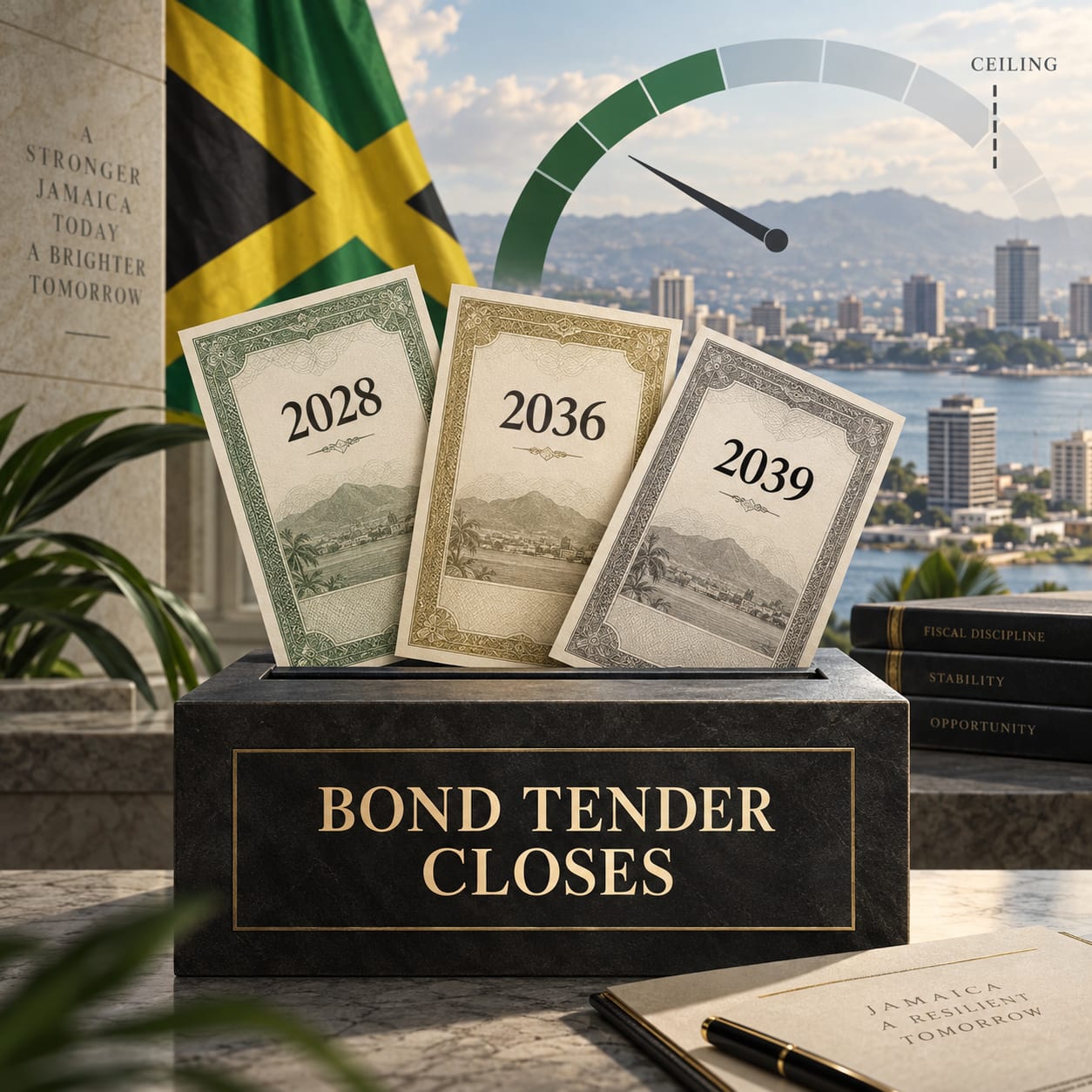
Jamaica’s tender offer for up to US$2.33 billion of its 2028, 2036 and 2039 bonds closed today, but the government has never suggested it expects full participation.
With roughly US$1 billion in new borrowing capacity behind the deal, and much of that earmarked for the buyback rather than the general budget, a partial result is the more likely outcome, and it is worth working through what that would mean for Jamaica’s debt schedule.
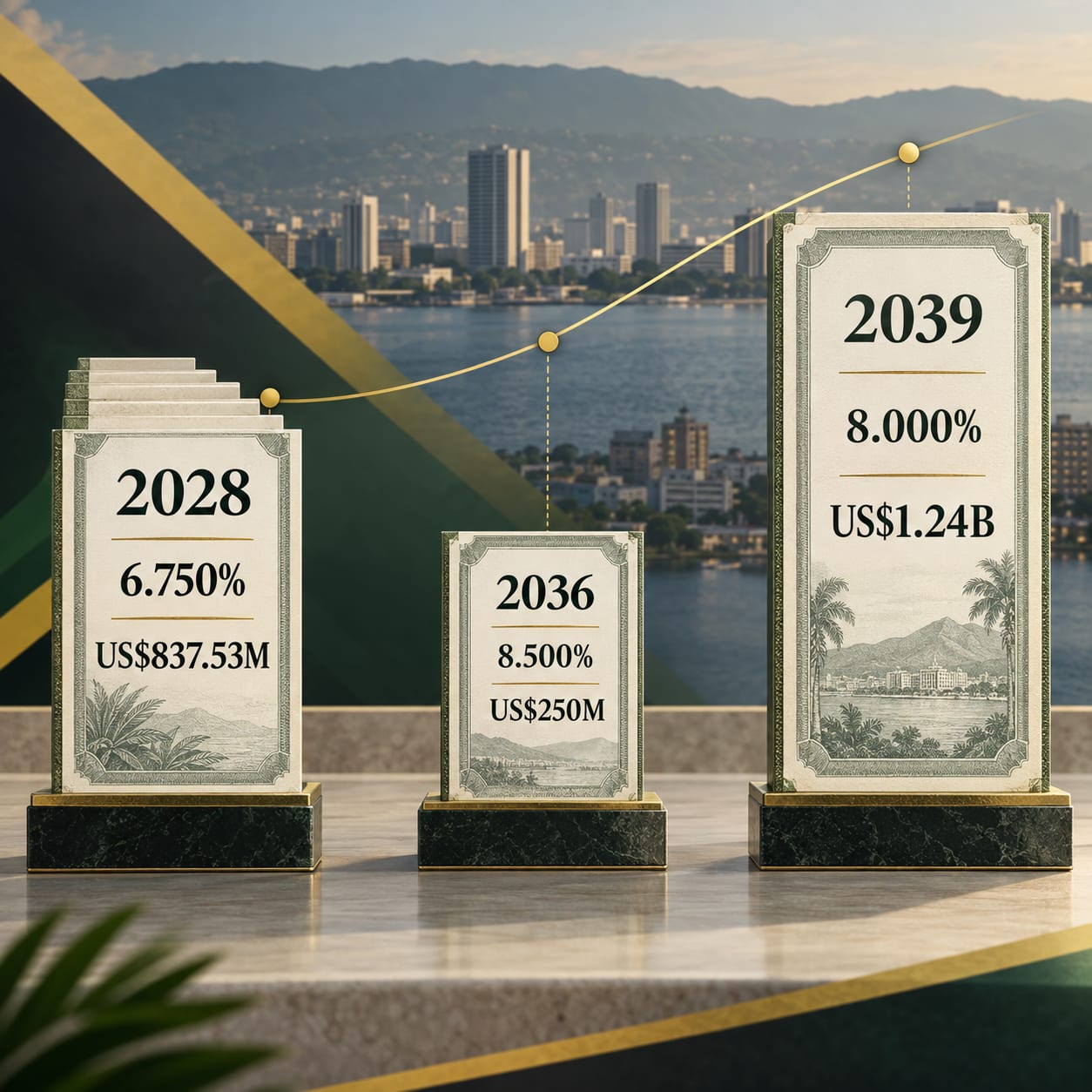
The three bonds being targeted sit at different points on the curve. The 6.750 per cent notes due 2028 currently have US$837.53 million outstanding, reflecting an amortisation schedule that has already begun paying down principal. The 8.500 per cent notes due 2036 have US$250 million outstanding, the smallest of the three series. The 8.000 per cent notes due 2039, the largest slice at US$1.24 billion outstanding, carry the highest coupon of the group.
Jamaica has reserved the right to prorate acceptances unfairly, in the ordinary sense, if total tendered value exceeds what it is willing to pay: it can select which series to prioritise rather than applying a single uniform cut across all three. That discretion matters because retiring 2028 debt does something different to the maturity ladder than retiring 2039 debt.
The 2028 notes are the nearest-dated obligation in the group, due in less than two years. Buying back a meaningful chunk of that series would ease the refinancing hump investors watch most closely, the point where a large bullet or amortisation payment falls due and the government must either have cash on hand or return to the market under whatever conditions prevail at the time. Leaving a large share of the 2028 notes outstanding, by contrast, keeps that near-term obligation largely intact and simply adds a new bond alongside it rather than replacing it.
There is a precedent for how these operations tend to land. In October 2023, Jamaica ran a similar liability management exercise, spending US$237.4 million to redeem notes with a combined face value of US$233.2 million. The tender on the 2028 notes in that round covered about 11.6 per cent of the amount outstanding before the offer, a modest slice rather than a wholesale retirement. If this year’s operation produces a similarly partial result, the practical effect on Jamaica’s near-term refinancing risk would be real but incremental rather than transformative.
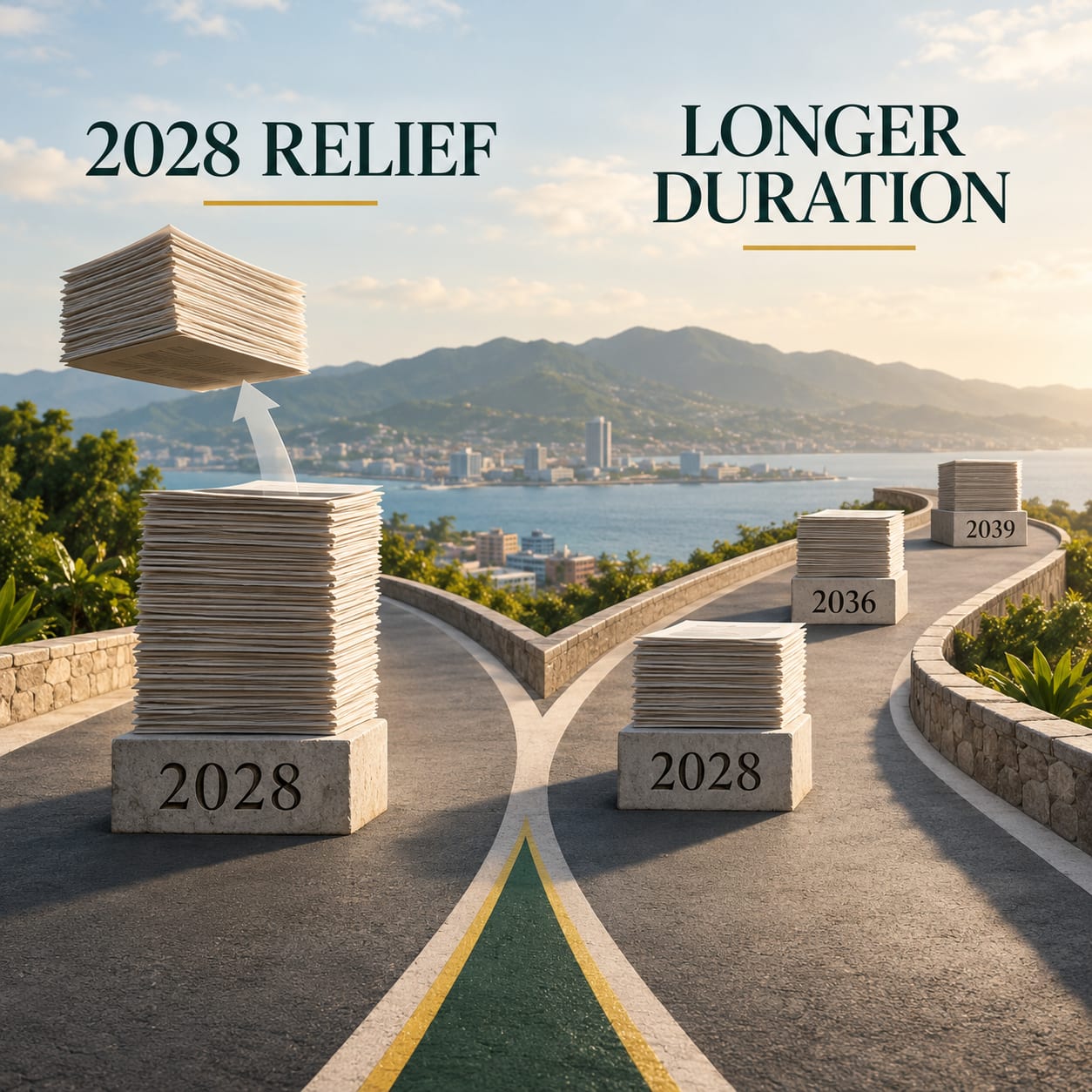
That is where the “why it matters” case for a full versus partial outcome sharpens. A large accepted volume on the 2028 notes would meaningfully shrink the amount Jamaica needs to refinance or repay outright before the decade is out, freeing up budget room and reducing rollover risk at a maturity investors tend to price conservatively. A result skewed toward the 2036 and 2039 notes instead would extend duration further out on the curve, which helps Jamaica’s long-run debt profile but does less to relieve the more immediate 2028 pressure point.
The Government of Jamaica has said the invitation is not conditioned on any minimum participation level, only on the new bond pricing and a successful close. That structure gives the government flexibility to accept whatever mix of tenders best fits its debt strategy, rather than being forced to take a fixed proportion of each series. Final acceptance amounts, expected to be disclosed around the September 17 settlement date, will show which part of the curve Jamaica prioritised, and by extension, which refinancing risk it judged most urgent to address now.






Comments