Paul Blake | When a Child Says, “I Cannot Go On,” We Must Listen

/ Our Today
administrator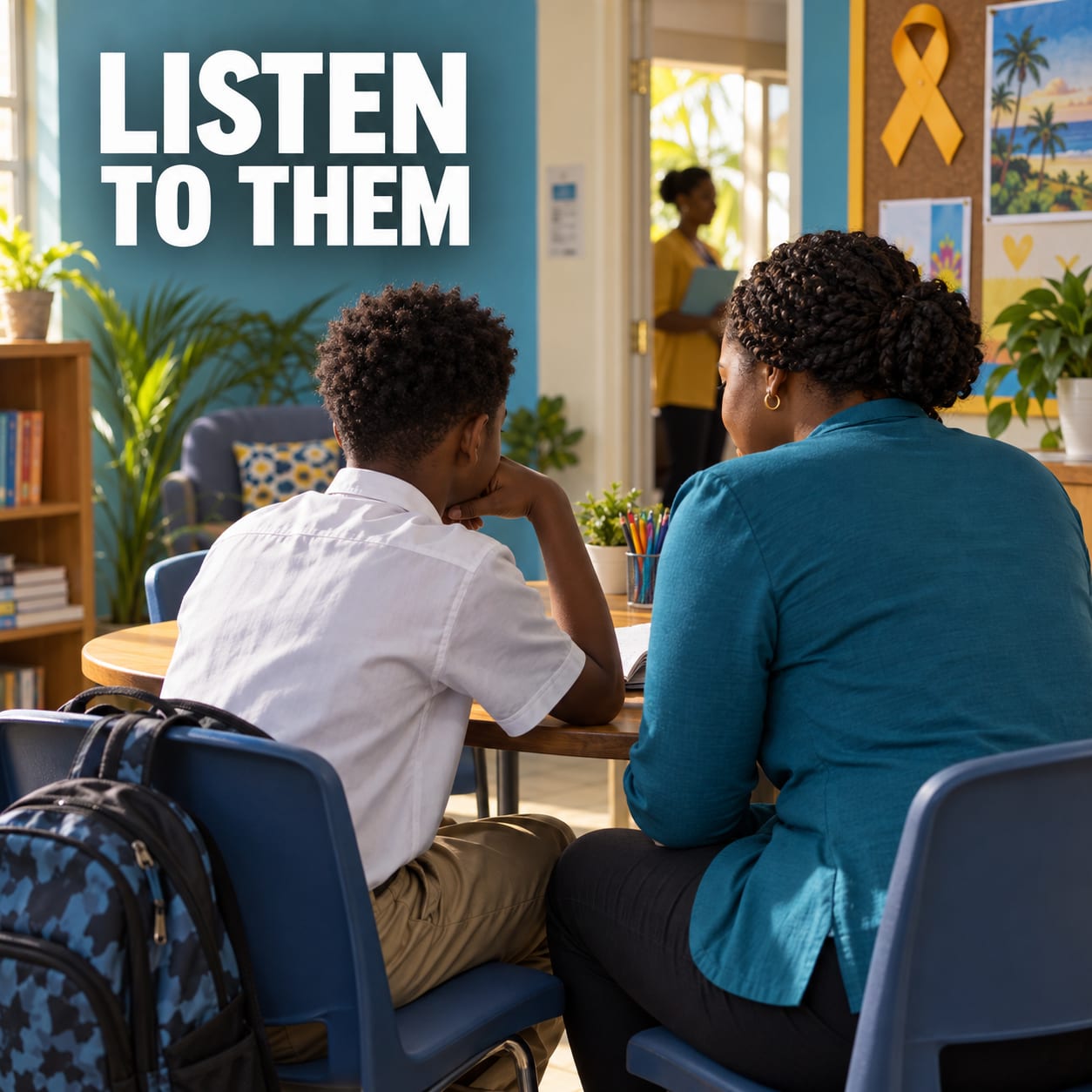
On World Suicide Prevention Day, observed on September 10, we are being called to “Change the Narrative on Suicide” and “Start the Conversation.” For Jamaica, that conversation must include a group whose psychological pain is too often overlooked: our children and adolescents.
As a paediatric psychologist, I have learned that children do not always announce their distress in language adults readily understand. A child may never say, “I am depressed,” “I feel hopeless,” or “I am thinking about suicide.” Instead, the child may become angry, withdrawn, defiant, or unusually quiet. Academic performance may decline. School attendance may become inconsistent. Sleeping and eating patterns may change. Some children complain repeatedly of headaches or stomach pains for which no medical explanation is found.
Adults often respond to these behaviours with punishment before considering whether the behaviour may be communicating pain.
This is why we must learn to look beyond behaviour.

The child who is labelled “attention-seeking” may actually be seeking safety. The student described as “lazy” may be emotionally exhausted. The teenager who suddenly stops participating in family activities may be struggling with depression, bullying, rejection, abuse or overwhelming anxiety. The young person who says, “Nobody would miss me,” or “Everybody would be better off without me,” is not being dramatic. Always take such statements seriously.
Globally, approximately one in seven adolescents between the ages of 10 and 19 experiences a mental-health condition. Suicide is also the third leading cause of death among people aged 15 to 29. These are not distant statistics. They represent children in our classrooms, young people in our churches, and teenagers living in our homes.
Adolescence is a period of rapid physical, emotional and social development. Young people are trying to understand their identities while dealing with academic pressure, family conflict, poverty, grief, relationship difficulties, bullying, and the continuous scrutiny of social media. They may be surrounded by people and still feel profoundly alone.
Unfortunately, many young Jamaicans have also learned that speaking about emotional pain can attract ridicule. Boys are told to “man up.” Girls may be dismissed as excessively emotional. Children who disclose suicidal thoughts may be scolded, threatened, or told that they are ungrateful. In religious settings, psychological distress is sometimes treated solely as evidence of weak faith.
These responses do not eliminate suicidal thoughts. They teach children to hide them.
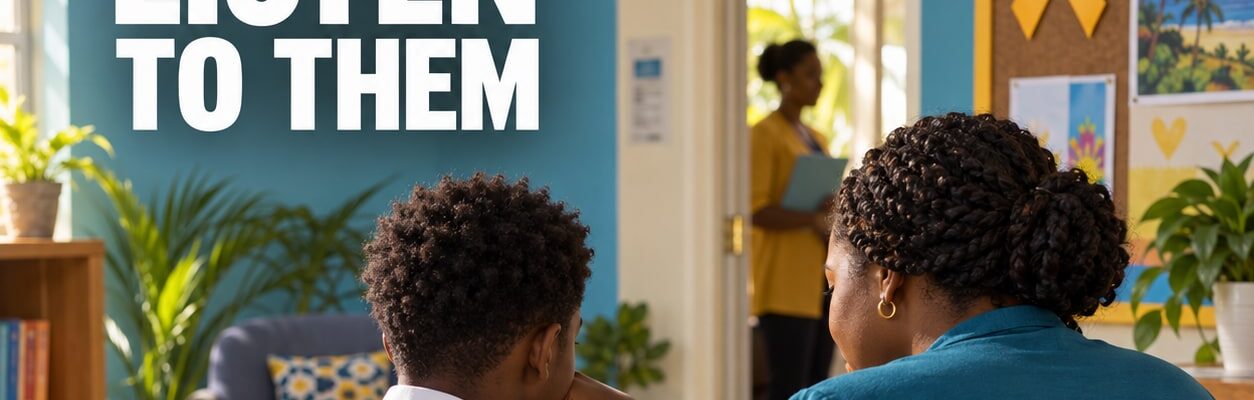
Parents, teachers, and caregivers must create places where children can speak honestly without being immediately judged, lectured, or punished. Listening is not the same as agreeing with every conclusion a child reaches. It means communicating: “Your feelings matter. You are not facing this alone. We are going to find help together.”
If a young person expresses hopelessness, talks frequently about death, gives away valued possessions, withdraws from friends, engages in self-harm, or experiences a sudden and unexplained change in behaviour, adults must respond immediately. Ask directly and calmly, “Are you thinking about suicide?” Asking the question does not place the idea in a child’s mind. It can give the child an opportunity to reveal a crisis that has remained hidden.
If the answer is yes, do not leave the child alone. Reduce access to anything that could be used for self-harm and seek urgent professional support. Promises of secrecy should never take precedence over the responsibility to protect a child’s life.
Jamaica’s response must also extend past individual families. Every school needs a clear protocol for identifying and responding to at-risk students. Guidance departments must be adequately staffed and connected to psychologists, psychiatrists, social workers and community mental-health services. Teachers should receive training to recognise emotional distress, respond to disclosures and make appropriate referrals.
Suicide prevention must also address bullying, cyberbullying, child abuse, family violence, substance misuse and academic environments that measure a child’s worth mainly through examination results. A disappointing grade, failed examination or broken relationship should never be allowed to convince a young person that their future has ended.
Churches also have an important role. Prayer, faith and professional mental-health care are not competitors. A responsible faith community prays with people while helping them to access appropriate clinical support. We must never shame a child for experiencing depression or imply that suicidal thoughts represent spiritual failure.
World Suicide Prevention Day cannot be reduced to social-media graphics, hashtags and one day of sympathetic speeches. Suicide prevention needs ongoing investment in child and adolescent mental-health services, responsible public education, earlier intervention and a culture in which asking for help is regarded as courage rather than weakness.
Our children need more than adults who notice when they are misbehaving. They need adults who notice when they are hurting.
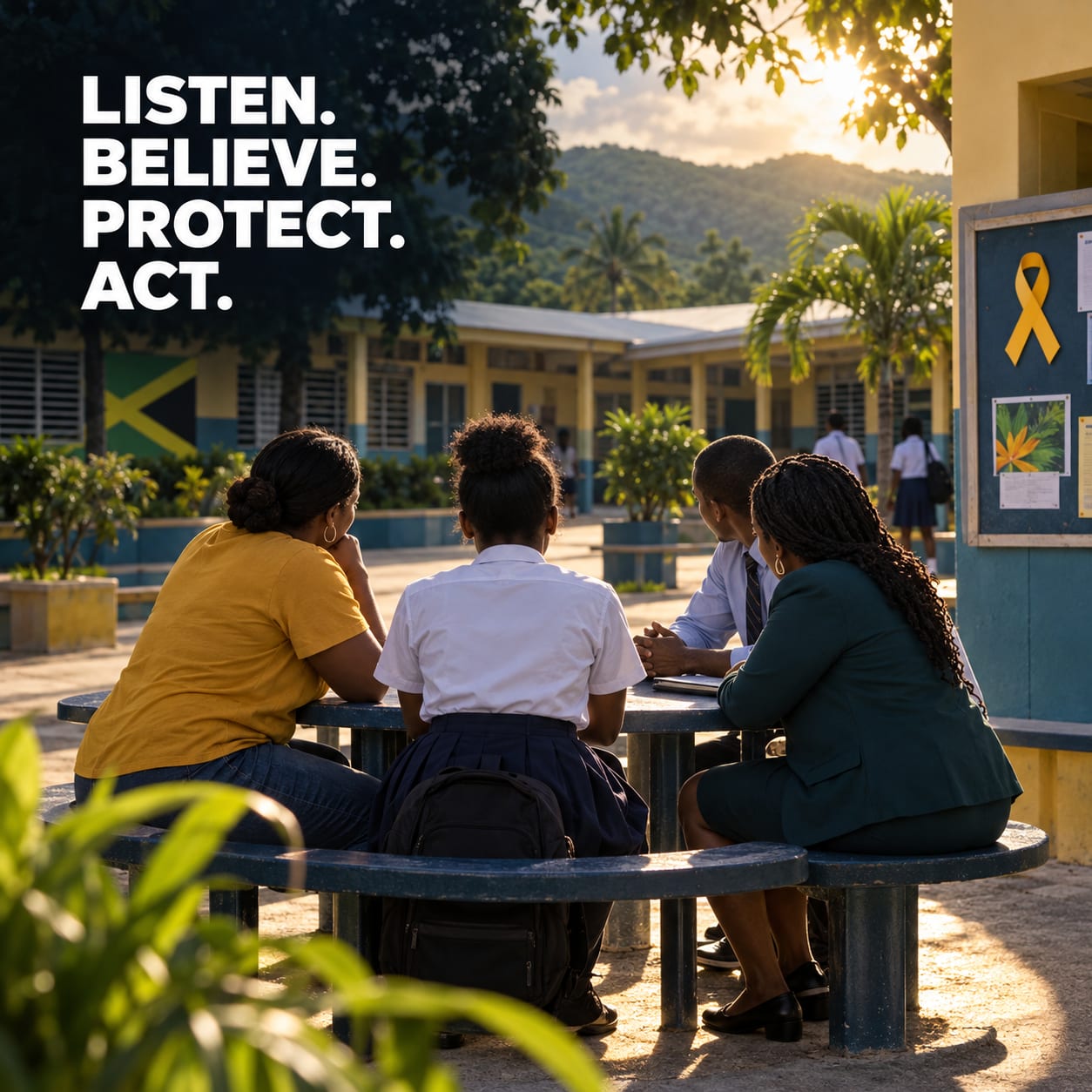
Let us start the conversation, but let us also be prepared to listen, believe, protect, and act. A child’s most difficult moment must never be allowed to become the final chapter of his or her life.
Anyone experiencing suicidal thoughts, or concerned about a child who may be at risk, may contact Jamaica’s Mental Health and Suicide Prevention Helpline at 888-NEW-LIFE (888-639-5433). Where there is immediate danger, remain with the child and seek emergency medical assistance.
Paul A. Blake, PsyD is a paediatric psychologist



Comments