
Regional CSEC pass rate rises to 72.18% for 2026

/ Our Today
administrator
The regional pass rate for this year’s Caribbean Secondary Education Certificate (CSEC) examinations came in at 72.18 per cent, a slight uptick from last year’s 71.42 per cent, the Caribbean Examinations Council (CXC) announced Tuesday.
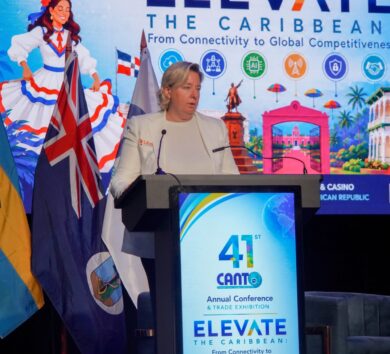
Dr Nicole Manning, CXC’s Director of Operations, delivered the numbers at the official release of the May-June 2026 results in Anguilla. “The CSEC paints a little different story but a good story nevertheless,” she said, summing up a year of incremental, if unspectacular, progress across the region.
The headline improvement came in Mathematics, which has dogged the region for years. The subject’s pass rate jumped four points, from 38 to 42 per cent. It’s still one of the weaker subjects overall, but Manning wasn’t shy about calling it a win. Fourteen territories came in above the regional average, with rates as high as 77 per cent, while the other seven landed between 30 and 38 per cent.
English A didn’t move much, holding at 80 per cent. Ten territories beat the regional average there; eleven fell short.

Information Technology had the best showing of any subject this year, at 83 per cent. Principles of Business followed at 81 per cent, with English A at 80, Electronic Document Preparation and Management at 79, and Human and Social Biology at 78. On the other end, Principles of Accounts, Physics, Chemistry and Social Studies all came in below the overall average, at 72, 69, 68 and 66 per cent respectively.
CXC also released results for CAPE, the region’s sixth-form exam, the same day. Candidates there did considerably better, with a 93.52 per cent pass rate overall. Caribbean Studies and Communication Studies led the way, at 98 and 93 per cent.
In total, more than 118,000 students sat CSEC exams across the Caribbean this year, alongside over 26,000 who sat CAPE, a reminder of just how much rides on these two weeks of results every August.
CXC is also rolling out a new initiative aimed at Mathematics specifically, letting eligible candidates finish outstanding modules for free, with up to four years to complete them. It’s meant to be a longer-term fix rather than a one-year bump.
One less encouraging note from the release: CXC said it’s seeing more examination irregularities among candidates and is keeping a close eye on the issue as it works to protect the integrity of the exams.





Comments