SDG Joint Programme strengthens School Nutrition in Jamaica

/ Our Today
administrator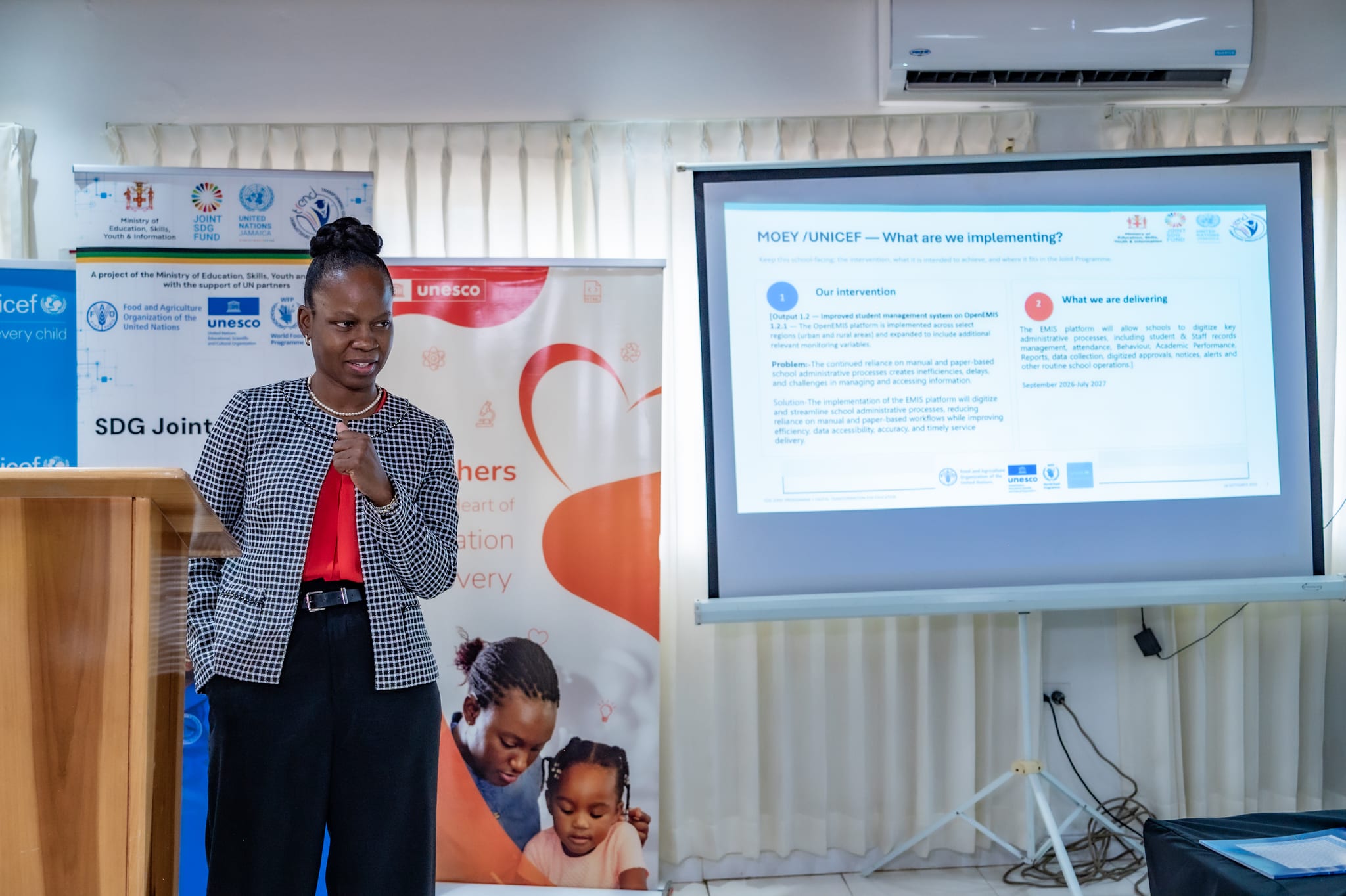
Jamaica’s efforts to digitally transform education are advancing through a United Nations-supported initiative that is helping schools better understand and respond to the nutritional needs of students.
Under the SDG Joint Programme on Digital Transformation for Education, United Nations partners are supporting the Ministry of Education, Skills, Youth and Information (MOESYI) with the creation of an integrated digital education ecosystem through six pillars: digital learning, digital schools, teacher transformation, digital school feeding and nutrition, digital food systems and data governance. A central focus is the integration of student nutrition data into the Education Management Information System (EMIS), enabling more evidence-based decision-making for school feeding and student well-being.
The initiative, supported through the SDG Fund, forms part of a multi-agency effort involving the United Nations Children’s Fund (UNICEF), United Nations Educational, Scientific and Cultural Organisation (UNESCO), the World Food Programme (WFP), the Food and Agriculture Organisation (FAO) with oversight from the Office of the UN Resident Coordinator, that connects digital learning, school feeding, food systems and data governance to improve education outcomes for children. It will also support stronger connections between schools and local farmers by using digital tools to better match food demand with local production. Through the programme, partners are using technology to strengthen services that directly affect children’s learning, health and development.
“The Ministry is pleased to partner with UNICEF, UNESCO, FAO and WFP on the Digital Transformation in Education Pilot Project. Building on the Ministry’s existing EMIS, the project will strengthen student nutrition, teachers’ digital skills and enable a reliable supply of locally produced Jamaican foods for schools. Together, these efforts will help create the conditions for students to learn, thrive and achieve their full potential,” said Viviene Johnson, Deputy Chief Education Officer, Planning & Development Division, MOESYI.

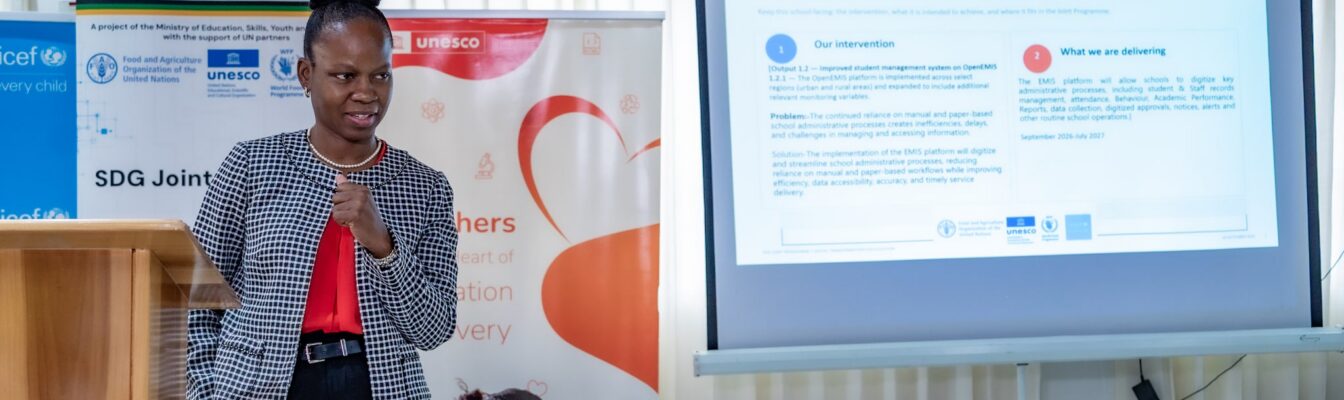
At a recent sensitisation session held in Mandeville with representatives of selected SMART schools, stakeholders discussed the concept, objectives and proposed functionality of new School Feeding and Nutrition Modules that WFP and UNICEF will integrate into the EMIS. The modules will allow schools and the Ministry to collect and use timely nutrition and school feeding information, including how many vulnerable students receive school meals, what they are eating, their nutrition status and school food environment, supporting the monitoring of the National School Feeding Programme and broader National School Nutrition Policy. This data can help identify gaps, strengthen school feeding and nutrition programmes and support healthier learning environments for children.
“Good nutrition and learning go hand in hand. By strengthening the data available to schools, we can better identify needs, improve responses and ensure that children are ready to learn,” said Vonetta Nurse, Nutrition Officer at UNICEF.
To further support this work as part of the digital food systems pillar, FAO has developed a digital tool that helps farmers understand what produce schools need while enabling schools to identify available local supplies. The aim is to reduce the time spent sourcing food, enable farmers to plan production around school demand, and build stronger relationships between schools and farming communities.
The UN agencies are also working with the Rural Agricultural Development Authority (RADA) to build the capacity of farmers, including support around food safety, helping to ensure that schools have access to safe, locally produced food that responds to the nutritional needs of students.
The education stakeholders involved in the sensitisation session welcomed the information shared. “The session has helped me to better understand how digital integration can strengthen all aspects of the school,” said Sonia Thomas, Acting Principal of Hazard Primary and Infant School and Special Education Unit in Clarendon. “I am particularly impressed with the nutritional aspect because we are aware that if students’ nutritional needs are not adequately met, then they will not be able to perform effectively.”
Christopher Tyme, Principal of Mile Gully High School in Manchester, is also looking forward to the integration of the nutritional module into the EMIS portal. “I’m very pleased with what I’ve seen, especially the link between the attendance of students and the nutritional benefits we can provide for them based on their needs. A lot of our children are on the PATH programme so whatever we can do to improve the food for them would be good.”
By combining digital technologies, school feeding and nutrition data and stronger school-farmer linkages, the SDG Joint Programme is helping Jamaica build a more responsive and resilient education system. The initiative will enable schools to better understand students’ nutritional needs earlier, strengthen school feeding programmes to respond more effectively and create healthier learning environments where every child can learn and thrive.






Comments