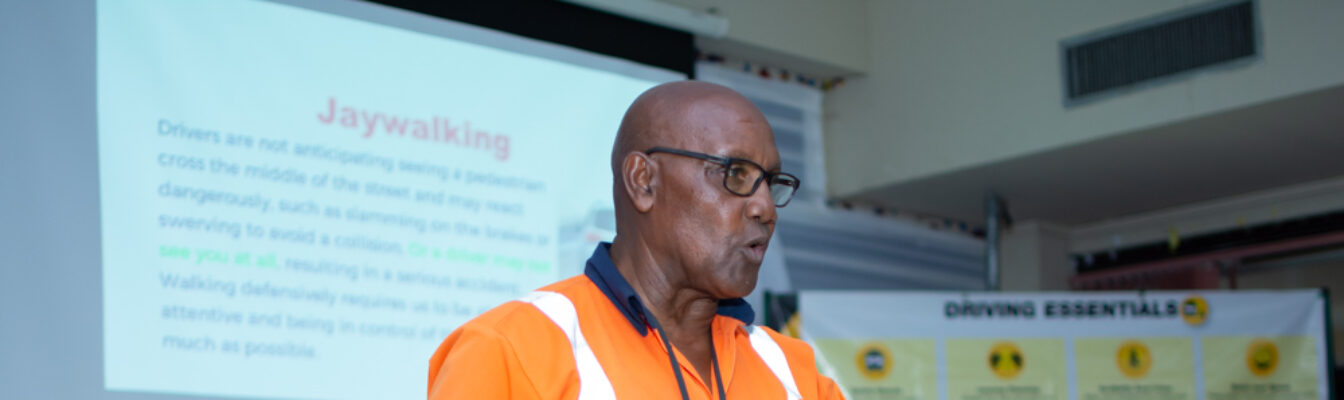
Senior citizens, ‘practice defensive walking techniques’ while on the roads

Candice Stewart / Our Today
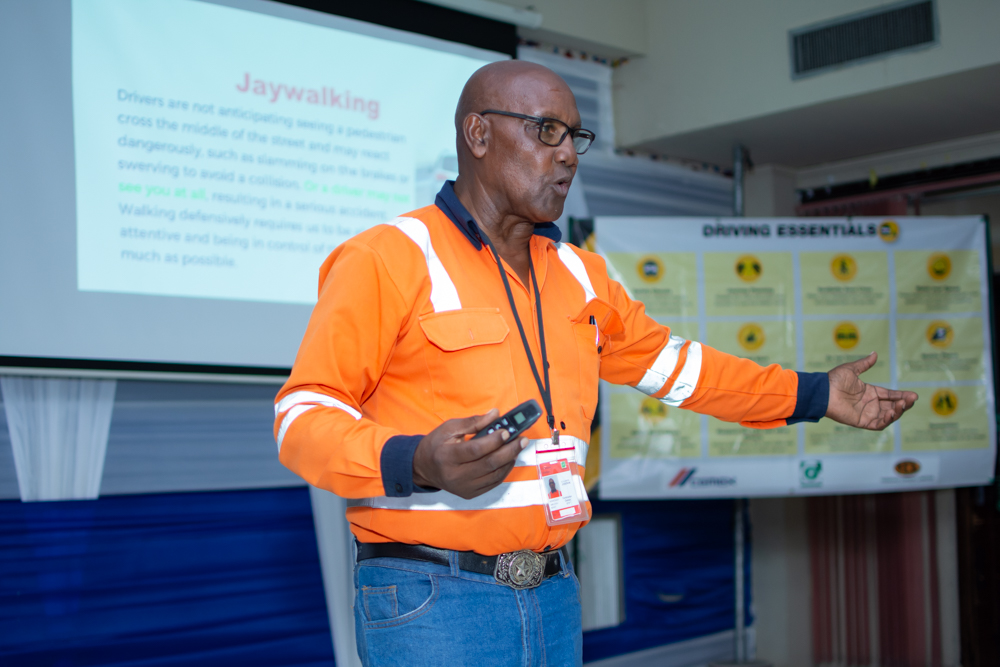
Clinton O’Connor, driving school instructor and mechanical inspector at Caribbean Cement Company Limited (CCCL) is urging senior citizens and other vulnerable road users to ‘practice defensive walking’ while using the roads.
He delivered a presentation at a senior citizens-focused Vulnerable Road User (VRU) Awareness event executed by CCCL on Thursday (April 13) at the Police Officer’s Club in St. Andrew.
CCCL’s VRU initiative aligns with their ultimate parent company, CEMEX. The initiative is organised globally by the supply chain department and targets people who are more susceptible to injuries or fatalities while utilising the the roads. It seeks to promote road safety among the most vulnerable members in society which include pedestrians, children, the elderly, and cyclists.

Present were members of the Caribbean Community of Retired Persons (CCRP) and the National Council of Senior Citizens.
O’Connor said that CEMEX is “not just concerned with commercial activities but it is deeply entrenched in safety and it preached everyday and in every activity”.
In his presentation, he said that “When you’re on the street as a pedestrian, you are one of the most vulnerable road users. It is, therefore. extremely important that you take steps where possible to protect yourself from traffic incidents and accidents while you are on the roadway.”
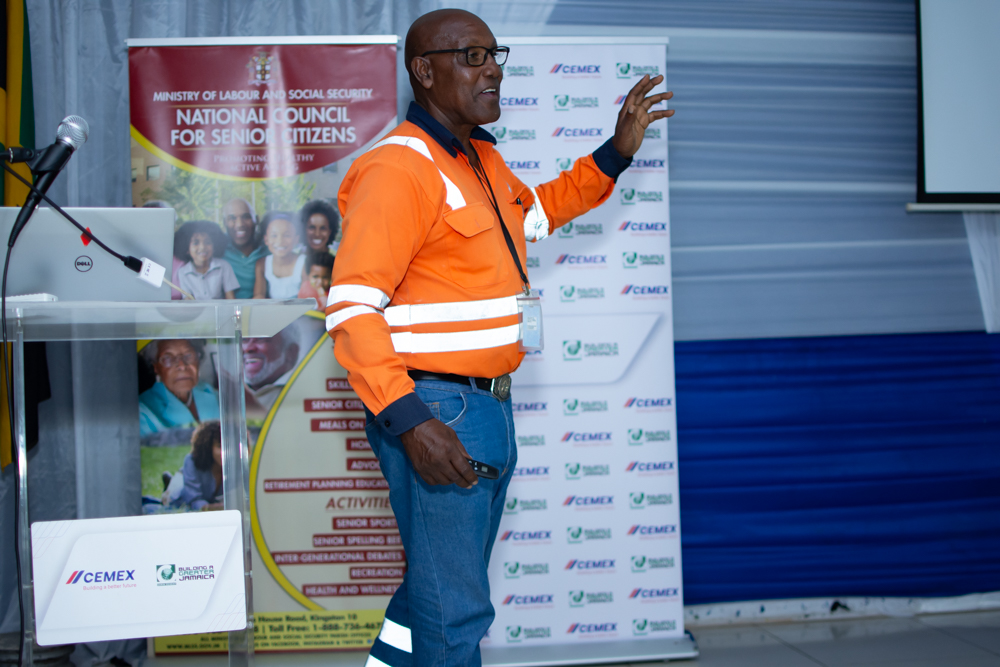
“One of the greatest protections that you have as a pedestrian is defensive walking. Defensive walking is a proactive technique that will help you to avoid harmful collision” while using the road as a pedestrian. The technique, he said, “requires you to take charge of your safety by being aware of your surroundings and anticipating the actions of those around you while you walk,” he said.
In walking defensively, O’Connor emphasised a few practices while engaging in defensive walking. He stressed the importance of “not walking and using your cell phone”, “increasing your visibility” especially at nights or in poorly lit areas, and “taking proactive safety measures, such as avoiding jaywalking, and avoid crossing the street within the blind spots of a vehicle.”
O’Connor noted that “though the law says you should drive a particular manner or drive at a certain speed, drivers don’t always comply with those regulations,” and added that drivers are often engaged with defensive driving training and techniques while most pedestrians are not necessarily aware of how to walk defensively.
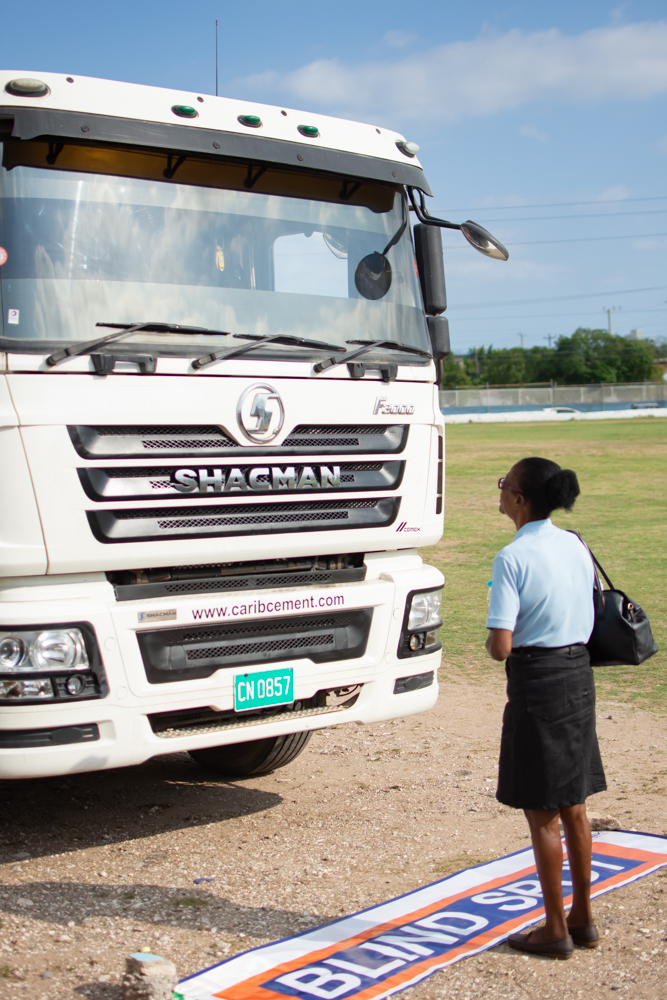
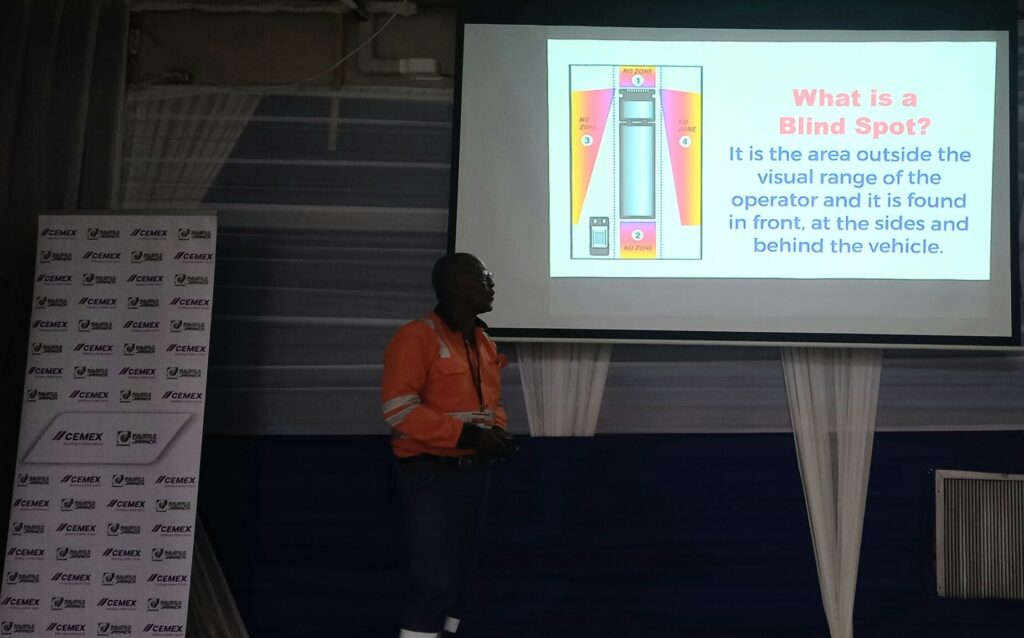
As such, he underscored that it is crucial that defensive walking be a common practice among vulnerable road users, including senior citizens, and in doing so, as pedestrians, they should expect the worst case scenario.
On the point of driving defensively, O’Connor highlighted that a collision may lead to bone fracture, brain trauma, as well as serious damage to organs.
When a vehicle collides and you are outside that vehicle, your body parts are going to collide with the vehicle as it comes to a stop and your internal organs will also collide with each other.
Clinton O’Connor, driving school instructor and mechanical inspector at Caribbean Cement Company Limited
“When there is a collision, it is not just one phase, it [happens] in three phases. When a vehicle collides and you are outside that vehicle, your body parts are going to collide with the vehicle as it comes to a stop and your internal organs will also collide with each other. A collision can have a far reaching effect,” he said.
19 people aged 60 and over have died in road accidents since the start of the year
Kimesha Dixon, accident analyst and statistician at the Road Safety Unit (RSU) was also in attendance and shared that , “Since the start of the year, 18 elderly persons have been killed on the roadway. A majority of those persons were pedestrians.”

She also highlighted that overall, 121 persons have been killed on the roadway since January 1. Since that presentation, the count has increased to 122.
“When we compare the same period to 2022, the figure was 135. We know that last year, recorded the highest number of fatalities where persons have been killed on the roadways and we’re pretty close to those figures,” she said.
As at Thursday (April 13), a total of 28 pedestrians have been killed. Fatalities for people 60 and over are reported at 19 where 16 males and three females have died.
By parish, Dixon highlighted that the RSU statistics show that Clarendon has had the highest number of elderly fatalities with five, since the start of the year. Second in line is St. Ann with four deaths.
In addition to targeted statistics, she shared pedestrian safety tips with the audience. They include:
- Before crossing the road, look right, then left, then right again and proceed when it is safe to do so
- When walking in groups along the roadway, walk in a single file
- Do not attempt to cross the road on a corner
- Use the sidewalk and walk facing the oncomin traffic
- Do not walk under the influence of a cell phone
- Cross roads in well lit areas
The RSU classifies vulnerable road users slightly differently than the CCCL does. They identify VRUs as pedestrians, pedal cyclists, motorcyclists, and pillions.
They report that vulnerable road users account for sixty-four per cent (64%) of the road users killed since the start of the year. Pedal cyclists account for nine fatalities while motor cyclists account for 35.
Read related stories at the links below:
Carib Cement targets reduced road fatalities among children
Down 44% in January: Shaw boasts road fatalities ‘already influenced’ by Road Traffic Act
Carib Cement to equip trucks with road safety technologies
Send feedback to [email protected]





Comments