
The critical role of Medical Laboratory Professionals in Jamaican healthcare

/ Our Today
administrator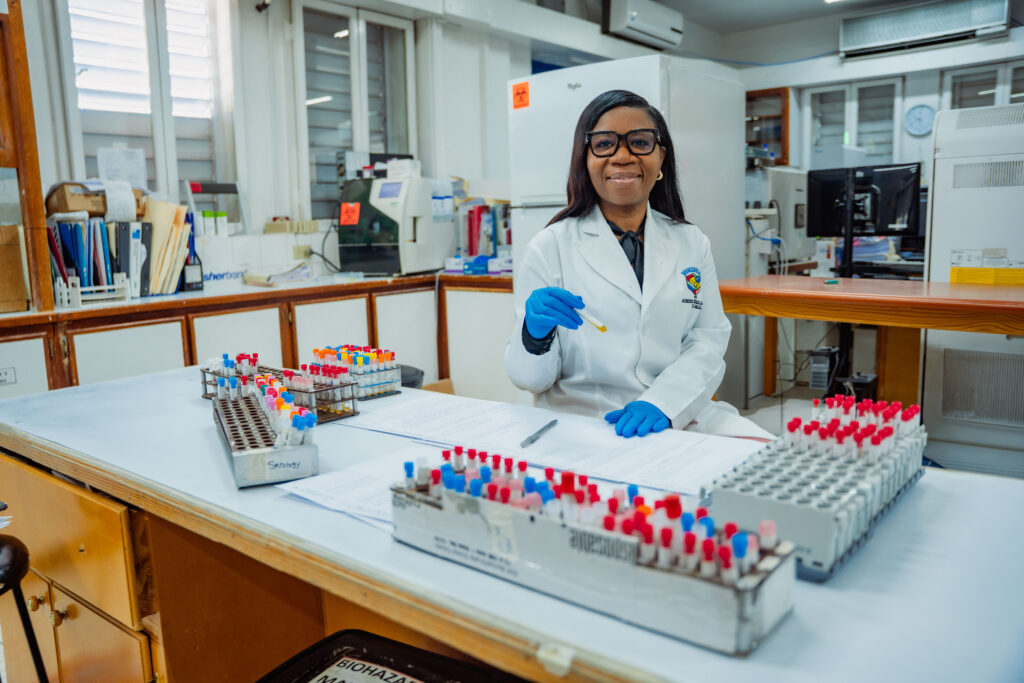
During Medical Laboratory Professionals Week (April 19 –25), the global healthcare community celebrated the technical expertise essential to modern clinical diagnostics.
Under the 2026 theme, A Lab Story: To Infinity and Beyond for Our Patients, the local industry highlighted the expansion of diagnostic capabilities and the rigorous standards of accuracy, quality and care required to support patient outcomes.
For Caledonia Medical Laboratory (Biomedical), a pillar of Jamaican healthcare for 58 years, the week provided a vital platform to highlight the indispensable role laboratory professionals play within the national health system.
The Clinical Link: From Sample to Diagnosis
While medical technology has advanced significantly, the core of laboratory medicine remains the transition of biological samples into actionable clinical data. Medical Technologists, both locally and internationally, carry the responsibility of transforming those samples into reliable clinical information. Their work goes beyond operating advanced instruments. They identify critical findings and provide the essential link between laboratory data and clinical decision-making.
In a world increasingly dazzled by automation and artificial intelligence, it is worth pausing to appreciate what that human layer of expertise actually means for patients. While a machine can flag an abnormality, it takes a trained professional to determine clinical significance and ensure quality control.
Each sample from a medical practice, hospital, clinic or community represents a person: a mother waiting on a result, a child whose doctor needs answers, an elderly patient managing a chronic condition. Every sample processed contributes to a clinical decision point for chronic disease management, pediatric care, or acute diagnosis.
For the laboratory professionals who receive these samples, that human reality is never abstract. It is the reason they do what they do.

Addressing Jamaica’s Public Health Challenges
The laboratory sector continues to grow in importance as Jamaica and the wider region face a ‘dual burden’ of disease. Laboratory data is a primary driver for both individual treatment and national public health policy.
Re-emerging infections like tuberculosis demand constant vigilance. The burden of chronic non-communicable diseases (NCDs) such as diabetes, hypertension, and heart disease continues to grow across the Caribbean. This has resulted in government measures such as the new tax on sugary drinks in Jamaica. The laboratory’s role in responding to these threats, through early detection, and the data that guides public health decisions, have never been more important.
At the same time, laboratory medicine is evolving through automation, digital workflows, and emerging applications of artificial intelligence. These tools improve efficiency, reduce turnaround times, and enhance analytical capacity. However, they do not replace professional responsibility and oversight.
A Turning Point for the Industry
Historically, laboratory work and the role of diagnostics have been viewed as a “behind-the-scenes” function. However, as healthcare becomes more data-driven, diagnostics have become more central to patient care, public health, and the decisions that shape outcomes.
By leveraging international partnerships and local accreditation standards, the medical community can now access high-level diagnostics domestically, ensuring that the foundation of patient care remains grounded in verifiable, high-quality data.






Comments