
Ukraine war fears shake stocks and send oil prices soaring

/ Our Today
administrator
LONDON (Reuters)
Global stock markets clawed back losses on Tuesday (February 22) as investors clung to hopes that Moscow’s deployment of troops to two breakaway regions in eastern Ukraine will be as far Russia goes.
The spectre of war on Europe’s eastern flank had flared on Monday, sending oil prices to a seven-year high, after Russian President Vladimir Putin ordered troops into the Donetsk and Luhansk regions of Ukraine.
The United States and its European allies started to announce harsh new sanctions in response, with German Chancellor Olaf Scholz warning that the Nord Stream 2 gas pipeline would now be denied certification to begin operating.
Europe’s STOXX 600 index fell nearly two per cent to a seven-month low in early trade but the mood gradually turned more positive and moved towards Monday’s closing level after reports that Russia would recognise the current boundaries of the breakaway regions.
The rouble, which has been hammered by the rising tensions in recent weeks, swept higher in FX markets while German equities—seen as more vulnerable because of the country’s heavy reliance on Russian gas—also erased losses of more than two per cent to trade flat.
“We are not in the clear, but that gives a path to de-escalation,” said Trium Capital fund manager Peter Kisler, referring to the news on Ukraine border recognition.
The Ukrainian military earlier said that two soldiers had been killed and 12 wounded in shelling by pro-Russian separatists in the east over the past 24 hours.
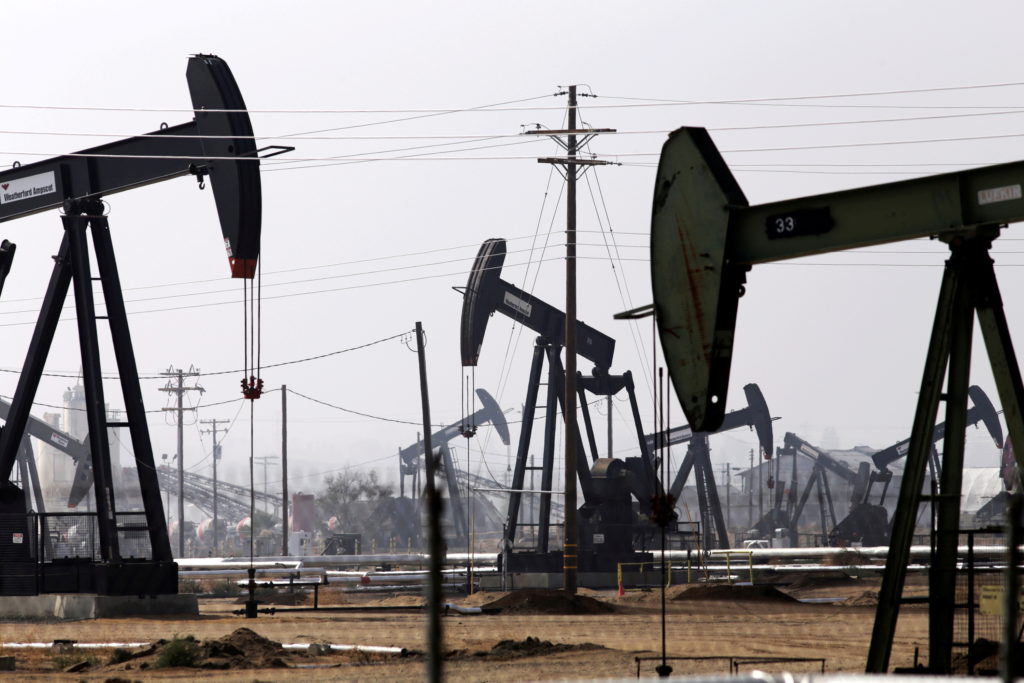
The prospect of a major European war had prompted investors to dump shares and other riskier assets while Brent crude jumped more than $3 to top US$99 at one point for its highest since September 2014, reflecting fears that Russia’s energy exports could be disrupted by any conflict.
Benchmark government debt was also in demand.
German government bond yields hit their lowest level since February 4 while US Treasuries rallied.
Spot gold turned negative after climbing more than 0.4 per cent to a six-month top of nearly $1,913.
“Europe is in a very, very uncomfortable situation,” said Michael Hewson at CMC Markets. “What you’re getting is a classic risk-off play here.”
The MSCI world equity index, which tracks shares in 50 countries, fell to its lowest since January 28 before trimming losses to stand 0.1 per cent down.
S&P 500 futures erased losses of as much as 1.4 per cent to trade flat, with Nasdaq futures down 0.5 per cent after initially falling more than two per cent.
“We can be pretty confident that this will put upward pressure on oil markets and will be watching gas prices pretty nervously as we wait to see what sanctions are introduced,” said Kit Juckes, macro strategist at Societe Generale.
MSCI’s broadest index of Asia Pacific shares outside Japan had earlier fallen by 1.5 per cent.
METALS SHINE
Washington and European capitals condemned Russia’s move into the Ukrainian breakaway regions, vowing new sanctions, while Ukraine’s foreign minister said he had been assured of a “resolute and united” response from the European Union.

Fears of supply disruption from Russia sent London-traded aluminium to a more than 13-year high of $3,350 a tonne while benchmark nickel hit its highest since August 2011. Shanghai-traded nickel hit a record high.
The Russian rouble slid to a 15-month low in early Asian trading, hurtling below 80 against the dollar before spinning around and climbing again.
The rouble has lost 12 per cent on prospects of a Ukraine invasion, with Russian equities down by a third.
Other currencies were quieter as traders awaited news of sanctions.
The Japanese yen erased early gains that took it close to a three-week high of 114.48 per dollar while the Swiss franc held steady near the previous day’s one-month high.
The euro added 0.4 per cent after falling to a one-week low of $1.1286 and the US dollar index retreated by 0.2 per cent to 95.910.






Comments