…The journey of a young Jamaican artist

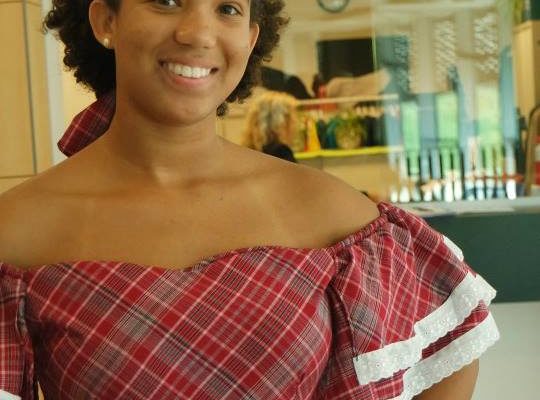
Young Jamaican writer and film-maker Joelle Powe is currently working on a documentary about the life and times of Beverley Manley.
This work will further burnish her reputation as a talent to pay attention to.
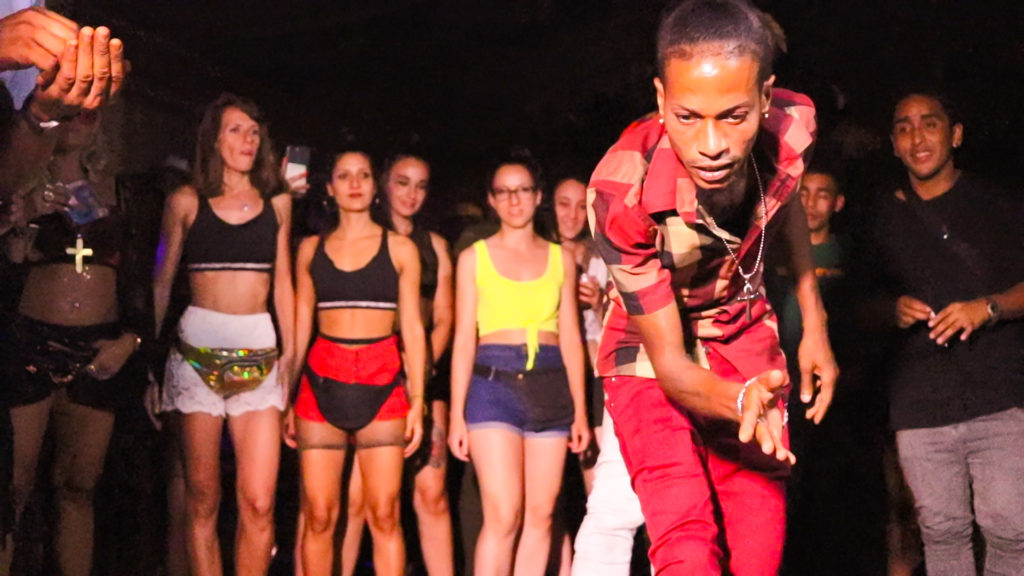
The documentary Out There Without Fear, about Jamaican dancehall dancers and this indigenous culture, has garnered a favourable reception across the world, announcing her arrival on the documentary-making scene.
When Joelle is not up to her neck in projects, she likes dancing, yoga and swimming.
In Part II of our interview, Joelle gives further insight into her journey as an artist.

Our Today – You cited your parents as major influencers aiding your development. Are there others who contributed to this life you have chosen? Do you have other mentors?
Joelle – My uncle Nevada Powe plays a crucial role in my professional development as a writer and thinker. He taught me to command the reader’s attention word by word. As a teenager, he impressed me with stories from the classics and the world’s religions. He exposed me to foods and films of various cultures, sweeping me away on various travel adventures to Europe and South America to open my mind.
He helps to imbue me with a cosmopolitan outlook on the world and heightens my artistic sensibilities. My uncle is instrumental in making me look at art and ideas through different perspectives. Nevada and I have shared countless brainstorming sessions over the phone. He tells me the truth about my work. He lets me know when I fail and why. Because of him, I always aim for excellence and think critically about what I produce before it goes out.

Our Today – Do you have any mentors from the educational institutions you have attended?
Joelle – My professors at Bard College in the Anthropology Department are supportive of my creative projects. I would like to single out John Ryle, Laura Kunreuther, Gregory Duff Morton and Sophia Stamatopoulou Robbins.
Jamaican scholars and intellectuals Herbie Miller and Dr Carolyn Cooper are generous in sharing their knowledge with me on Jamaican music, culture and history. I have benefited immediately from their mentorship and the encouragement of Novia Mc Donald-Whyte.
Elizabeth Ferry at Brandeis University also comes to mind. She was my first anthropology professor. She made me fall in love with the discipline through her exciting fieldwork assignments when we travelled together through 14 countries in Asia and Africa on “Semester at Sea”.
Our Today – What have you gleaned from the response to your documentary, Out There Without Fear?
Joelle – Locally we got great feedback. People are excited to see Jamaican creative works. There were varying perspectives with the church saying dancehall is demonic and the famous dub poet Mutabaruka saying it is the worst thing black people can engage in. All these diverse views allow people to make a decision about what they think about dancehall.
There was a comment that caught my attention comparing dancehall to Kumina. This upset an important thinker in Jamaica who thought that was offensive to Kumina practitioners. Now my response to that is, the fact that the comparison was put out there, and somebody rejected it, is a very positive thing. Why? Because someone has put out there, thoughts on dancehall which creates accuracy around what is true. It provokes debate.
Most of the responses to the documentary have been positive.
Our Today – As a young woman, how do you find life in Jamaica today?
Joelle – Life in Jamaica is extremely inspiring for me. I study Anthropology at Bard College in New York, just off the Hudson. There is no amount of theory that can make me understand Jamaica! I am very, interested in looking at diverse aspects of our culture. Dancehall is an amazing art form. I am also interested in politics. Right now, I am working on an anthropological piece on an upper-class elite Jamaican family.
As Jamaicans, we are a combination of many different cultural groups – Africans, Europeans, Chinese Indians etc. That ‘mix-up’ has created a unique society which is not consistent at all. There needs to be a case study so that the world can understand Jamaica.
Our Today – What impact do you think your film will have internationally?
Joelle – Many countries from South America to Africa have expressed an interest in it. There are institutions in the United States that have booked screenings and have made an especial effort to talk with the dancers. I think they are attracted because Liberal Arts institutions want to create conversations about films, across disciplines, across art.
This film looks at diverse topics like the clash of religions and cultures. It also looks at classism in Jamaica with dance at the centre of all these forces. There are many international educational bodies that want their students to have this kind of conversation.

Our Today – Do tell us more about the “30 under 30” award you were recently a part of?
Joelle – The “30 under 30” Changemaker Award was given to me by the Institute of Caribbean Studies. I am really excited about it because it means a connection to other people in the Caribbean and the Diaspora who are also interested in making an impact.
Since the start of the programme, I have met many fascinating people across the Caribbean. Some in film, some in environmentalism, all young people. It is through networking that we can accomplish more.
Our Today – So what’s next after your Beverley Manley documentary?
Joelle – After I graduate in December this year, there are a number of creative art projects I would like to get off the ground. Mind you, I do have grad school in mind. For the next two years I plan to be home in Jamaica making cultural projects, making documentaries and finishing the book that I am working on. There are endless creative inspirations here in Jamaica.

Our Today – Let’s go broader. How do you see life in the world today?
Joelle – In the modern world today we are very divided. Through my experiences with other people in educational academies, we have become afraid to talk to each other and voice our differences. We are reticent about coming forward with our opinions on all manner of subjects, to give full voice to commentary.
As a moderator of a cultural education programme, I try to encourage students of my age to comment on a number of topics such as dance, black culture, etc. This is important because they realise that we can have a safe space where they can approach someone respectfully from another culture and ask their questions. Here these questions can be answered without offending anybody. We all grow when we recognize our shared sense of humanity. We have to talk through our differences.
There is a lot of fear in the world today and that can be solved through intentional, facilitated dialogues across subjects like art because everyone has an opinion on art.

Our Today – Where do you see Jamaica’s place in the wider world?
Joelle Powe – I think Jamaica is the perfect place to study, in order to see just how messy, the world can be. We are a superb cultural centre and we have given the world eight genres of music. There are other things we might be able to give the world. We could be a good example for other countries.
From a cultural perspective, Jamaica’s contribution to the world is undeniable. Reggae, Kumina, Nyabinghi, Rastafari. We have an intellectual heritage, a legacy in the arts. Some of our intellectuals have had a groundbreaking impact in different parts of the world. Deborah Thomas is one of the leading anthropologists in the United States right now.
Then there is Orlando Patterson. Marcus Garvey’s ideas helped to spark the civil rights movement in America.
We have a diverse set of assets. It’s not just about our music; we have a strong intellectual heritage and we have shared it with the world, but this has not been documented.
Jamaicans have a particular way of being open, particular when you think about how we talk. For instance, we openly call a plump woman “fluffy”. We call a white person “whitey” to their face – a very dark person “Bbackie”. That kind of candour is liberating. The world needs more of that.
Jamaicans, through their philosophy and their approach to dialogue, can make a valuable contribution to this world, more so at this time that we are living in.




Comments