
Kingston, not storm-hit west, is capturing Jamaica’s post-Melissa remittance boom

/ Our Today
administrator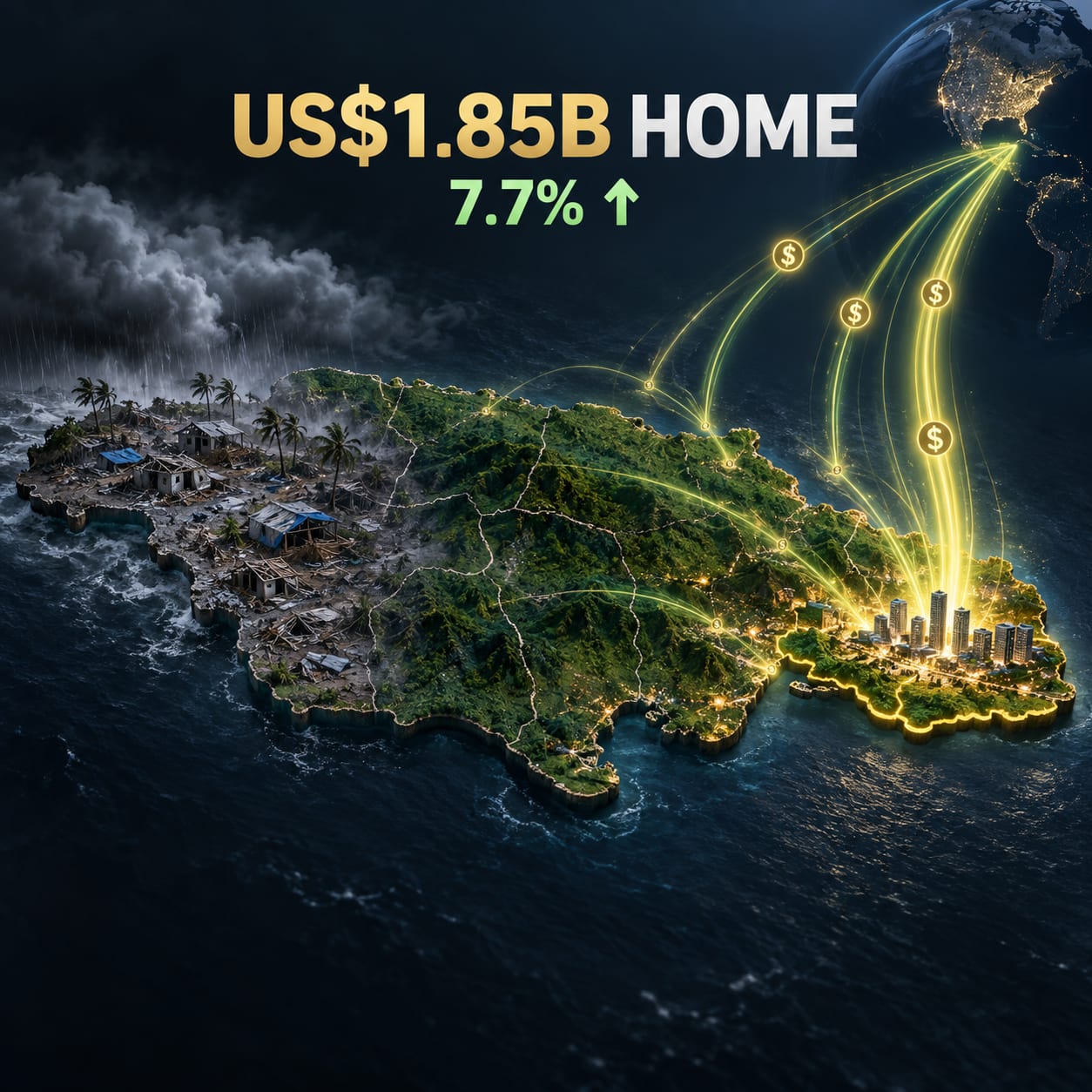
Jamaicans abroad sent home US$1.85 billion through remittance companies between November 2025 and May 2026, up 7.7 per cent from the same seven months a year earlier, but the extra money has flowed overwhelmingly to Kingston and St Andrew rather than the western parishes Hurricane Melissa devastated.
According to parish-level data published by the Bank of Jamaica, the capital captured US$79.6 million of the US$132.5 million increase, roughly 60 cents of every additional dollar sent to the island. Inflows to Kingston and St Andrew rose 11.8 per cent year on year.
The four parishes that bore the brunt of the storm, St James, Hanover, Trelawny and Westmoreland, together took in just US$9.0 million more, a 4.2 per cent rise on combined inflows of US$223.2 million. Westmoreland accounted for most of that gain, with inflows up 8.8 per cent, the only hurricane-hit parish to outpace the national growth rate. Hanover rose 5.5 per cent and Trelawny 3.0 per cent, each adding roughly US$1.0 million. St James, home to Montego Bay, received the same US$82.4 million it had collected in the seven months before the storm, no increase at all.
In St Elizabeth, where the town of Black River was destroyed, inflows rose 4.1 per cent, adding US$4.4 million.
The initial shock told a different story. When Melissa struck last October, island-wide remittances dipped 6.6 per cent against year-earlier levels, and 12 of Jamaica’s 14 parishes received less money than the year before. St James fell 16.3 per cent, Westmoreland 14.5 per cent and Hanover 14.3 per cent. Kingston and St Andrew were the only parishes to grow that month, up 2.7 per cent.
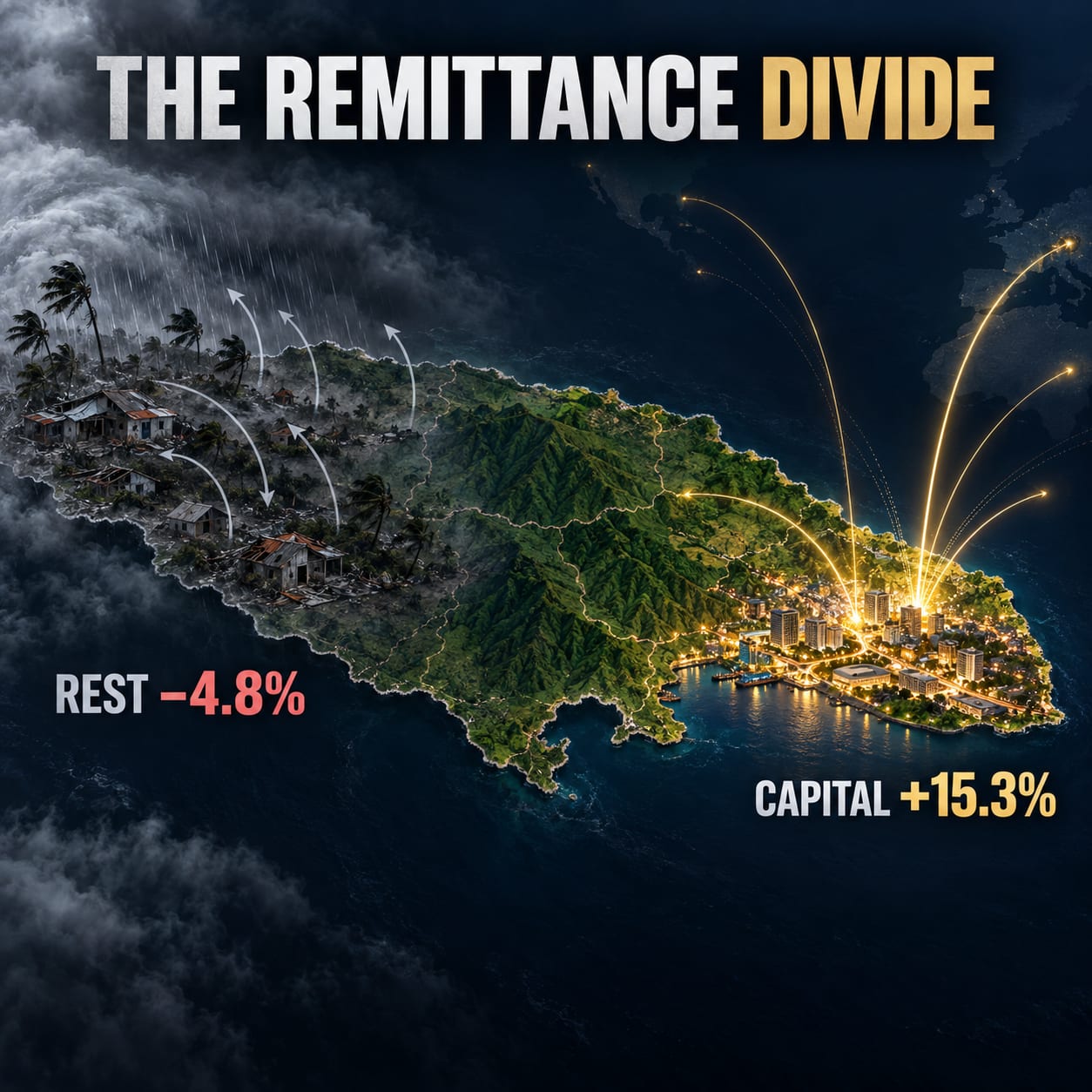
The capital’s advantage predates the storm by years. Between 2021 and 2025, remittances to Kingston and St Andrew rose 15.3 per cent while inflows to the rest of the island fell 4.8 per cent, leaving national totals up just 2.3 per cent over five years. Hanover has lost 22 per cent of its remittance inflows since 2020, and St James 12.8 per cent.
Western Jamaica has also faced heightened scrutiny of money flows through informal channels. The Jamaica Constabulary Force launched its “Scam Dun, Justice A Run” initiative in June 2025, targeting lottery scamming in St James, Westmoreland, Trelawny and Hanover. By July 2025, the operation had carried out 91 raids, charged 24 people, and seized more than J$44 million along with US$55,000; enforcement concentrated in the same parishes now showing the weakest remittance growth.
Regional data suggest the broader tailwind is also easing. The Inter-American Development Bank has flagged a slowdown across the Caribbean, with remittance growth of 5.9 per cent in the first quarter of 2026 compared with a stronger pace in 2025. The IDB attributed the deceleration to the fading of two post-pandemic drivers: transfers funded from migrant savings and additional hours migrants had been working. Jamaica’s first-quarter growth of 4.1 per cent trailed Haiti’s 12 per cent and the Dominican Republic’s 4.2 per cent, even as Latin American and Caribbean remittances reached a record US$173.7 billion in 2025.
The Bank of Jamaica figures capture only money moved through remittance companies, excluding transfers through commercial banks and building societies, and record where funds are collected rather than where recipients live.





Comments