
Donovan White | Redesigning Tourism Marketing, One Data Point at a Time

/ Our Today
administrator
Tourism has always been a people business. Technology has not changed that, and I do not believe it ever will. What technology has changed fundamentally is our ability to understand people: what inspires them, what they search for, where they want to travel, what influences their decisions, what causes them to book and, increasingly, what kind of experience they expect when they arrive.
For Jamaica, this transformation represents an extraordinary opportunity.
When I assumed leadership of the Jamaica Tourist Board in 2018, I came to tourism after more than two decades working across telecommunications, technology, media, advertising, sales and business development. It was an unconventional route into destination marketing, but in retrospect, perhaps precisely the preparation required for the transformation that was coming.
My experience in telecommunications taught me that technology, by itself, is rarely the answer. Technology becomes transformative when it solves a business problem, creates efficiency, improves the customer experience and ultimately produces measurable results. That philosophy has guided much of our transformation at the Jamaica Tourist Board.

The challenge before us is significant. Jamaica competes every day with virtually every desirable destination in the world for one of the most valuable commodities in modern commerce: the attention of the consumer. Winning that competition requires more than beautiful advertising. It requires intelligence.
From mass marketing to intelligent marketing
For generations, destination marketing largely operated on a mass-media model. Destinations developed campaigns, purchased advertising, distributed brochures, attended trade shows and communicated broadly with audiences in their principal source markets.
Those tools remain valuable. But the consumer has changed.
Today’s traveller moves constantly between search engines, social media, online travel agencies, airline websites, review platforms, video content, influencers and increasingly AI-powered discovery and recommendation tools. Inspiration, research and booking are no longer separate stages of a predictable journey.

They are interconnected moments.
That means the Jamaica Tourist Board can no longer simply ask: How many people saw our advertisement?
We must increasingly ask: Who saw it? What interested them? What did they search for afterwards? Did they engage? Did they visit VisitJamaica.com? Did they investigate an experience? Did they move to an airline, hotel or tour-operator booking environment? And what can that behaviour teach us about the next potential traveller?
This transition has been years in the making.
As early as 2018, we articulated our ambition to build a data-rich, socially driven digital ecosystem through which Jamaica could communicate with consumers continuously and measure their engagement. At the launch of Join Me in Jamaica, we deliberately used Jamaicans to tell authentic stories about music, food, art, sport and culture through digital content designed to meet consumers where they were increasingly finding travel inspiration.
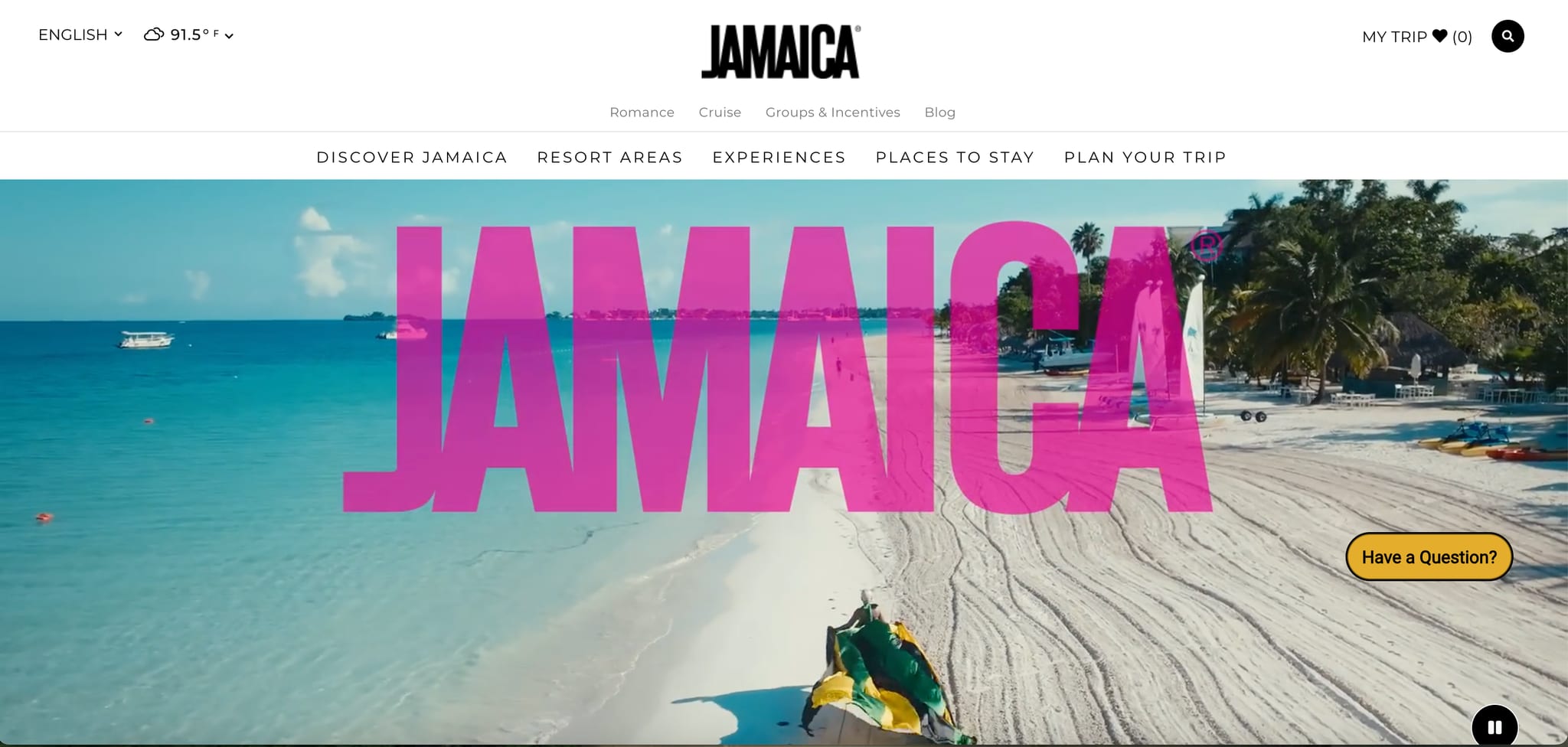
That same year, we launched the redesigned VisitJamaica.com platform. I said then that travellers were becoming increasingly digitally dependent in how they plan, book, experience and share travel. Eight years later, that transformation has accelerated beyond anything the industry could reasonably have imagined.
Today, JTB’s marketing methodology is increasingly technology-integrated. VisitJamaica.com is connected with major tour-operator partners and has become an important referral channel into the travel-purchasing ecosystem.
This is the difference between mass marketing and intelligent marketing. Mass marketing speaks to an audience. Intelligent marketing learns from the audience.
AI as an intelligence layer
Artificial intelligence is therefore not a departure from our strategy. It is the next acceleration of it.

Behind the scenes, AI increasingly helps the JTB understand how audiences engage with Jamaica across platforms, interrogate search-demand intelligence, listen to traveller conversations, optimise advertising and content, and make better decisions about where and how we deploy marketing resources.
At the consumer-facing level, our AI-powered Virtual Jamaica Travel Specialist provides 24-hour assistance through VisitJamaica.com and can converse in up to ten languages. By September 2025, the platform had already answered more than 30,000 consumer queries. We have also been developing audio-AI capabilities to make interaction with the destination even more natural.
Think about what that means.
A potential traveller thousands of miles away can become curious about Jamaica at midnight in London, during lunch in Buenos Aires or early morning in Berlin and immediately begin a conversation with the destination.

Technology effectively allows Jamaica to remain open for inspiration 24 hours a day, 365 days a year.
But the deeper value lies in what those interactions collectively tell us.
Search behaviour tells us what travellers are considering. Questions tell us where uncertainty exists. Social listening tells us what people are saying about Jamaica. Engagement patterns tell us which stories resonate. Advertising analytics allow campaigns to be optimised while they are running rather than waiting until they are finished.
This creates a continuous cycle: Listen. Learn. Respond. Measure. Optimize.
That is intelligent destination marketing.
A transformation accelerated by disruption
Interestingly, some of this innovation was accelerated during one of tourism’s darkest periods.

When COVID-19 brought global travel virtually to a standstill, we faced an unprecedented question: how does a destination remain emotionally connected to travellers when they physically cannot visit?
Our response was to accelerate digital content creation.
By 2021, Jamaica had developed approximately 12 to 13 virtual tours, allowing prospective visitors to digitally experience elements of the destination while international mobility remained severely constrained.
The lesson was profound: when the traveller cannot immediately come to Jamaica, Jamaica must find new ways to reach the traveller.
That philosophy remains relevant well beyond the pandemic.
Technology gives destinations resilience. It allows us to maintain conversations with consumers through disruption, understand changes in sentiment and demand, adjust messaging quickly and remain visible even when circumstances outside our control affect travel.

Technology must ultimately produce results
Innovation cannot become an end in itself.
For a destination marketing organisation, technology must ultimately contribute to stronger awareness, increased consideration, bookings, arrivals and tourism earnings.
There are encouraging indications that our increasingly integrated approach is producing measurable consumer engagement.
Our 70 Days of Jamaica Love campaign, for example, generated almost two million page views and directed approximately 330,000 consumers towards landing or booking pages.
More broadly, Jamaica’s tourism performance provides important context.
In 2024, Jamaica welcomed approximately 4.3 million visitors and generated approximately US$4.3 billion in tourism earnings, exceeding the previous year’s performance.
We must be disciplined, however, about attribution.
No responsible destination marketer should claim that AI or digital marketing alone produces visitor growth. Tourism performance is influenced by airlift, hotel capacity, pricing, product quality, investment, consumer confidence, global economic conditions and geopolitical developments.

And our industry remains particularly exposed to circumstances beyond a destination’s control. COVID-19 demonstrated that dramatically. Extreme weather events, airline disruptions and global industry shocks can similarly interrupt otherwise strong growth trajectories.
What technology does is make us better equipped to understand those changes and respond to them. It allows the JTB to become faster, more precise, more measurable and ultimately more efficient in how we create demand.
Among the destinations pushing the frontier
Is Jamaica the world’s most technologically advanced tourism destination?
There is no universally accepted global benchmark that would allow me responsibly to make that declaration, but I believe the evidence allows us to make another, equally important claim: Jamaica is firmly among the destinations pushing aggressively into the next generation of intelligent destination marketing.
Consider the ecosystem now being assembled: an integrated destination website and referral platform; multilingual AI visitor assistance; virtual destination experiences; search-demand intelligence; social listening; automated advertising optimisation; data-driven audience segmentation; AI-supported analytics; digital content at scale; and increasingly sophisticated connections between inspiration and conversion.
Even the architecture of our campaigns has changed. When Usain Bolt was appointed Jamaica’s Global Tourism Ambassador in 2025, I explained that JTB’s marketing methodology had become fully technology-integrated and that content was now a critical currency of integrated digital marketing.
The next frontier is even more exciting.
Imagine combining real-time search behaviour, airline capacity, booking patterns, accommodation inventory, visitor sentiment and expenditure data to identify demand before it fully materialises.
Imagine detecting growing interest in Jamaica from São Paulo, Riyadh, Lagos, Mumbai or Tokyo and rapidly adjusting language, content, media investment, distribution partnerships and airline conversations around that intelligence.
Instead of marketing responding to history, marketing begins responding to signals. That is where destination management is heading.

Making Jamaica more Jamaican
Yet perhaps the greatest opportunity technology presents is not making Jamaica more technological. It is making Jamaica more Jamaican. That distinction matters enormously.
Artificial intelligence can process millions of data points. It can identify patterns faster than any human team. It can translate languages, personalise communications, optimise advertising and answer questions instantly.
But AI cannot recreate the feeling of walking into a Jamaican community and being welcomed as though you belong there.
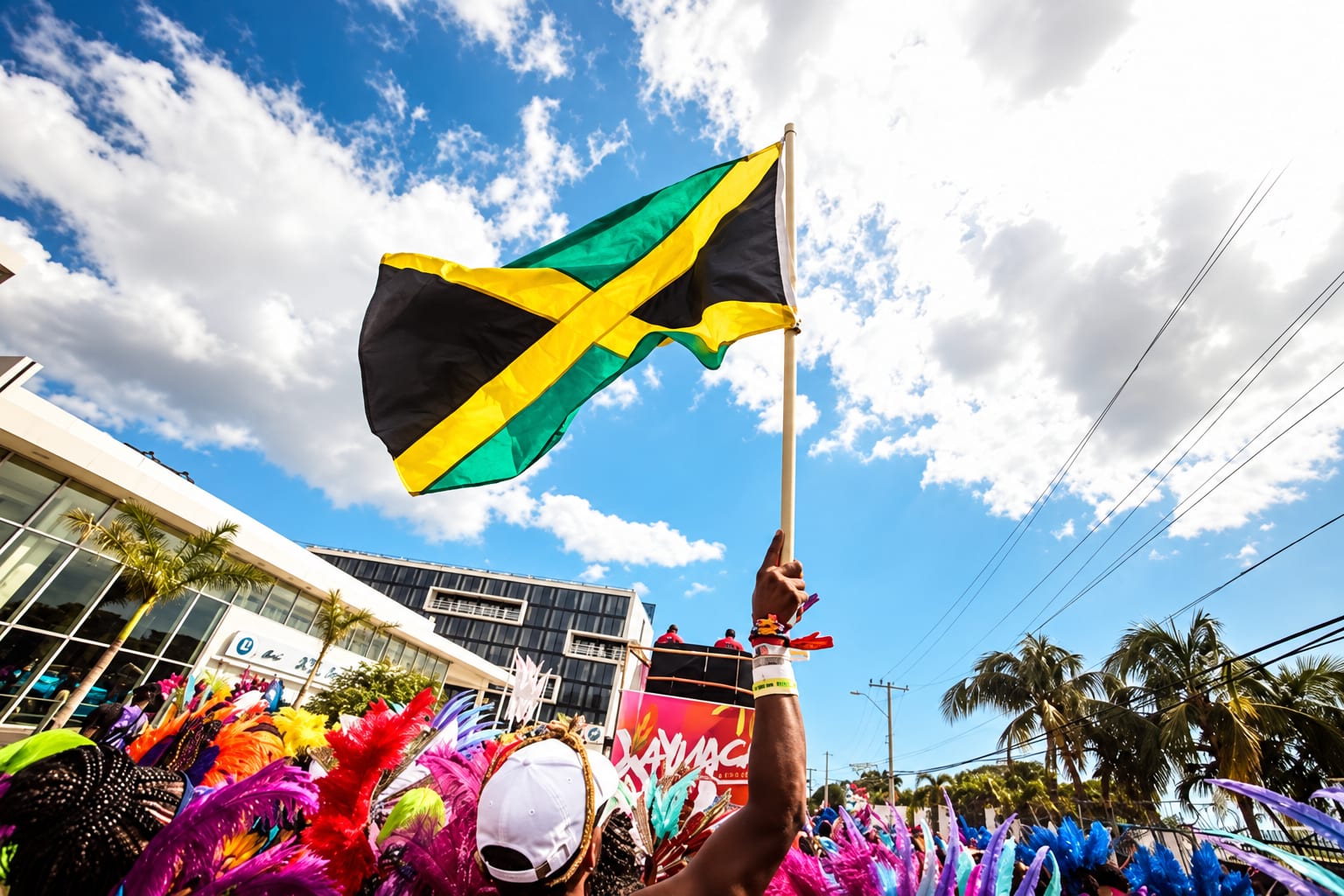
It cannot replicate the sound system on a Kingston night, the conversation with a craft vendor, the smell of jerk smoke drifting across the road, the energy of Carnival, the stillness of the Blue Mountains, the rhythm of Negril at sunset or the spontaneous warmth of a Jamaican who decides that a visitor should experience something they would never have discovered in a guidebook.

That is why I have consistently argued that the human element of tourism is irreplaceable. Jamaica’s strong repeat visitation is fundamentally connected to our hospitality and the relationships visitors develop with our people.
Our objective, therefore, cannot be to use AI to manufacture Jamaica. It must be to use intelligence to reveal Jamaica more authentically. If data tells us a traveller is passionate about food, our technology should help introduce that person to Jamaican chefs, markets, farmers, restaurants and communities.
If someone loves music, technology should lead them beyond a generic advertisement and into the extraordinary living ecosystem that gave the world reggae, dancehall and sound-system culture.
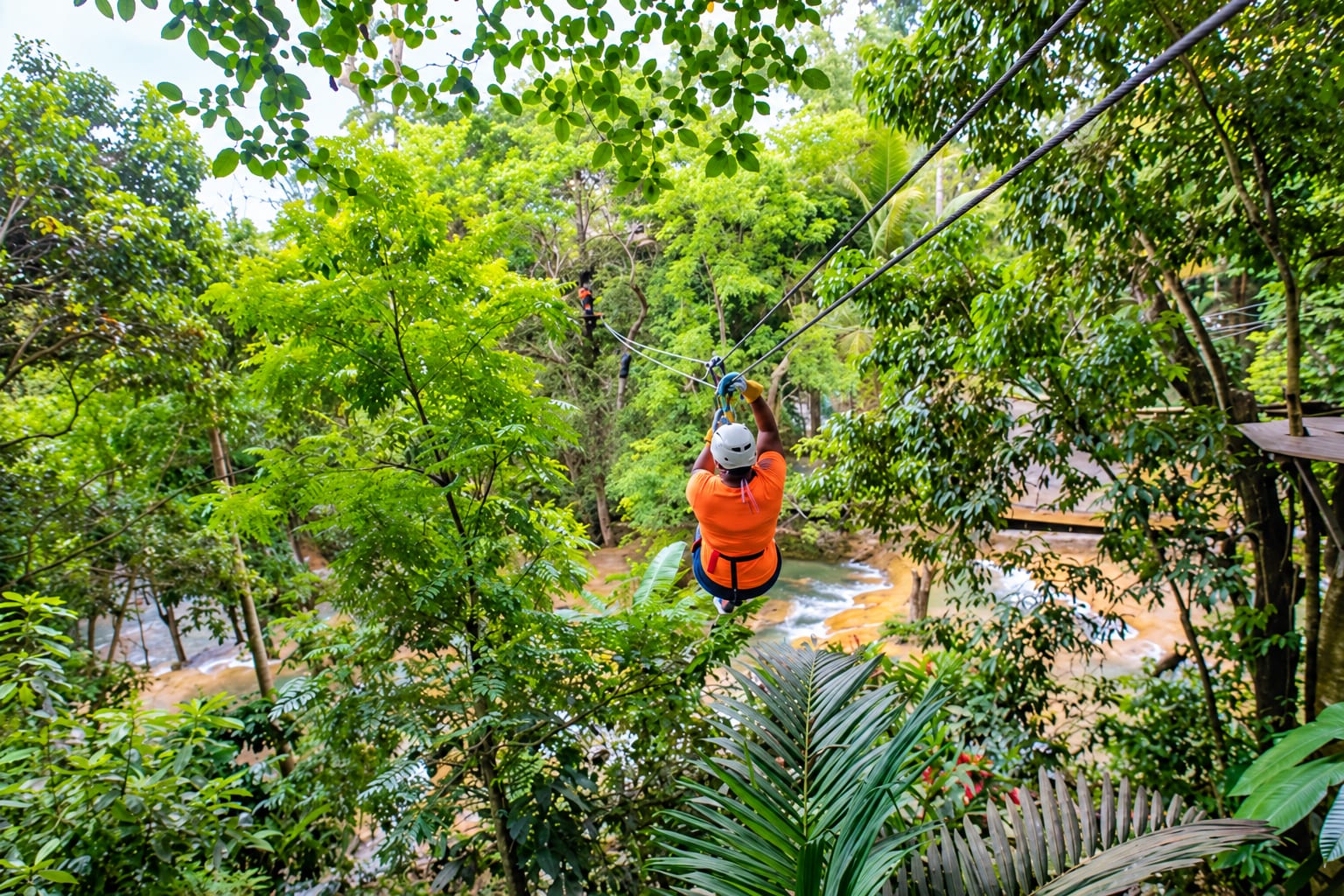
If a traveller is interested in history, wellness, adventure, sport or community tourism, intelligent marketing should make those authentic Jamaican experiences easier to discover.
In that sense, personalisation and authenticity are not opposing ideas. Properly deployed, technology allows us to connect the right traveller with the most relevant authentic Jamaica.
The next chapter
The destination-marketing organisations that succeed over the next decade will not necessarily be those with the largest advertising budgets.
They will be the destinations that understand travellers fastest, recognise changes in demand earliest, create relevant content most efficiently and convert intelligence into experiences most effectively.
That is the transformation we are pursuing at the Jamaica Tourist Board.
For more than 70 years, the JTB has had the privilege of introducing one of the world’s most compelling destinations to generations of travellers. Technology now gives us tools our predecessors could scarcely have imagined.
But the mission remains remarkably similar.

Understand the traveller. Inspire them. Make Jamaica easy to discover. Give them compelling reasons to come. And when they arrive, allow our people, culture and extraordinary sense of place to do what technology never can.
Technology may help the world find Jamaica. But Jamaica must always be the reason they fall in love with it.
That is how we are redesigning tourism — one traveller, one interaction and one data point at a time.
Donovan White is Director of Tourism at the Jamaica Tourist Board.






Comments