Opposition rejects Holness’s remarks romanticising classroom crisis as a “Return To Nature”

/ Our Today
administrator
The Opposition Spokesperson on Education (Damion Crawford) has strongly criticised Prime Minister Andrew Holness’s recent comments about students forced to learn outdoors, calling his attempts to romanticise substandard conditions an insult to the nation’s intellect and sensibilities.
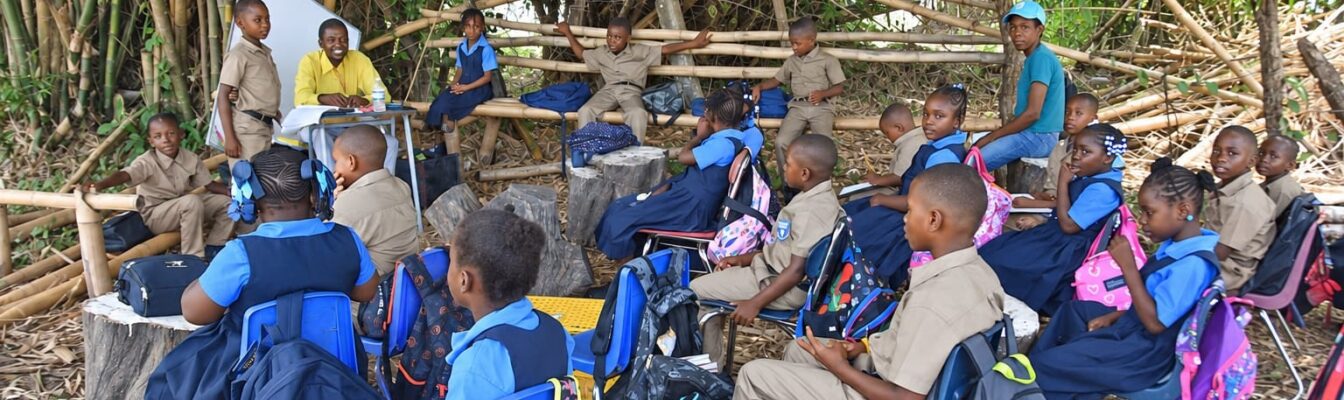
The Opposition finds the Prime Minister’s remarks about students learning under mango trees at Holland Primary deeply troubling and out of touch with the reality these children face. To suggest that children forced out of sweltering heat in temporary tents to sit outdoors represent a “positive return to nature,” or a reminder of his own “favourite time” at school, is an attempt to normalise what is clearly a failure of the State to provide an adequate learning environment.
This, he seems to suggest, is sufficient in lieu of 21st-century, climate-resilient classrooms that protect their health, safety and academic performance.
The Opposition notes that what these children and their teachers were forced to endure at the start of this school year is the direct result of a chain of three distinct failures by this administration:

THE FIRST FAILURE: Failure to Rebuild Classrooms in a Timely Fashion
Despite claiming to possess significant resources for reconstruction, the Government failed to complete the necessary school repairs in time for the reopening of school. With over 600 schools affected, the scale of the challenge demanded urgency, careful planning and effective execution.
The administration had an entire year, including the summer vacation period, to accelerate the rehabilitation programme. Yet, by the first day of class, only 57 out of 681 impacted schools were reportedly fully completed, leaving too many children returning to schools where construction remained ongoing and normal classroom accommodation was unavailable.
THE SECOND FAILURE: The Alternative Tent System Failed on Day One
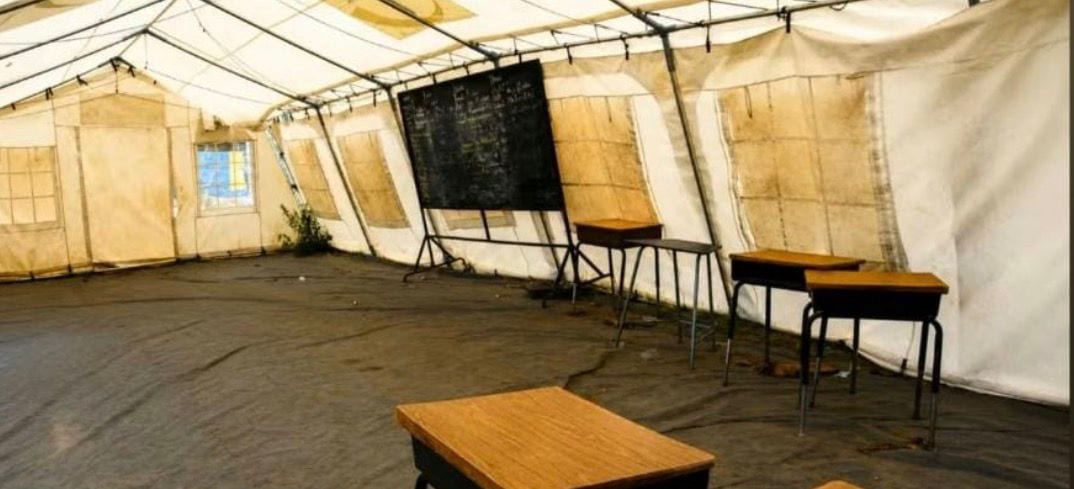
Where permanent classrooms could not be completed in time, the Government had a responsibility to provide temporary facilities that were suitable for Jamaica’s climate and capable of functioning as classrooms. In this particular circumstance, that alternative failed on the very first day of school.
The temporary tent was intended to accommodate two classrooms. Yet when teachers and students attempted to use it, the heat became so unbearable that none could remain inside. Grade 2 and Grade 3 students were consequently moved outdoors, including beneath a mango tree and a makeshift bamboo structure.
A temporary classroom cannot be considered an adequate solution if the stakeholders for whom it was provided are physically unable to remain inside it. Temporary classroom facilities must provide not only shelter, but proper flooring, adequate ventilation, shading, cooling and protection from the elements if they are to function as genuine learning spaces.
Whatever the ministry’s excuses, the solution failed the practical test, and children could not safely and comfortably learn inside the facility provided. It must be noted that this was on day one of school.

THE THIRD FAILURE: Failure to Respond Adequately to the Fallout
When the tent system failed, there should have been an immediate contingency response to provide an environment in which teaching and learning could continue. Instead, teachers were left with little choice but to relocate Grade 2 and Grade 3 students to dirt patches beneath trees and makeshift structures just so that they could escape the unbearable conditions inside the tent.
The Prime Minister should therefore not romanticise the teachers’ improvisation. To take this chain of operational failures and reframe it as a nostalgic outdoor experience demonstrates a failure to appreciate the seriousness of the conditions confronting these children.
Neither can this be disguised as structured outdoor learning, which is fundamentally different from children being forced outdoors because their classrooms are unavailable and the solutions provided are unbearable.
The consequences of this makeshift mango tree learning are significant:
- Compromised Learning Environment: Outdoor learning strips away many of the protections of a normal classroom. Children must compete with disruptions from passing traffic, construction activity, wind and other environmental distractions, affecting concentration and making the teacher’s task considerably more difficult.
- Health and Safety Risks: Sitting outdoors increases the exposure of young children to heat, dust, insects, vehicle emissions and other environmental hazards. Their proximity to roads and active construction areas also creates legitimate safety concerns.
- Loss of Instructional Time and Learning Tools: Rain, high winds, shifting shade and other outdoor conditions can interrupt lessons, while the absence of whiteboards, projectors, charts and other classroom resources limits the quality and range of instruction teachers can provide.
- Educational Inequality: Forcing vulnerable students in rural and disaster-affected communities to accept conditions that would never be considered adequate elsewhere reinforces an unacceptable educational divide. It sends a message to these children that their right to a safe, comfortable and equitable learning environment is somehow less important.

The Opposition strongly advises the Prime Minister that it would be fitting for him to render a formal, unreserved apology to the children, teachers, parents and indeed the nation for downplaying their plight and trivialising what is a serious failure in the provision of an adequate educational environment.
The Opposition further calls on the Ministry of Education to immediately inspect every temporary classroom tent currently deployed and ensure that each is equipped with proper flooring, adequate ventilation, appropriate shading and cooling measures suitable for Jamaica’s climate.
Cooling should be provided as a standard consideration across the temporary tent system, with the Ministry urgently assessing the conditions at each location to determine the appropriate intervention. This should include adequate fans as a minimum response where required, with more intensive cooling solutions, including portable air-conditioning, deployed where conditions and assessments demonstrate that they are necessary to maintain a safe and conducive learning environment.
Where a temporary structure cannot maintain acceptable conditions even with these interventions, alternative accommodation must be provided immediately. Further, we demand a transparent and accelerated timeline for the completion of permanent classrooms so that our children can be rescued from these unacceptable conditions and returned to proper learning environments.
Our children do not need a return to nature. They need a return to normalcy.





Comments