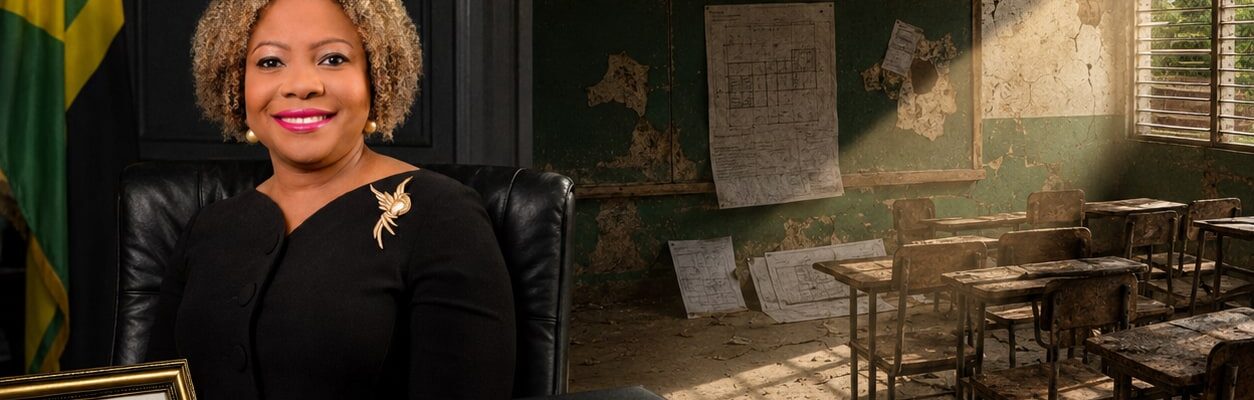
Charlene McMorris| Education is too important for an experiment: An open letter to the Prime Minister and Cabinet of Jamaica on leadership, the future of education, and the Dana Morris Dixon problem

/ Our Today
administrator
I write to you today with that peculiar form of Jamaican optimism: the kind that has survived potholes, promises, commissions of enquiry, transformation committees, strategic plans, implementation plans for the strategic plans, and governments announcing solutions to problems that somehow survive every solution.
We are, if nothing else, a resilient people.
But resilience has its limits.
And nowhere should those limits concern you more than in education.
For years, Jamaica has spoken of education as the ladder out of poverty, the engine of development and the foundation upon which our national future must be built. We have appointed commissions, commissioned reports, launched reforms, relaunched reforms, transformed transformation programmes and held enough consultations to qualify the entire country for an honorary doctorate in discussing education.
Yet the patient remains unwell.
And now, at precisely the moment when Jamaican education requires extraordinary leadership, we appear to have confused confidence with competence, eloquence with achievement, visibility with vision, and the ability to command a microphone with the ability to command a ministry.
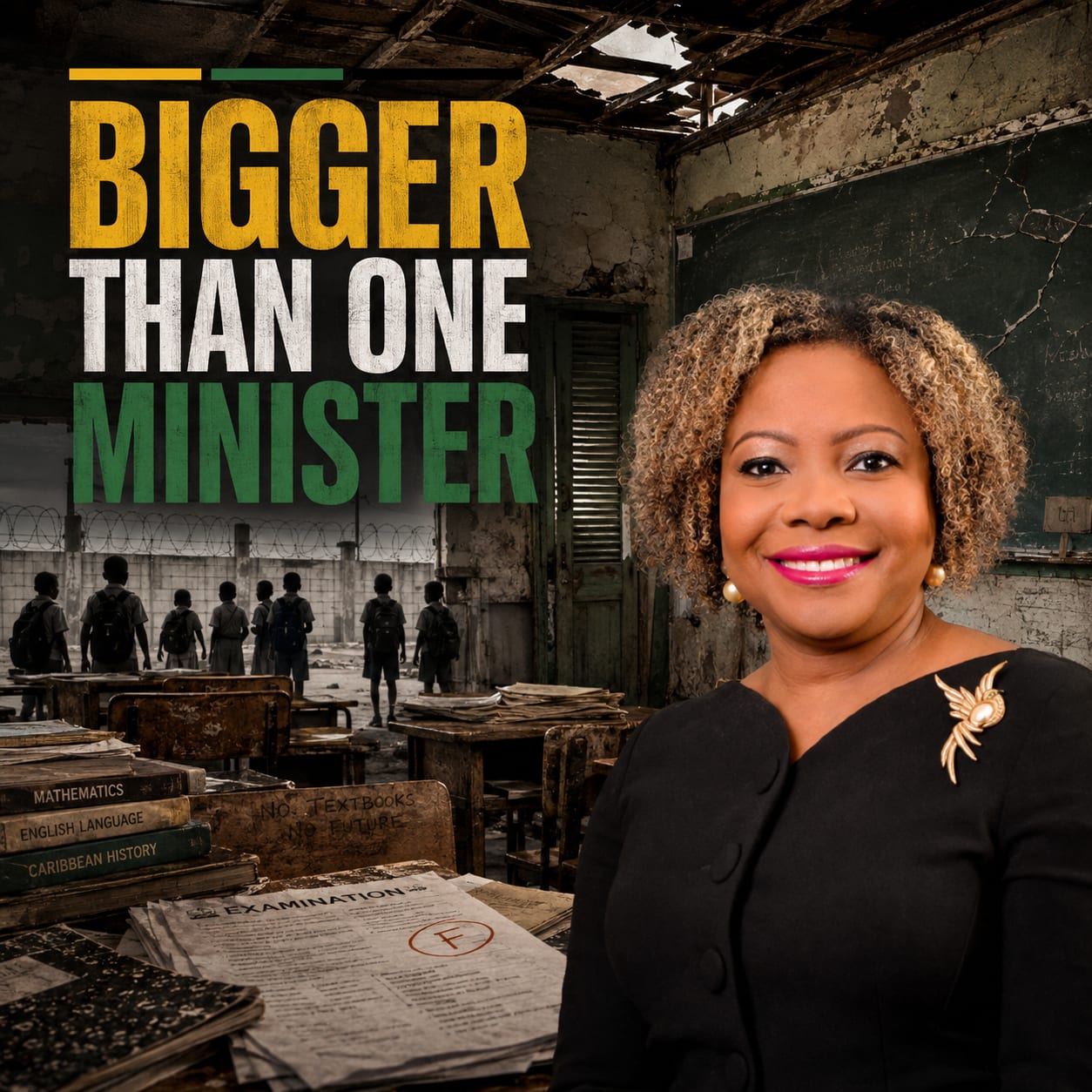
Jamaica’s education crisis is bigger than Dana Morris Dixon
Let us begin with fairness.
Dana Morris Dixon did not create Jamaica’s education problems.
She did not invent learning loss, teacher migration, educational inequality, weak numeracy and literacy outcomes, inadequate school infrastructure, bureaucratic inertia, violence in schools, the digital divide, inadequate special-education provision or the enormous socioeconomic disparities separating Jamaican children.
These problems precede her. Some precede this Government. Some precede most of us. But this is precisely why the person appointed Minister of Education matters so much. A country facing ordinary problems can perhaps tolerate ordinary leadership. A country confronting extraordinary problems cannot.
Jamaica requires an Education Minister capable of building coalitions across teachers, principals, parents, students, universities, unions, churches, private-sector organisations, civil society, international partners and the political divide.
The Minister must be able to listen without regarding disagreement as insubordination.
The Minister must understand that authority is not the same thing as leadership.
The Minister must appreciate that respect earned is infinitely more useful than respect demanded.
And above all, the Minister must possess the temperament to bring people together.
Because you cannot transform education while fighting the people you need to transform it.
That should be obvious.
Apparently, it needs saying.
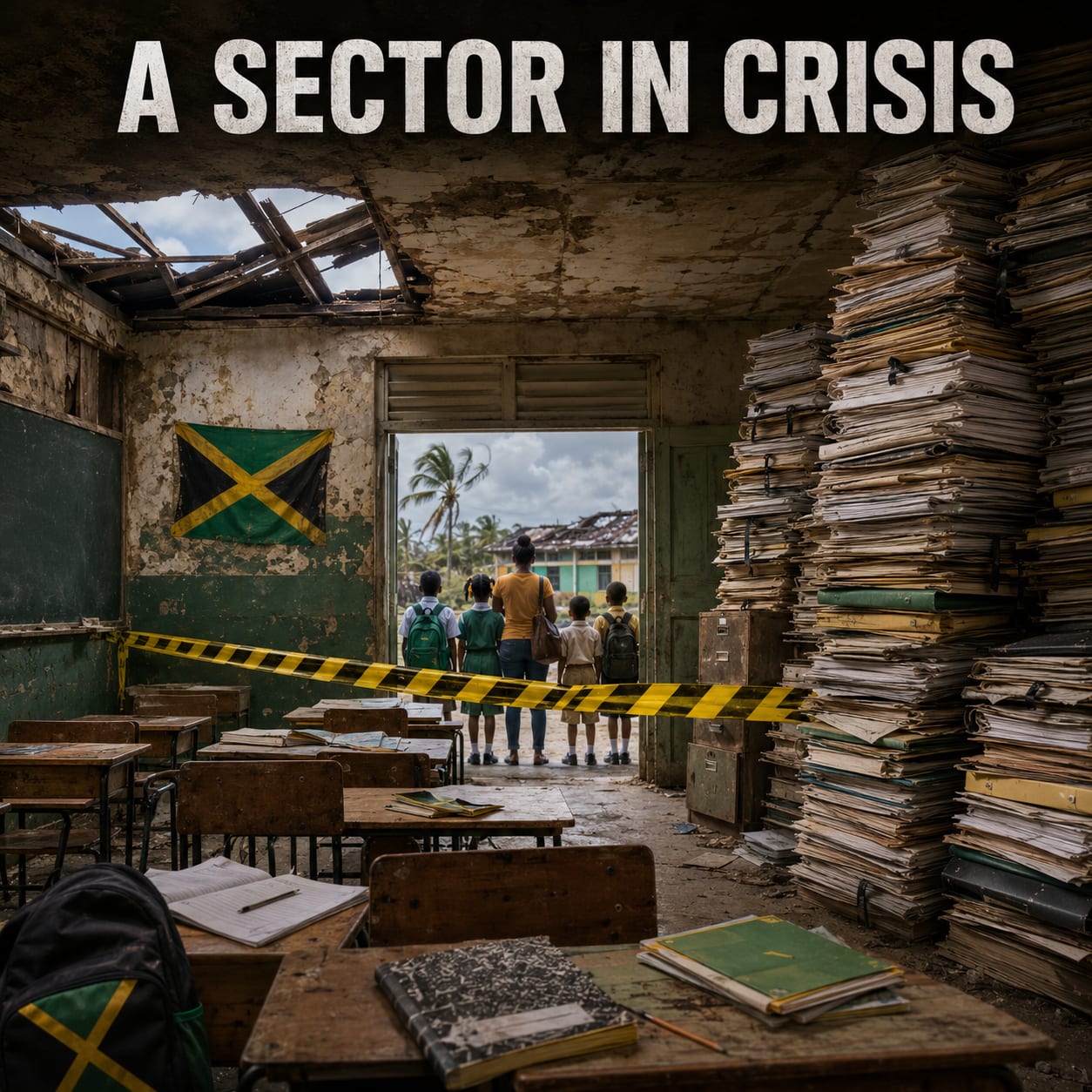
The state of the sector: A tragedy in several acts
Let us begin with the facts, or what passes for facts in an era where “rules are rules” is considered a policy position. Jamaica’s education system currently stands as a monument to bureaucratic inertia, a sector where schools damaged by Hurricane Melissa remain in disrepair nearly a year later, where parents send children to institutions with more cracks than confidence, and where the Ministry of Education has managed to transform itself into a case study in operational paralysis and a social experiment in leadership insecurities negotiated by a childhood drama of lack.
An August letter to the Observer asked a question so obvious it should not need asking: why, on the eve of the academic year, are significant numbers of schools still in serious disrepair? It is a question that echoes in empty classrooms and leaks through roofs that should have been fixed months ago. The Minister herself acknowledged in July that the ministry had not handled repairs as well as it could have, a confession that would be refreshing if it were not followed by more of the same inaction. It is rather like a surgeon admitting they have clumsy hands, then asking to continue operating.
Then there is the grooming policy debacle, that magnificent own-goal where the Minister declared that “school is not a runway”, as if Jamaican children were sashaying into mathematics class in haute couture rather than simply requesting that their natural hair not be policed like contraband. The Fi We Children Foundation, in a moment of clarity rare in public discourse, pointed out the obvious: consistency in enforcing a rule does not make the rule reasonable. But reason, it appears, is a guest who was not invited to this particular ministry.
And who could forget the Naggo Head Primary fence controversy, where the Minister cited an 18-month bureaucratic delay as evidence of red tape, only to be publicly rebuked by the Portmore Municipal Council, who called her account “factually inaccurate”? When municipal councillors are correcting your homework, Prime Minister, it may be time to reconsider who is sitting at the head of the class.
But these are merely symptoms. The disease is deeper.

On leadership: Who is fit, and who is faking it
Leadership in education is not a popularity contest, though one suspects this particular Minister has not received that memo. It requires vision, administrative competence, the ability to inspire stakeholders, and, dare I say it, a basic capacity to get along with human beings without leaving a trail of bruised egos and broken working relationships. It is education; empathy is a must.
Let us speak plainly, as Jamaicans do when the microphones are off. The current Minister of Education, Senator Dr. Dana Morris Dixon, has occupied positions at the University of the West Indies, the Ministry of Foreign Affairs, JAMPRO, Jamaica National, and the Bank of Jamaica. One would expect, with such a curriculum vitae, a legacy of transformative achievement, of systems improved and institutions strengthened. Yet, Prime Minister, if you were to ask anyone, truly, anyone, who has worked alongside her in any of these capacities to name a single, concrete achievement, you would be met with the kind of awkward silence usually reserved for when someone passes wind in a crowded elevator. I could list a trail of failures based on several discussions and documents that I have, but I will save that for something else, some other time.
“She speaks well”. That is the consensus. She speaks very well. She speaks so well, in fact, that one might be forgiven for thinking that eloquence is a substitute for execution. Many of us like the beautiful speaking people, but education policy is not a debating society. Children cannot eat rhetoric. Teachers cannot pay rent with press conferences. And schools, as it turns out, cannot be repaired by soundbites.
The PNP Youth Organisation, in a rare moment of poetic justice, recently asked: “Will the real Education Minister please stand up?” They alleged that stakeholders were unclear whether direction was coming from Morris Dixon, State Minister Rhoda May Crawford, or Senator Marlon Morgan. When your own youth wing is confused about who is driving the bus, it is generally a sign that the bus is either driverless or that the person in the driver’s seat has made themselves invisible.
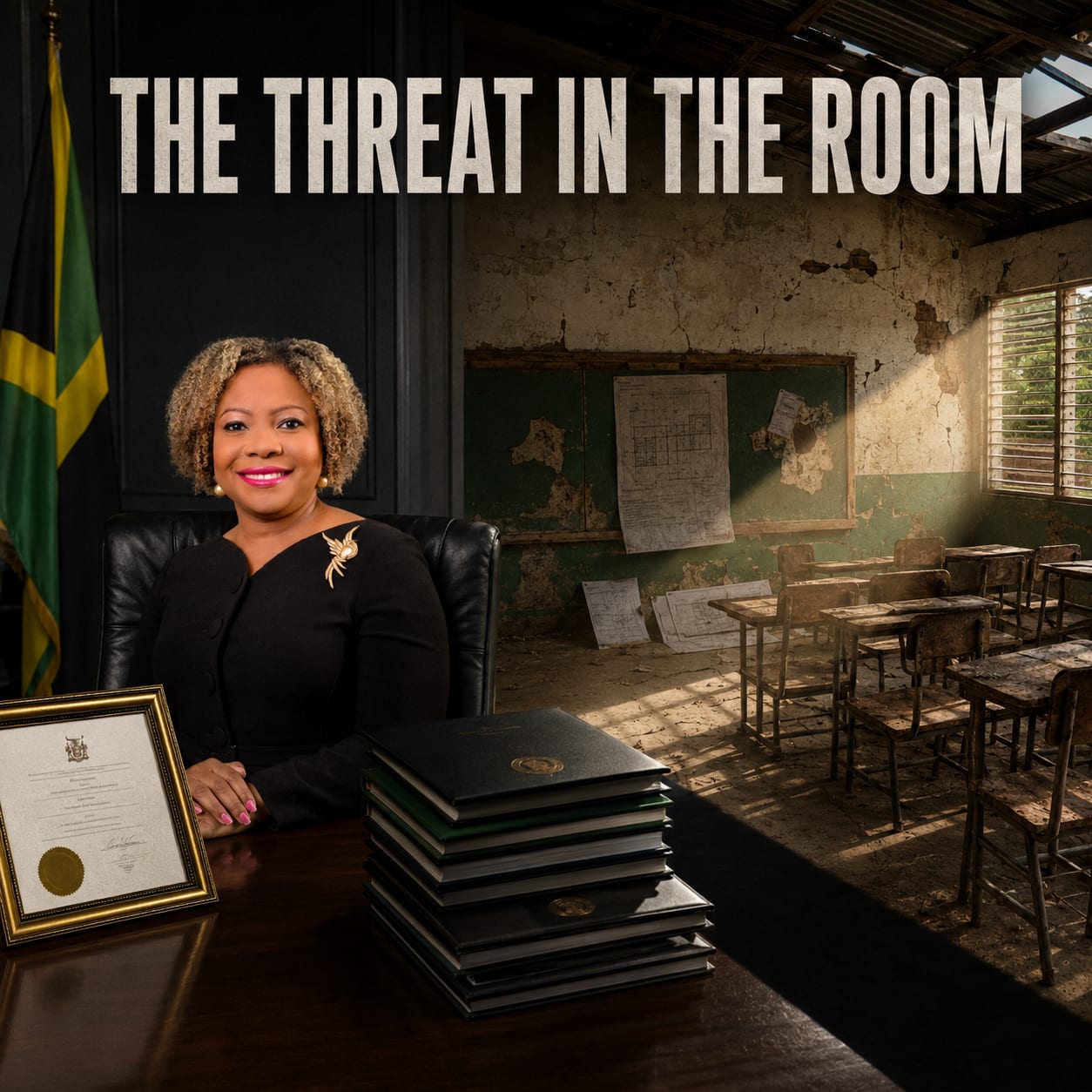
The threat in the room
The appointment of Senator Morris Dixon to the education portfolio was not merely a misstep; it was, and continues to be, an active threat to the sector. Not because she lacks credentials on paper- oh, the paper is immaculate- but because paper does not teach children, and titles do not build schools.
What we are witnessing is the elevation of a personality over competence, of presentation over substance. And the education sector is paying the price in delayed repairs, confused policy, alienated stakeholders, and a ministry that appears to be operating in a state of permanent dysfunction.
How Trauma is undermining Policy and Implementation
It has become painfully apparent to many of us who work here, who are more qualified than her, who have empathy and who know broken people, that the Minister is more preoccupied with being liked, a function of her own trauma, of not feeling that she is good enough. This is not armchair psychology; this is observable behaviour from anyone who has had the misfortune of professional proximity.
The minister appears to possess a remarkably complicated relationship with the success of others. Especially women. And she loves weak men. According to her, “they are easily controllable”. She is extremely petty and small-minded. And consequently, the education sector is suffering. She does not get along with people because of her insecurities. And for all of us who have had to interact with her, her own actions are a representation of this lack that she is suffering from. She demands respect but has no capacity to command it. She expects loyalty but offers none. She wants to be celebrated for a job she has not done, in a sector she has not improved, by a people she has not served.
I can find no organisation under her ministry which does not have a problem with her. As a matter of fact, she has been actively trying to get rid of many heads of agencies whose track records, achievements and evaluations can only be described as exemplary. We all know this is jealousy. Remember we spoke about her insecurities; the truth is it’s much greater than you can imagine. Trust me.
Consequently, we are concerned that her actions or inaction and attitude has undermined the education sector in ways that will take years to repair. Many of the real contributors to Jamaica’s development have sought to separate themselves from her. According to one that I spoke to, “she is broken, in more places than we think.” It is a shame; many people who have dedicated their lives to nation-building are now actively avoiding the Minister of Education, being undermined by her or have become the victims of misinformation by the minister who had the portfolio for information. One victim, whose contribution to nation-building has historically been profound, has actually migrated because of her. The truth is, the minister is only celebrated by those who are broken and dysfunctional themselves, those hypocritically seeking some benefit from her and those who share similar traits.
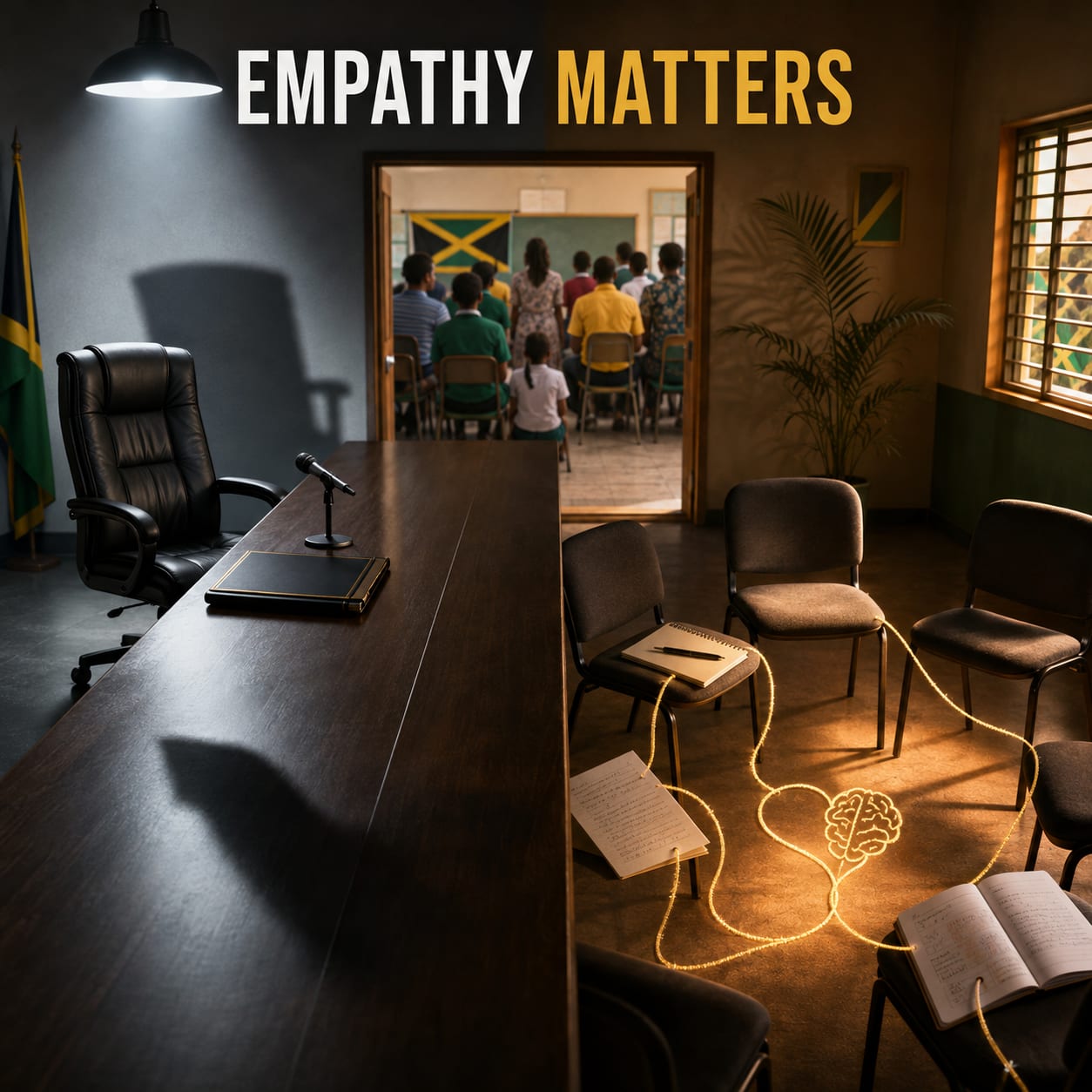
Education requires emotional intelligence
There is another dimension of leadership that Jamaica routinely undervalues.
Temperament.
A Minister can have intelligence and still be a poor leader.
A Minister can be articulate and still alienate stakeholders.
A Minister can possess authority and still lack influence.
Leadership requires the emotional intelligence to disagree without humiliating, correct without belittling, command without bullying and exercise authority without needing constantly to demonstrate that one possesses it.
But only a secure leader can achieve this.
A secure leader does not need every room to affirm her importance.
A secure leader can accommodate disagreement.
A secure leader surrounds herself with capable people rather than people who merely agree with her.
A secure leader understands that criticism is information.
When stakeholders across an education system increasingly feel unheard, dismissed or alienated, Cabinet should investigate rather than simply defend the Minister.
I cannot independently establish every private complaint being made about Dr Morris Dixon, nor should gossip become evidence.
But Cabinet can establish the truth.
Ask.
Speak privately with principals.
Speak with teachers.
Speak with senior education officials.
Speak with university leaders.
Speak with agencies and organisations falling within the portfolio.
Speak with people who have worked directly with the Minister across her previous professional assignments.
And crucially, create conditions in which those people can speak without fearing consequences.
Then ask a brutally simple question:
Does this Minister bring people together or drive them apart?
The answer matters.
But that’s only if you really and truly care about the future of Jamaica.
The solution
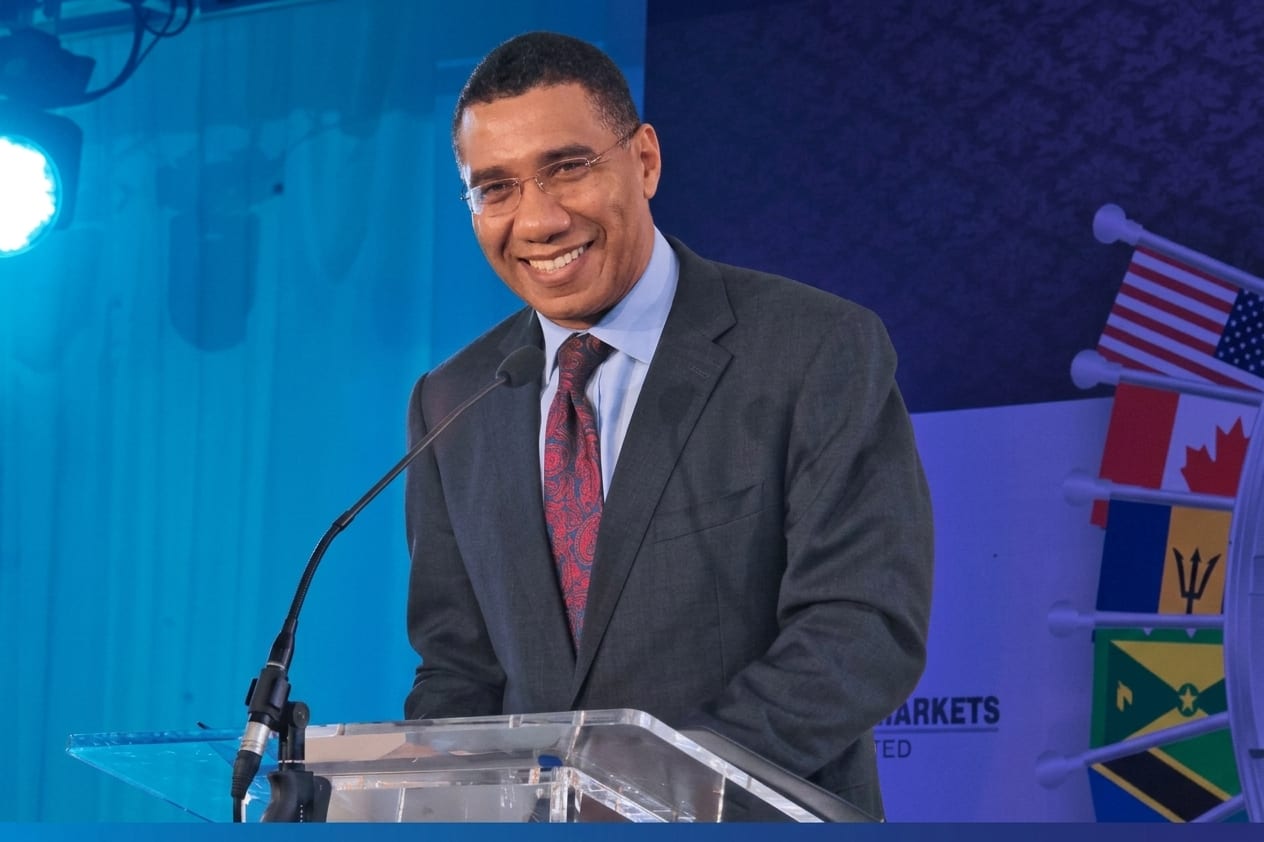
The irony, Prime Minister, is that the solution is sitting right there in the ministry. Either Senator Marlon Morgan or State Minister Rhoda May Crawford would make a much better minister. They at least appear to understand that education is about children, not celebrity; about schools, not self-esteem; about the future of the nation, not the fragile ego of the person holding the portfolio. More importantly, they demonstrate empathy and an understanding of the sector. And even more importantly, unlike the minister, they are respected by the staff and many principals.
Either would bring a steadiness that is currently absent, a focus that is currently diverted, and a humility that is currently non-existent. They would not need to be the smartest person in the room because they would not spend all their energy ensuring that they are perceived as such. They could simply do the work.
The current situation at the ministry is intolerable. Dana has managed to turn a portfolio that should be about nation-building into a therapy session that the entire country is forced to attend.
Prime Minister, I implore you: remove her from this serious sector and place her somewhere else. Perhaps a portfolio dedicated to speeches and ribbon-cuttings.
The education sector cannot afford to be a runway for political vanity, nor a rehabilitation centre for personal insecurity. It needs real leadership. It needs competence. It needs someone who understands that the job is not about them. I remember your stellar management of the ministry, and to say she cannot follow in your footsteps is a great understatement.
Until then, we will continue to watch as schools crumble, policies contradict, stakeholders despair, and a ministry meant to enlighten instead confuses. We will watch, and we will wait, and we will wonder how many more children must pay the price for one woman’s inability to confront her own reflection.
Please save us, Prime Minister. The Ministry of Education does not need a personality.
It needs leadership.
It does not need someone who can win the room.
It needs someone who can transform the system.
And there is a profound difference between the two.
A School is not a runway. But under her leadership, it has certainly become a circus. And the clowns, unfortunately, are not the ones in costume.



Comments