
Dennis Minott | Taken, enslaved, chained to labour, utterly stiffed.

/ Our Today
administrator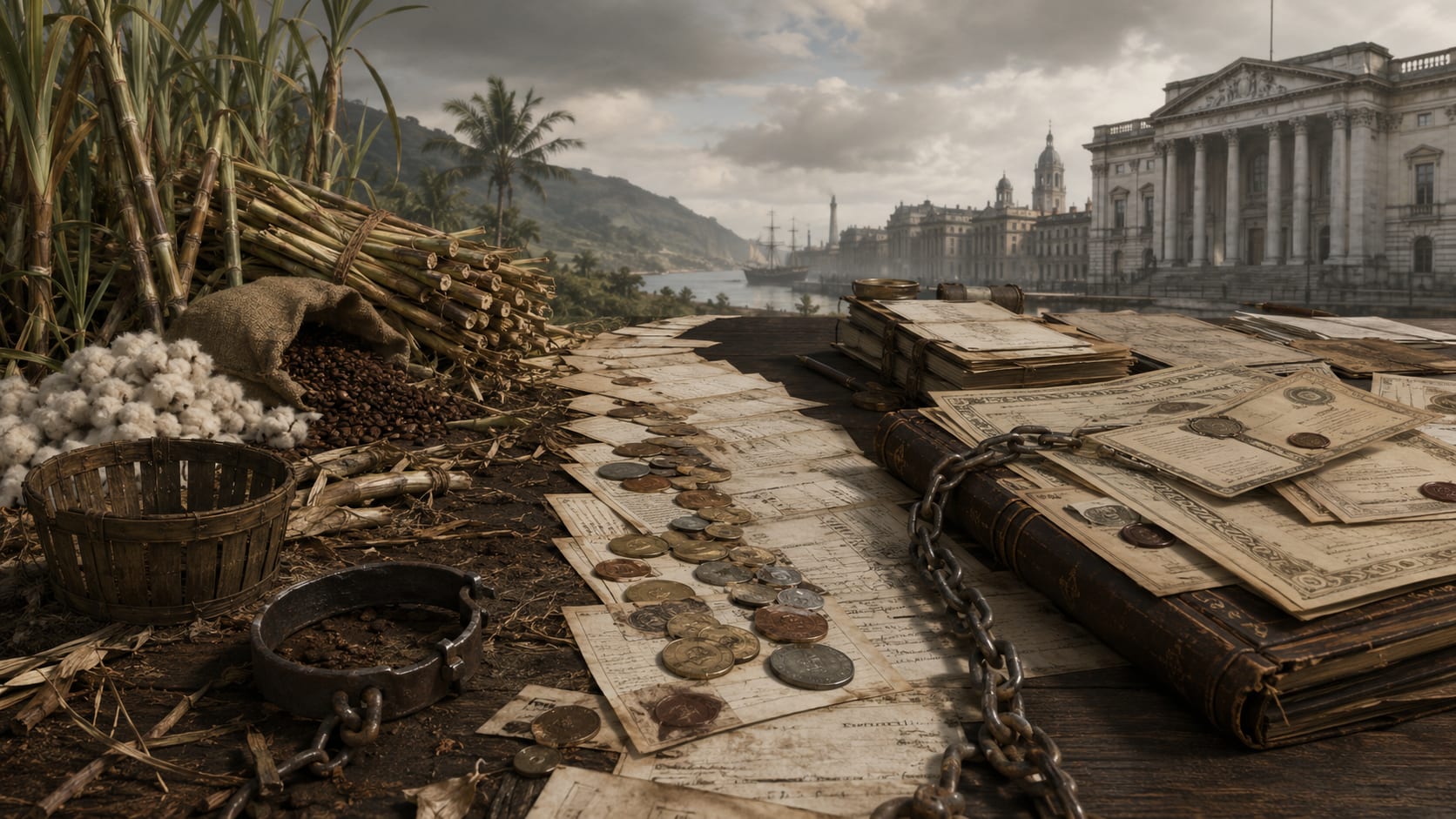
The sums of historical injustice are not always beyond ordinary people.
For centuries, Africans were kidnapped, transported across the Atlantic in chains and compelled to labour without wages. Their labour produced sugar, coffee, cotton and other commodities, enriched plantations and merchants, and helped generate capital that flowed into Britain. Their suffering was converted into profit. Their humanity was reduced in law to property.
Then came emancipation.
Britain did something extraordinary. It compensated the people who had owned the enslaved.
The British Government committed £20 million in compensation to slave-owners — an enormous sum for the 1830s (40% of Britain’s GDP that year) — while the formerly enslaved received nothing for generations of unpaid labour. The Bank of England confirms that the compensation was added to the national debt and that the final repayment of that debt was not completed until 2015.
Pause over that fact.
The enslaved were freed.
Their enslavers were paid.
And the public debt created to compensate the enslavers survived into the lifetime of people living today.
That is not an allegation. It is British institutional history.
And it gives Britain a particularly uncomfortable reason to listen when the Caribbean speaks of reparations.
The Zong: When Cargoes Of Human Beings Became Insurable
Consider the Zong.

On 6 September 1781, the British slave ship Zong sailed from West Africa towards Jamaica carrying 442 enslaved Africans. During the voyage, approximately 140 were thrown overboard. Jamaica’s Government has deliberately chosen the anniversary of that departure for its forthcoming reparations petition to King Charles III.
The horror of the Zong was not simply that people were murdered.
It was that the murders occurred within an economic and legal system capable of treating human beings as insured property.
The owners sought insurance compensation for those thrown into the sea. The ensuing case, Gregson v Gilbert, was litigated as an insurance dispute rather than a prosecution for mass murder. The National Archives still catalogues the surviving legal records of the case.
That is the point British citizens should confront.
Slavery was not merely a collection of individual acts of cruelty. It was an organised economic system, protected by law and sustained by commerce, finance, insurance, shipping and political power.
The Zong exposed that system in its most horrifying form.
Human beings could be purchased.
They could be insured cargo.
They could be culled, yes, “culled”.
And their destruction–to shark feed–could become the subject of a financial claim.
No amount of historical distance makes that morally neutral.
The Compensation That Went One Way
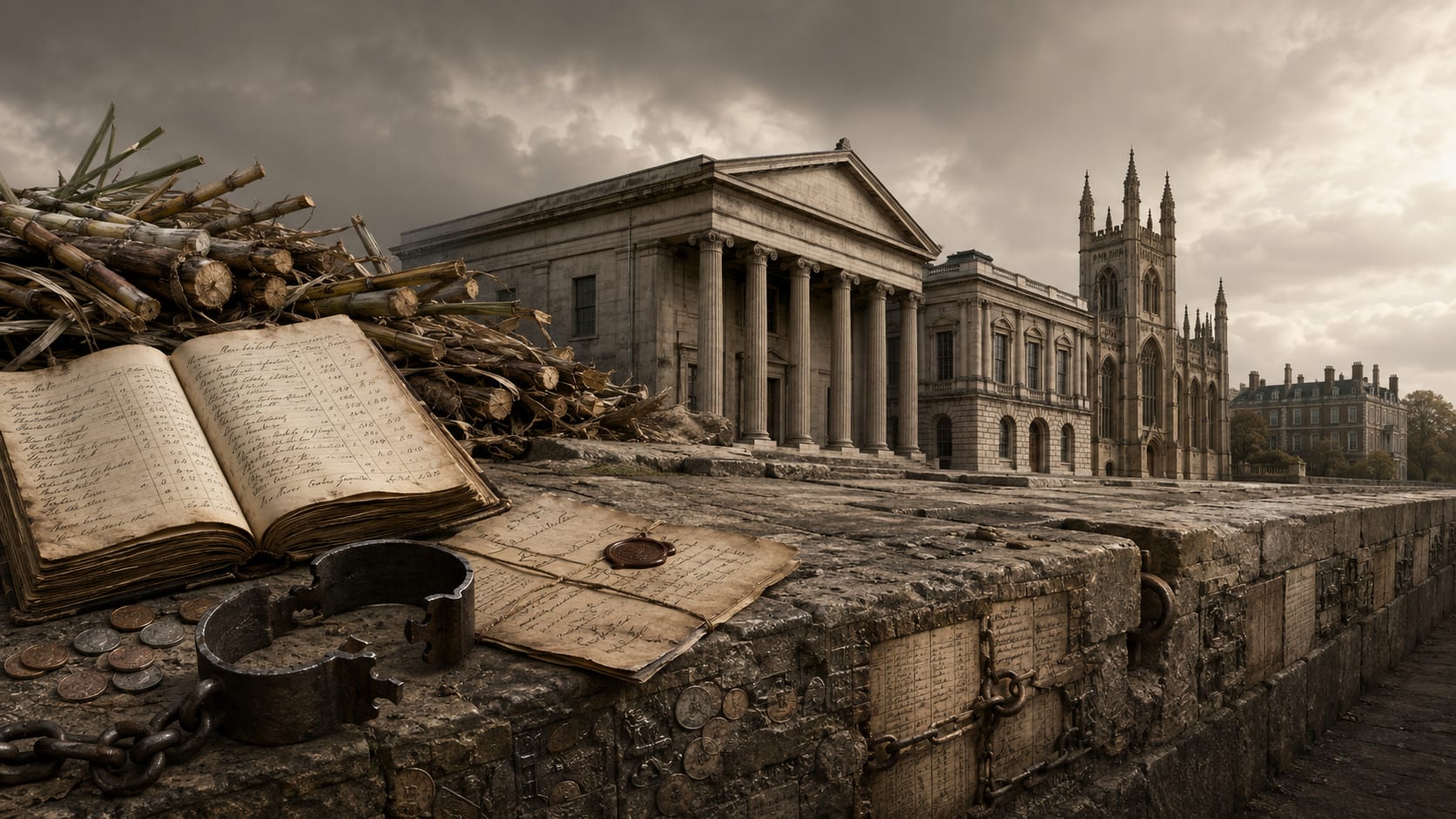
Britain abolished the slave trade in 1807, but slavery itself continued in the British Empire until emancipation legislation took effect in 1834, with apprenticeship extending the coercive labour system before full freedom was achieved in 1838. Parliament itself records the £20 million compensation granted to slave-owners.
The crucial point is not that Britain eventually abolished slavery. That was an achievement of immense moral importance, secured after decades of campaigning and resistance.
The point is what Britain did at the moment of abolition.
It compensated the owners.
It did not compensate the workers. (Not even a whiff of “40 acres and a mule”)
Indeed, the formerly enslaved entered freedom without the accumulated capital their labour had produced. They were not given plantations. They were not given meaningful compensation for generations of stolen wages. They did not receive the capital required to compete with those who had inherited property and wealth from the plantation system.
Freedom was granted.
The economic consequences of enslavement were not repaired.
That distinction remains fundamental.

Reparations are therefore not a demand to reverse abolition. They are a demand to complete the moral work that abolition began.
“But Nobody Alive Today Owned Slaves”
This is perhaps Britain’s most familiar objection.
It is also patently the wrong question.
The reparations claim is not that today’s British citizen personally committed yesterday’s crime.
It is that institutions can possess historical continuity without individuals possessing personal culpability.
A state survives changes of government.
A corporation survives changes of shareholders.
A university survives generations of students and academics.
A bank survives generations of directors.
An estate can pass from one generation to another.
Assets can be inherited.
So can obligations.
Nobody suggests that a British citizen today is personally guilty because an ancestor owned enslaved people.
But neither should Britain pretend that institutional history disappears whenever the generation changes.
The Bank of England itself has documented the connections between the compensation process, financial institutions and the wealth generated through the transatlantic slavery economy.
The argument, therefore, is not about inherited guilt.
It is about inherited advantage, institutional continuity and an historical liability that was never properly addressed.

Britain cannot reasonably say, “We inherited the benefits, but the liabilities died with the perpetrators.”
That is not how history works.
It is not how estates work.
And it is certainly not how public institutions work.
Britain Should Listen to Its Own History
There is another reason British people should take this debate seriously.
This is not simply a Caribbean complaint directed at an indifferent former colonial power.
Britain’s own institutions have been documenting the historical connections.
The Bank of England acknowledges that slave-owners were compensated while the formerly enslaved received nothing, and that the compensation became part of the national debt.
The National Archives preserves records of the Zong.
Parliament preserves the legislative record of the compensation scheme.
British historians have spent decades documenting the financial, political and social legacies of slave ownership.
The evidence is therefore not being imported into Britain from somewhere else.
It is sitting in Britain’s archives.
The question is what Britain chooses to do with it.
The World Has Moved
The reparations debate is no longer confined to activists and historians.
On 25 March 2026, the United Nations General Assembly adopted Resolution 80/250, recognising the trafficking of enslaved Africans and racialised chattel enslavement of Africans as “the gravest crime against humanity”. The resolution passed by 123 votes to three, with 52 abstentions.

That resolution does not itself order Britain to pay reparations.
But it changes the moral landscape.
CARICOM has moved further still. In July 2026, its Heads of Government approved a revised Ten-Point Plan for Reparatory Justice, signalling that the Caribbean is no longer content merely to commemorate slavery. It is organising a programme for reparatory justice and development.
This matters to Britain because the Caribbean is not asking for pity.
It is asking for partnership in correcting an historical imbalance.
And reparations need not mean writing one enormous cheque.
They can include educational investment, public-health programmes, debt relief, cultural restitution, technology transfer, development financing, institutional reform and carefully designed financial compensation. CARICOM’s own framework encompasses a broad programme rather than a single crude payment.
That should make the conversation easier, not harder.
What Britain Can Choose
Britain has a choice.
It can continue to say, “We do not pay reparations,” and treat the matter as though the debate were already closed.
Or it can demonstrate the confidence of a mature democracy by saying:
Let us examine the evidence.
Let us hear the Caribbean case.
Let historians, economists, lawyers and representatives of affected communities sit together.
Let us determine what justice requires.
That would not diminish Britain.
It would strengthen it.
Britain has often taught the world that justice requires institutions to confront uncomfortable truths. The country should not be afraid to apply that principle to itself.
Jamaica’s planned petition to King Charles III on 6 September 2026 is therefore an opportunity, not merely a confrontation. CARICOM has expressly supported the Jamaican initiative, which is scheduled to be lodged in London on 7 September.
Britain should receive it with seriousness.
The Teacher Who Gave Me Memory
There is a personal reason I have long regarded this history as more than an academic subject.
As an undergraduate, alongside physics, mathematics and electrical engineering, I studied African History with particular enthusiasm. I fondly recall Professor Fitzroy Andre ‘Fitz’ Edward Baptiste, the Grenadian historian and scholar who taught the 1969–1970 course. It was oversubscribed, and I was pleased to have aced it.
Professor Baptiste later invited me to help tutor the even more oversubscribed subsequent cohort.
I declined.
My academic trajectory was already locked on research physics, mathematics and energy+ instrumentation-controls engineering, and I did not appreciate then how enduring his African History course would become in my intellectual life.
Professor Baptiste is now deceased. With the passage of decades, however, his lesson has become clearer to me: history is not decoration. It determines what a people understands about itself.
And that is why reparations matter.
Not because Africans require anyone to confer dignity upon them.
Our ancestors possessed dignity before the slave ships came.
Not because today’s Britons should be made to feel personal guilt.
They should not.
But because truth matters.
Justice matters.
And unfinished obligations matter.
Africans arrived in chains.
They were chained to labour.
They were denied wages.
They were royally stiffed—utterly.
They were denied ownership of the wealth they created.
They were denied compensation when slavery ended.
Their enslavers were compensated instead.
And the public debt created for that counterintuitive compensation was finally extinguished only in 2015.
The chains are gone for those who laboured unpaid- zilch, Nada, Puppa Jezas!
Yet:
Those people survived.
They resisted.
They built families, communities, universities, churches, economies and nations.
They transformed the Caribbean despite an economic system designed to extract from them while denying them the means to accumulate.
That achievement is a reason for pride.
It is not a reason to forget the debt.
So the formulation remains deliberately blunt:
Taken enslaved
Chained to Labour.
Utterly stiffed.
Britain did not invent the injustice of slavery alone, nor was Britain alone in perpetuating it. But Britain was a major imperial beneficiary, and Britain made a very specific choice at emancipation: it paid the owners while leaving the formerly enslaved unpaid.
The question before Britain today is therefore not whether its present citizens are guilty.
They are not.
The question is whether a great democracy is prepared to acknowledge an injustice embedded in its own history and engage seriously with those who still live with its consequences.
That is not an unreasonable demand.
It is an invitation to finish the work.
Abolition ended slavery.
It did not settle the account.
Africans arrived in chains.
Only we remain unpaid.



Comments