
Jamaican economy contracts 5.9% for January to March 2026 quarter

/ Our Today
administratorEconomy contracts by 1.7% for Fiscal Year 2025/26, ended this March
Durrant Pate/Contributor
The Jamaican economy contracted by an estimated 5.9% during the January to March 2026 quarter, compared with the corresponding quarter of 2025, according to the latest preliminary numbers from the Planning Institute of Jamaica (PIOJ).
For Fiscal Year 2025/26, which ended in April this year, the economy is estimated to have declined by 1.7%. The out-turn for the fiscal year reflected a contraction in all industries, except for Construction; Financial & Insurance Activities; and Public Administration & Defence.
The downturn for the fiscal year largely stemmed from the negative impact of Hurricane Melissa. However, the performance for the review quarter largely reflected the lingering impact of Hurricane Melissa on productive activities.
The impact of the hurricane led to an estimated contraction in all industries with the exception of Financial & Insurance Activities and Public Administration & Defence, as well as a reduction in the Employed Labour Force and lower levels of business and consumer confidence, which constrained domestic demand.
The latest economic numbers were disclosed by PIOJ Director General, Dr. Wayne Henry at his Quarterly News Briefing yesterday. Dr Henry emphasised that the Category 5 storm’s impact was compounded by weakened external demand, largely reflecting the intensification of geopolitical tensions in the Middle East. The resulting disruptions to supply chains and surging energy prices curtailed trade flows and dampened external demand.

Sector performance
The Goods-Producing Industry contracted by an estimated 11.2%, compared with the corresponding quarter of 2025. This outturn was evidenced by the downturn in all four industries. Agriculture, Forestry & Fishing Output of the Agriculture, Forestry & Fishing industry was estimated to have contracted by 20.3%.
“This performance stemmed from the devastation caused by Hurricane Melissa in the previous quarter, which caused damage and losses to crops, livestock, aquaculture, infrastructure and equipment, valued at an estimated $43.9 billion. The performance during the quarter was due to a fall in productivity, reflected in reduced output per hectare for five of the nine crop groups, the PIOJ boss indicated.
Additionally, there was a 15.2% decline in the hectares of domestic crops reaped as eight parishes recorded lower harvested areas. Among the parishes that recorded a decline in hectares reaped were St Elizabeth (down 39.9%), Hanover (down 38.1%) and St Thomas (down 27.2%). Other Agricultural Crops were estimated to have contracted by 8.0%, reflecting lower production in seven of the nine crop groups.
Declines were recorded for Plantains, down 83.7%; Legumes, down 41.7%; Yams, down 41.6%; Cereals, down 38.1%; Fruits, down 20.1%; Condiments, down 16.3%; Other Tubers, down 11.5%. In contrast, the output of Vegetables and Potatoes grew by 12.0% and 18.0%, respectively.

Mining & Quarrying
Real Value Added for the Mining & Quarrying industry contracted by an estimated 26.6%, due to decreased output of both crude bauxite and alumina. Lower output reflected the lingering impact of Hurricane Melissa on the industry’s infrastructure.
Crude Bauxite production decreased by 26.4%, resulting in a fall in the bauxite capacity utilisation rate by 11.3 percentage points to 31.5%. Alumina production declined by 30.3% and resulted in a fall in the alumina capacity utilisation rate by 12.8 percentage points to 29.3% compared with the corresponding quarter of 2025.
Manufacturing
Real Value Added for the Manufacturing industry was estimated to have contracted by 7.7%, due to lower production in both the Food, Beverages & Tobacco and the Other Manufacturing sub-industries.
The decline in the Food processing component was largely due to a fall in the output of Flour, down 17.3%; Sugar, down 47.4%; Molasses, down 41.9%; and Poultry Meat, down 13.4%. Within the Beverages & Tobacco sub-component, a decline was recorded for Beer & Stout, down 2.0%
Construction
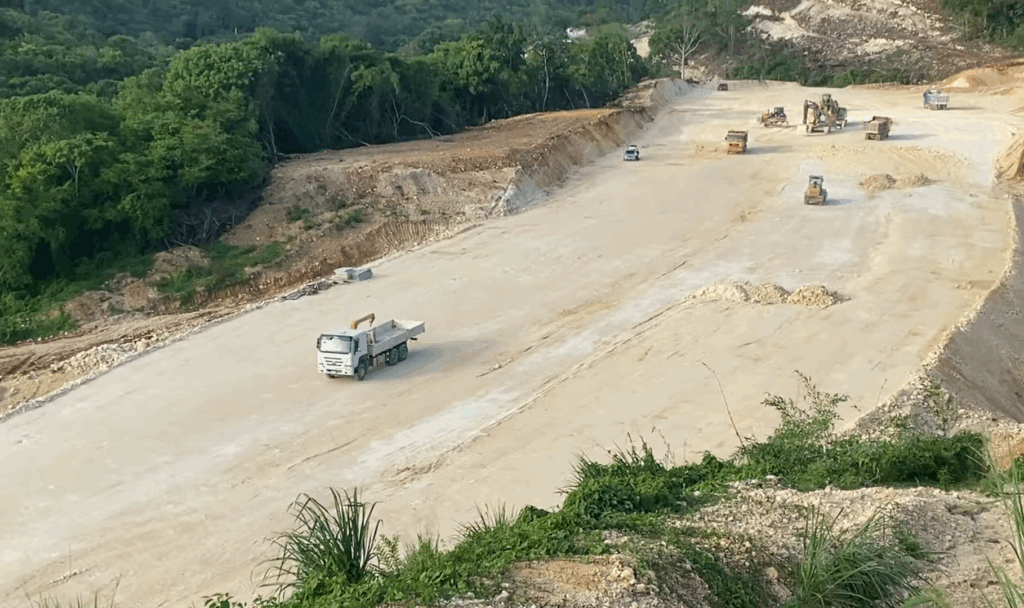
Real Value Added for Construction declined by 1.3%, reflecting downturns in both the Building Construction and Other Construction components.
The industry’s performance was adversely affected by delays in some ongoing infrastructure projects due to the shock caused by Melissa. However, rebuilding initiatives by households and state agencies tempered the rate of decline.
Services Industry
The Services Industry was estimated to have declined by 4.1%, reflecting contractions in all industries with the exception of Financial & Insurance Activities, Public Administration & Defence, Electricity, Water Supply & Waste Management.
The Electricity, Water Supply & Waste Management industry was estimated to have recorded a contraction of 10.3% in Real Value Added, due to a fall in electricity and water consumption. Electricity consumption decreased by 11.9%, reflecting lower consumption in all six categories, namely:
- Residential, down 11.3%
- General Service (small businesses using less than 25 kVa), down 10.6%
- Power Service (large businesses using more than 25 kVa but less than 500 kVa), down 12.2%
- Large Power (Businesses using more than 500 kVa), down 13.0%
- Street Lighting + Traffic Signals, down 24.1%; and
- Largest Power (single locations that have a minimum peak demand of 2 000 kVa), down 7.3%.
Water consumption declined by 6.5%, due to declines in consumption levels in both the Western division, down 15.7% and the Eastern division, down 1.5%.
Transport & Storage
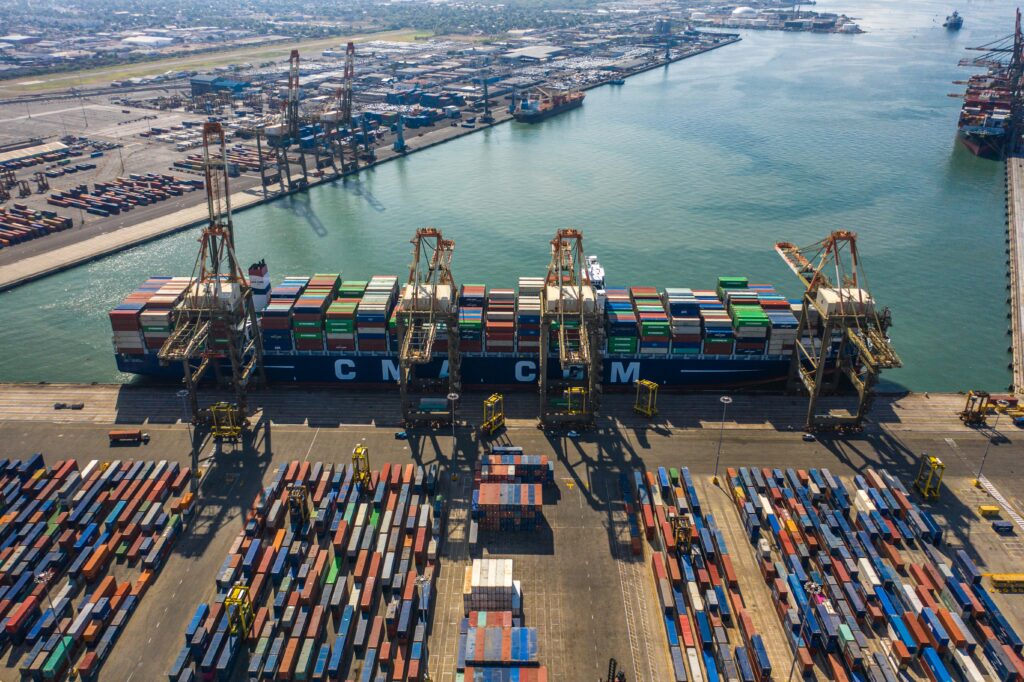
Real value added for the Transport & Storage industry declined by 5.4% due to an estimated decline in both the Transport and Storage components. The outturn reflected the effect of a contraction in the Storage component that stemmed from the fall-off in the volume of cargo handled at the island’s seaports, which fell by 8.7%, due to declines in cargo handled at both the Port of Kingston (down 3.0%) and Outports (down 29.7%).
This is in addition to a contraction in air transport, largely reflecting decreased passenger movements, down 24.2%, due to a decline in Arrivals (down 23.7%) and Departures (down 25.1%).
Wholesale & Retail Trade; Repair of Motor Vehicles, Installation of Machinery & Equipment
Real Value Added for this industry was estimated to have decreased by 1.6%, reflecting lower demand stemming from a reduction in employment levels, and lower Business and Consumer Confidence. The performance was also negatively impacted by a downturn in the related Agriculture and Construction industries.
The downturn in the industry was partially tempered by higher sales associated with the purchase of supplies to facilitate rebuilding efforts. This was reflected in a 3.2% increase in total real gross sales.

Financial & Insurance Activities
Real Value Added for the Financial & Insurance Activities industry increased by an estimated 1.8%. This performance was mainly due to higher net interest income, as well as increased fees and commissions for commercial banks.
Accommodation & Food Service Activities
Real Value Added for the Accommodation & Food Service Activities industry contracted by an estimated 20.4%, relative to the same quarter of 2025. This outturn was attributed to a fall in visitor arrivals, largely associated with the lingering 8 effects of Hurricane Melissa.
Total visitor arrivals decreased by 17.0% to 1 017 443 visitors, with Stop-over arrivals down 27.5% to 534 652 and Cruise passenger arrivals down 1.1% to 482 791. The sharp downturn in visitor arrivals outweighed the impact of an increase in the average length of stay to 8.6 nights up from 8.1 nights.
This resulted in a decline in visitor expenditure by 21.3% to US$976.4 million.




Comments