
Jamaican economy officially in recession with 3rd consecutive decline

/ Our Today
administrator
Contracts by 2.9% for April to June quarter while consumer spending waning
Durrant Pate
The Jamaican economy has declined for a third consecutive decline, making it officially in recession.
The economy declined in Q4 2025 (October–December) by 7.1% compared to Q4 2024; Q1 2026 (January–March) contracted by 4.1% while Q2 2026 (April–June) contracted by 2.9% . A recession happens when there is a significant, widespread, and prolonged downturn in economic activity.
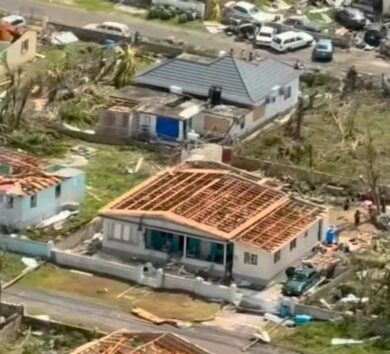
It is most commonly identified by two consecutive quarters of negative Gross Domestic Product (GDP) growth, alongside rising unemployment and falling consumer spending. The economy recorded an estimated contraction of 2.9%, largely reflected the continued downturn in most industries due to the lingering impact of Hurricane Melissa.
The hurricane led to an estimated decline in domestic demand as a result of a reduction in the Employed Labour Force and lower levels of business and consumer confidence. The hurricane’s impact was compounded by the El Niño phenomenon, which is expected to bring hotter, drier conditions, and heightened risks to agricultural output, water availability, and public health, thereby threatening livelihoods and the performance of some industries.
Real Sector Developments
Developments in the Goods Producing Industry declined by an estimated 6.4% with declines recorded for two of the four industries, namely Agriculture, Forestry & Fishing; and Mining & Quarrying. However, the Manufacturing and Construction industries were estimated to have recorded growth.
Real value added for the Agriculture, Forestry & Fishing industry contracted by an estimated 17.0%.
This performance stemmed from the lingering effects of Hurricane Melissa compounded by drought conditions associated with the El Niño effect. Consequently, there was a fall in output per hectare and a 12.9% reduction in the area of domestic crops reaped.
The Mining & Quarrying industry decreased by 23.9%, due to lower alumina production, which outweighed an increase in crude bauxite production. Specifically, alumina production, the heavier weighted component, contracted by 30.8%.
Lower production was the result of technical challenges associated with damage caused by Hurricane Melissa. The alumina capacity utilization rate was 27.3%, down 12.1 percentage points compared with the corresponding quarter of 2025.
Crude bauxite production went up 8.8%, reflected higher demand from a major overseas purchaser. The bauxite capacity utilization rate increased by 3.1 percentage points to 38.5%.
Manufacturing and construction
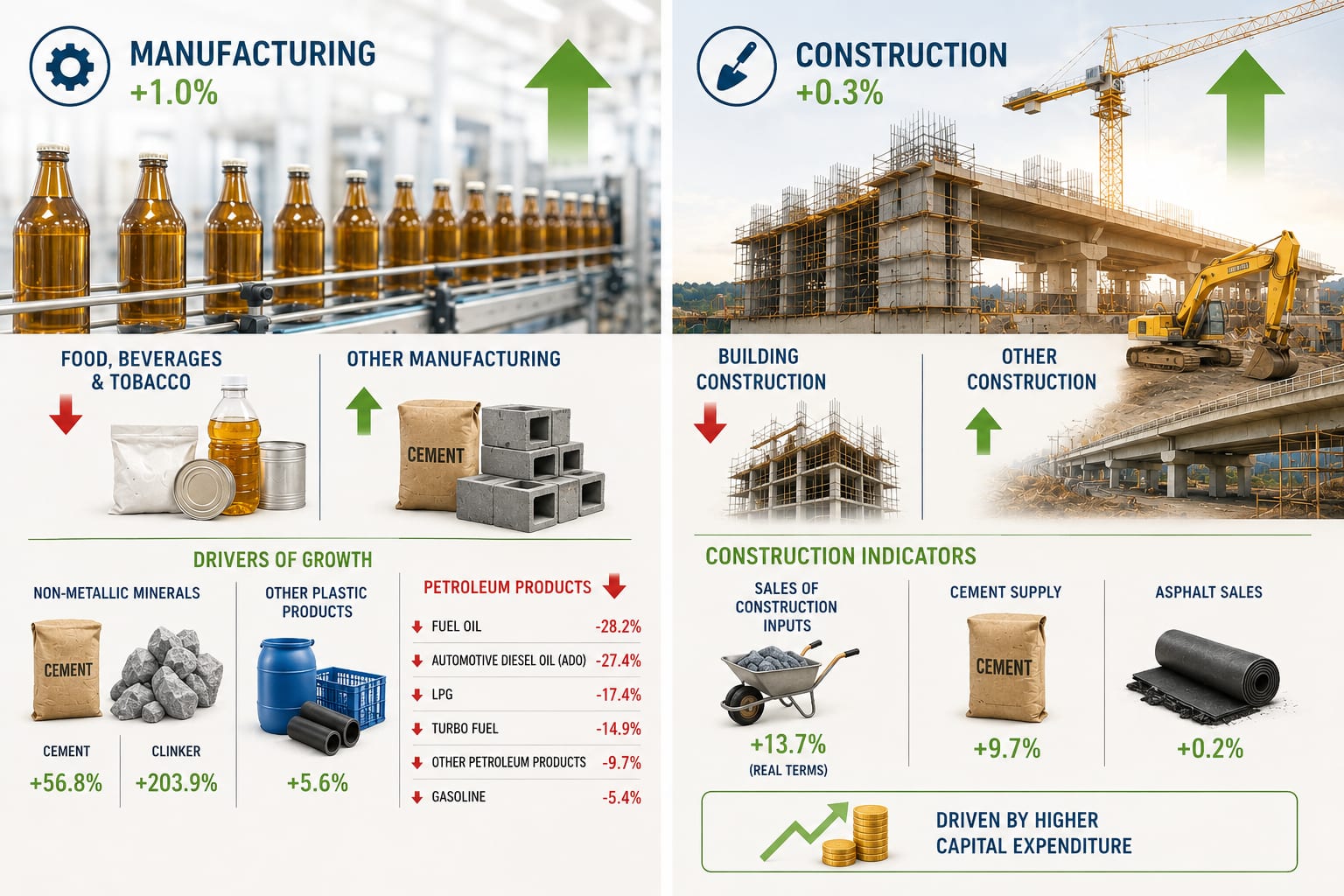
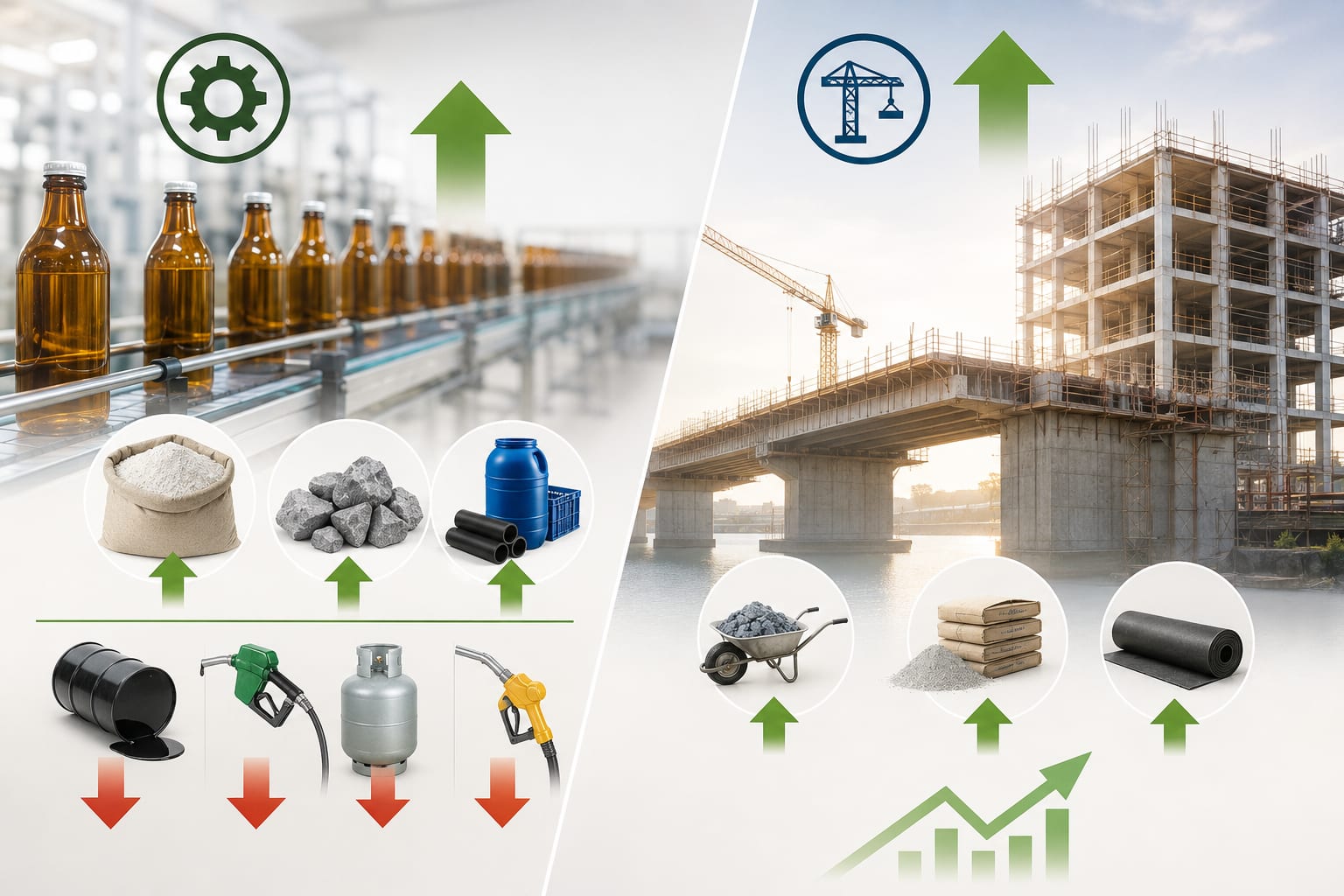
The Manufacturing industry was estimated to have grown by 1.0%. Increased output was estimated for the Other Manufacturing sub-industry that outweighed an estimated contraction in Food, Beverages & Tobacco.
For the Other Manufacturing sub-industry, the estimated increase was as a result of higher output of Non-metallic Minerals, due to Cement production, up 56.8%; and Clinker, up 203.9%. Additionally, increased output of 5.6% was recorded for Other Plastic Products.
Further growth in this sub-industry was stymied by a decline in Petroleum Products led by Fuel Oil, down 28.2%; Automotive Diesel Oil (ADO), down 27.4%; LPG, down 17.4%; Turbo Fuel, down 14.9%; Other Petroleum Products down 9.7%; and Gasoline, down 5.4%.
An estimated growth of 0.3% was recorded for the Construction industry, due to an improved performance in the Other Construction sub-industry, driven by higher levels of civil engineering activities. This outweighed an estimated downturn in the Building Construction component.
Preliminary data on sales of Construction inputs indicate a 13.7% increase in real terms, while cement supply to the market and Asphalt sales expanded by 9.7% and 0.2%, respectively. The growth in the Other Construction component was due to higher capital expenditure.
Services Industry also contracted
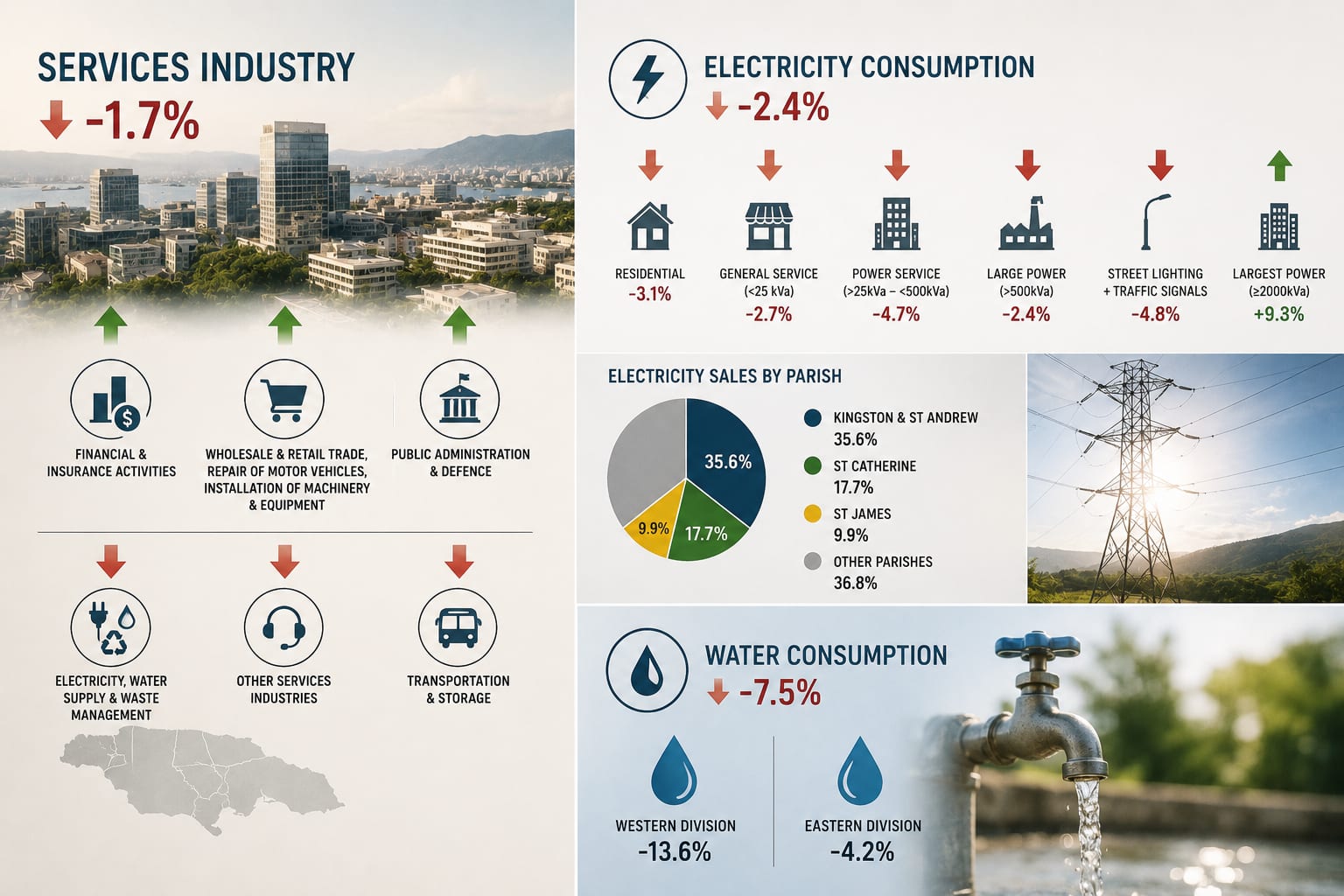
For the Services Industry, the contraction is estimated at 1.7% reflecting contractions in all industries with the exception of Financial & Insurance Activities; Wholesale & Retail Trade, Repair of Motor Vehicles, Installation of Machinery & Equipment; and Public Administration & Defence. The Electricity, Water Supply & Waste Management industry recorded a contraction of 4.1% in Real Value Added, reflecting declines in both electricity and water consumption.
Electricity consumption decreased by 2.4% based on lower consumption for five of six categories:
- Residential, down 3.1%
- General Service (small businesses using less than 25 kilovolt ampere (kVa), down 2.7%
- Power Service (large businesses using more than 25 kVa but less than 500 kVa), down 4.7%
- Large Power (businesses using more than 500kVa), down 2.4%, and
- Street Lighting + Traffic Signals down by 4.8%
These outweighed increased consumption for the category Largest Power (single locations with a minimum peak demand of 2000 kVa), which increased by 9.3%. Kingston & St Andrew continued to account for the largest share of electricity sales at 35.6%, followed by St Catherine at 17.7% and St James, 9.9%.
Water consumption decreased by 7.5%, due to a 13.6% decline in the Western division and a 4.2% decline in the Eastern division.

Transport & Storage
The Transport & Storage industry was estimated to have contracted by 3.9%, due to reduced air transport activities. The decline in the air transport component was consistent with the downturn in visitor arrivals, as a result of reduced room capacity in the Accommodation & Food Service industry.
However, a further decline was tempered by an estimated growth in the maritime transport subcomponent. This reflected domestic cargo volume, up 7.0%, due to increases in cargo handled at the Port of Kingston, up 11.0% and a 2.6% increase in cargo handled at Outports. The growth was also supported by a higher number of vessel visits.





Comments