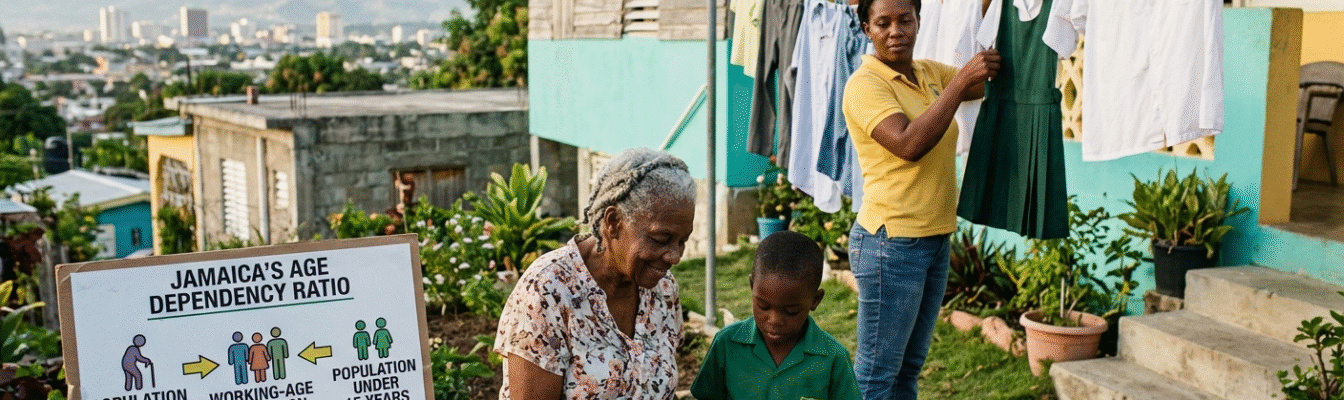
Jamaica’s Age Dependency Ratio adequate finds survey of living conditions

/ Our Today
administratorChild dependency higher than elderly dependency
Durrant Pate/Contributor
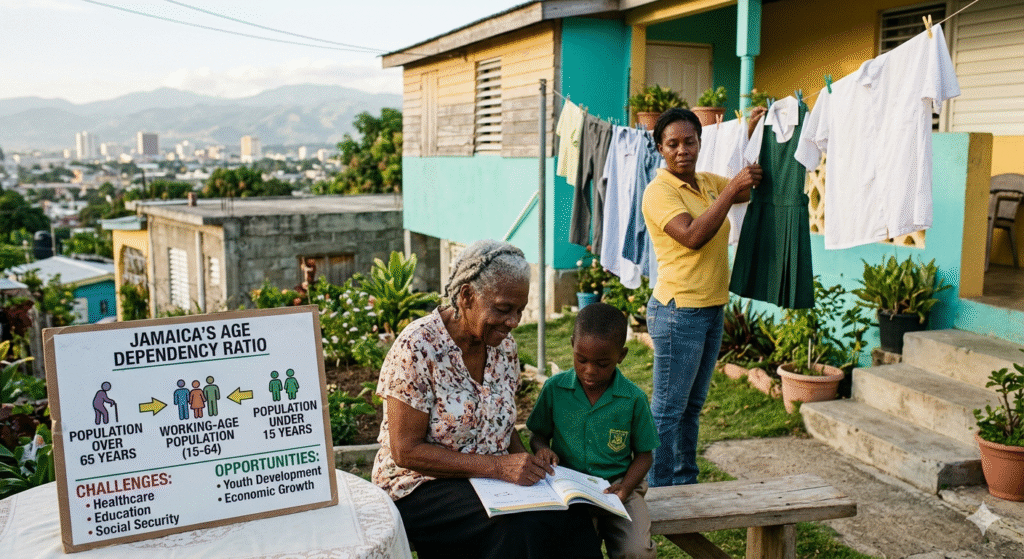
Jamaica’s Age Dependency Ratio (ADR) has been found to be adequate by the latest Jamaica Survey of Living Conditions (JSLC).
The ADR refers to the number of persons in the ages defined as dependent (under 15 years, and 65 years and over) to persons in the ages defined as economically productive (15–64 years) in a population. Dependency ratios indicate the level of burden on the economically active/ productive population (15–64 years) and the potential effects of changes in population age structures for social and economic development.
ADRs below 100 signify adequate people in the working age population to support the dependent population with Jamaica registering an ADR of 46.2 dependents per 100 persons of working age. The latest JSLC for 2023, emphasised that this latest ranking provides a “window of opportunity,” allowing for the harnessing of the relatively large pool of human resources in the working age group to improve the country’s sustainable development in the social, economic and environmental dimensions.
Child dependency ratio
The survey, which was recently released child dependency ratio was estimated at 32.3 dependent children (aged 0–14 years) per 100 persons of working age, while the elderly dependency ratio was 13.9 dependent elderly (aged 65+ years) per 100 persons of working age. By region, Rural Areas recorded the highest ADR of 51.3 dependents per 100 persons of working age. Other Urban Centres (OUC) followed with 44.8 dependents per 100 persons of working age and the Greater Kingston Metropolitan Area (GKMA) recorded the lowest, 40.8 dependents per 100 persons of working age.
Higher ADRs were recorded in female-headed households (52.7 dependents per 100 persons of working age) than in male-headed households (39.6 dependents per 100 persons of working age). This is consistent with a larger proportion of children (aged 0–14 years) found in female-headed households (27.0%) compared with male-headed households (16.7%).
A larger proportion of the working age population aged 15–64 years (71.6%) was found in male-headed households than in female-headed households (65.6%). Female-headed households in all three regions recorded ADRs above the national average (46.2 dependents per 100 persons of working age) in comparison with male-headed households with ADRs in all regions below the national average.
This illustrates a greater level of dependence and burden of support in female-headed households. The child dependency ratio in female-headed households was 41.2 dependent children per 100 persons of working age, which was higher than that of male-headed households (23.3 dependents per 100 persons of working age) and exceeded the national average of 32.3 dependents per 100 persons of working age.
Elderly dependency ratio
Conversely, the elderly dependency ratio in male headed households was 16.2 dependent elderly persons per 100 persons of working age, which was higher than that of female-headed households and exceeded the national average of 13.9.
This, therefore, indicates a greater level of child dependency in female-headed households and a greater level of elderly dependence in male-headed households.






Comments