JP Farms channels fresh fruit donations to children’s homes

/ Our Today
administrator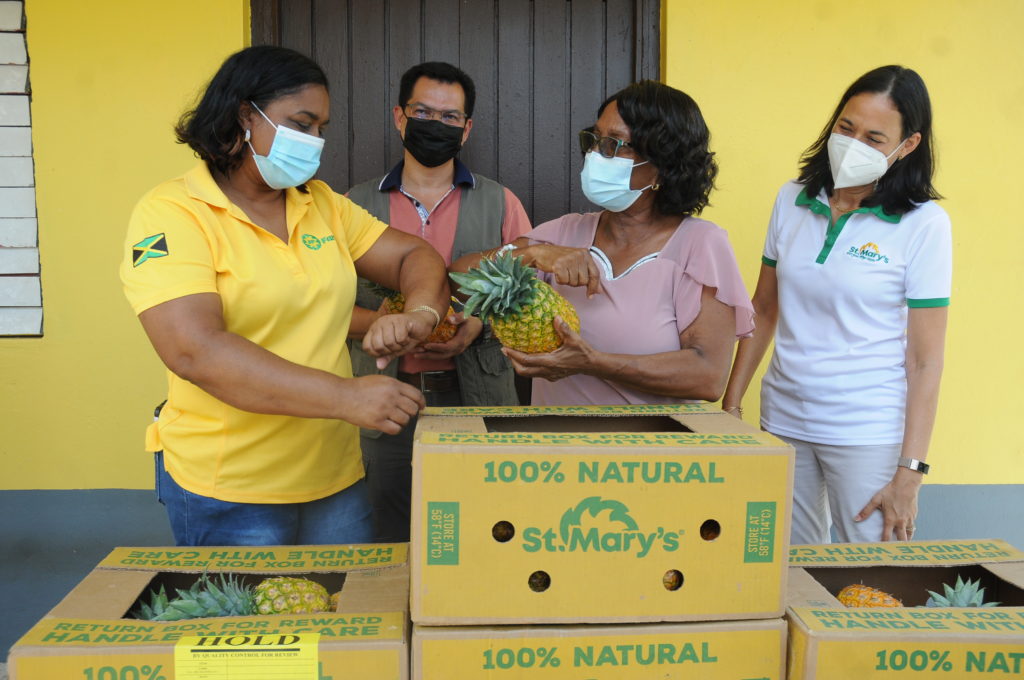
JP Farms has been fulfilling its corporate duty through humanitarian and philanthropic projects geared towards improving nutrition and food security locally. Since the onset of the COVID-19 pandemic and rising commodity prices, the company has put more focus on directing donations of its JP pineapples, ripe and green bananas to one of Jamaica’s most vulnerable population segments.
According to The State of Food Security and Nutrition in the World 2022 report, there are approximately two million Jamaicans, more than two-thirds of the population, who are unable to afford a healthy meal. Prior to the COVID-19 pandemic, the United States Department of Agriculture’s Economic Research Service projected that 200,000 Jamaicans would be food insecure by the end of 2020. Some 100,000 Jamaicans were added to that pool in 2020 after the pandemic hit, up from 1.9 million in 2019.
HELPING HAND
JP Farms has been working hard to close this gap with their goal to promote good nutrition across local communities by sharing the fruits of their labour and healthy produce from its farms in St Mary.
Having committed to prioritising causes that involve children and wellness, the fresh produce conglomerate has been extending a regular helping hand to provide children-focused institutions like the Mustard Seed Communities, Maxfield Park Children’s Home, Glenhope Nursery, Bustamante Hospital for Children and The Pringle Home for Children with access to healthy meal alternatives.
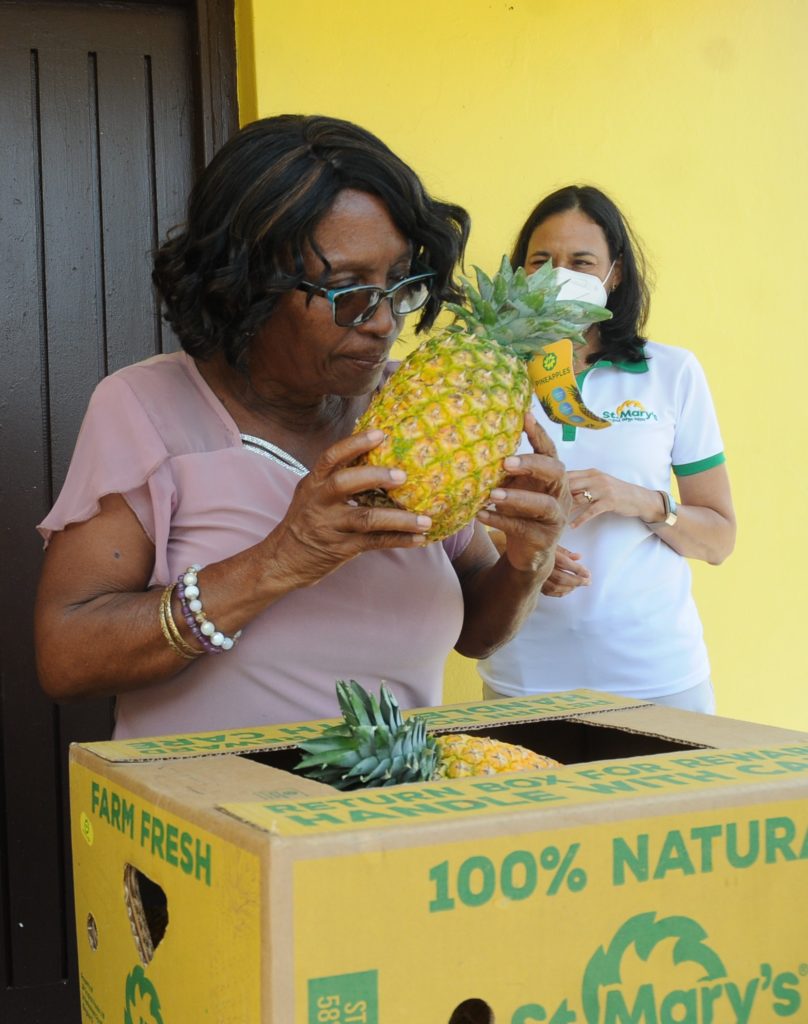
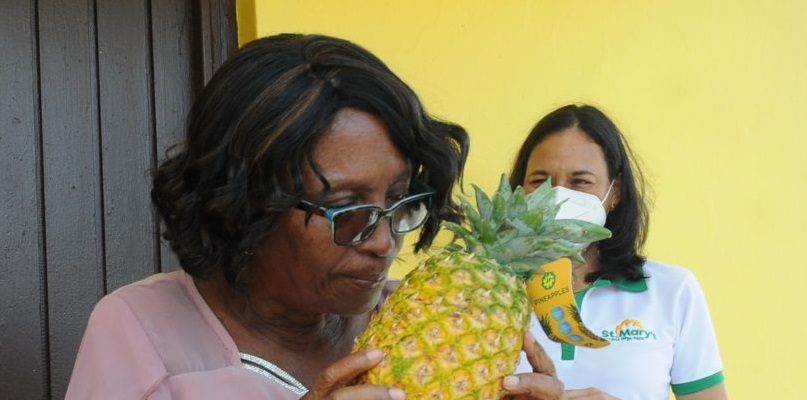
The Pringle Home for Children located in Carron Hall, St Mary is one of the latest institutions benefitting from JP Farms’ philanthropic efforts. JP Farms recently donated over 300 lbs of its freshly picked JP pineapples, ripe and green bananas to the home during a visit and walkthrough tour of the facility.
Director at the Pringle Home, Jeanette Rose-Bryan, says that the donation will not only provide nutrition for the children, but will also encourage fellowship among them.
“Corporate Jamaica has a big role to play in ensuring our children feel that connection in between what could be called the outside world and their world. When they see a group of people come in to help, it allows them to recognise they are remembered, they are still loved, and are part of the human race. And you see food, food is important for human beings, for nutrition but food is also important for fellowship because it is the act of reaching out to someone. It is a kind of stewardship responsibility; the children see someone coming to share something they have, and when they consume it, it is as if it becomes part of this person and it makes them feel good and so special,” she says.
EXTREMELY GRATEFUL FOR PARTNERSHIP
Echoing the sentiment, Suzette Dixon, administrator at the Mustard Seed Communities noted: “We are extremely grateful for the partnership between JP [Farms] and our organisation. The donations have tremendously offset the cost for fruits that are greatly needed to boost the nutritional value of our population and without [JP Farm’s] donation, we would not be able to supply this need based on our population. [They] have impacted a community of persons who are ‘the least of our brothers and sisters’.”
The Pringle Home for Children receives a subvention from the Government of Jamaica through the Child Protection and Family Services Agency for each ward, however Rose-Bryan admits that there is a challenge with budgeting and the home is continuously seeking funding to provide all the services that the children need including education, recreation, worship and employment training and an aesthetic environment. The home sits on 22 acres of fertile land and is home to 27 girls from the ages of 6 to 18 years. Beyond focusing on education, residents at the Pringle Home are engaged in self-help projects, including rainwater harvesting and livestock farming.
“JP Farms has a long and storied history with the Pringle family, and we absolutely look forward to strengthening our partnership with the Home and finding meaningful ways to help these crucial institutions provide nutritious meals for those in their care.”
Gayon Douglas, marketing executive at JP Farms
While discussing the importance of private sector involvement in alleviating food insecurity, Marketing Executive at JP Farms, Gayon Douglas noted, “Extending a helping and healthful hand to at-risk Jamaicans, especially our children, has always been a key part of our CSR policy here at JP Farms. We recognize that the budgets of these homes have been incredibly stretched recently and like everyone else, our business has been feeling the squeeze of rising costs, but we have to continue to put aside something for the most vulnerable among us every chance that we get.”
She continued, “JP Farms has a long and storied history with the Pringle family, and we absolutely look forward to strengthening our partnership with the Home and finding meaningful ways to help these crucial institutions provide nutritious meals for those in their care.”
JP Farms is a subsidiary of Jamaica Producers Group and is a leading producer of high-quality tropical foods in the Caribbean. JP bananas, pineapples, plantains and coconuts are grown and harvested on the 500+ acre JP Farm in St Mary, Jamaica and sold locally and internationally under the JP and St. Mary’s brands.






Comments