Ladif | The question we keep forgetting to ask Jamaican men: How are you?

/ Our Today
administrator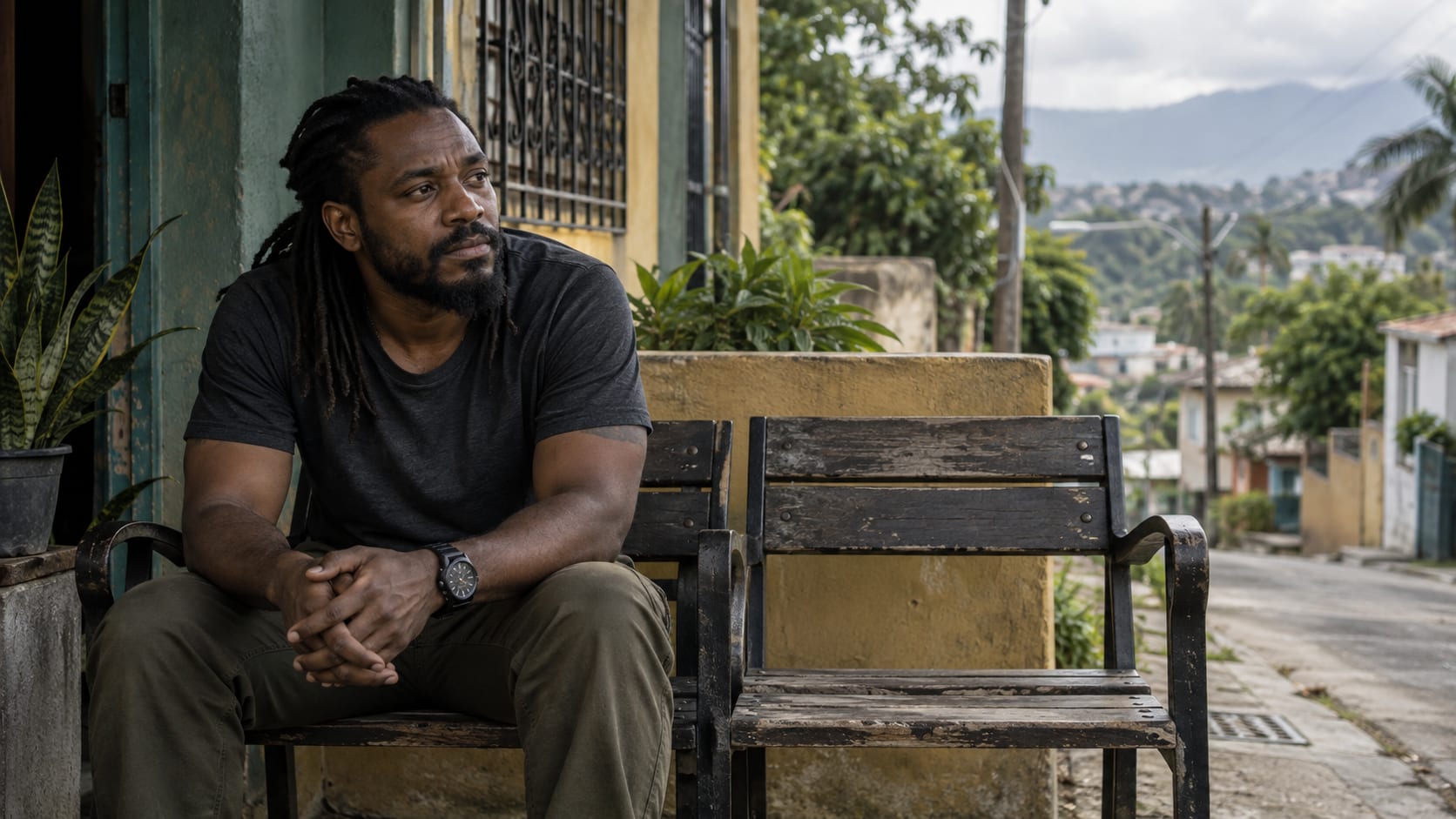
There is a question we ask far too late.
It is the question that comes after the police have arrived, after the family has gathered, after the shock has settled in and after the news has travelled through WhatsApp:
“What could have caused him to do this?”
Perhaps the more important question is one we should have been asking long before the tragedy:
“How are you?”
According to figures from the Jamaica Constabulary Force, Jamaica recorded 44 reported suicide cases up to September 7, 2026. Of those, 39 were males and five were females.
That is not simply a statistic. Behind every number is a person, a family, a community and a collection of questions that may never be answered.
And before we dismiss this as some new phenomenon, or conclude that Jamaican men have suddenly become “weaker”, we should look backwards.
The disproportionate number of male suicides is not new. The current figures are another manifestation of a longstanding gender disparity. The Jamaica Observer, reporting the latest JCF figures, also noted that the pattern is particularly pronounced among men and that psychologists have linked part of the disparity to the way boys are socialised to suppress emotion.
So perhaps we should stop asking why Jamaican men are suddenly breaking.
Perhaps we should ask what we have been teaching Jamaican boys about breaking.
The boy who was taught not to cry
From early childhood, many boys receive the same lesson in different forms:
Big man don’t cry.
Man up.
Stop behaving like a girl.
Be strong.
Don’t let anybody see you hurt.
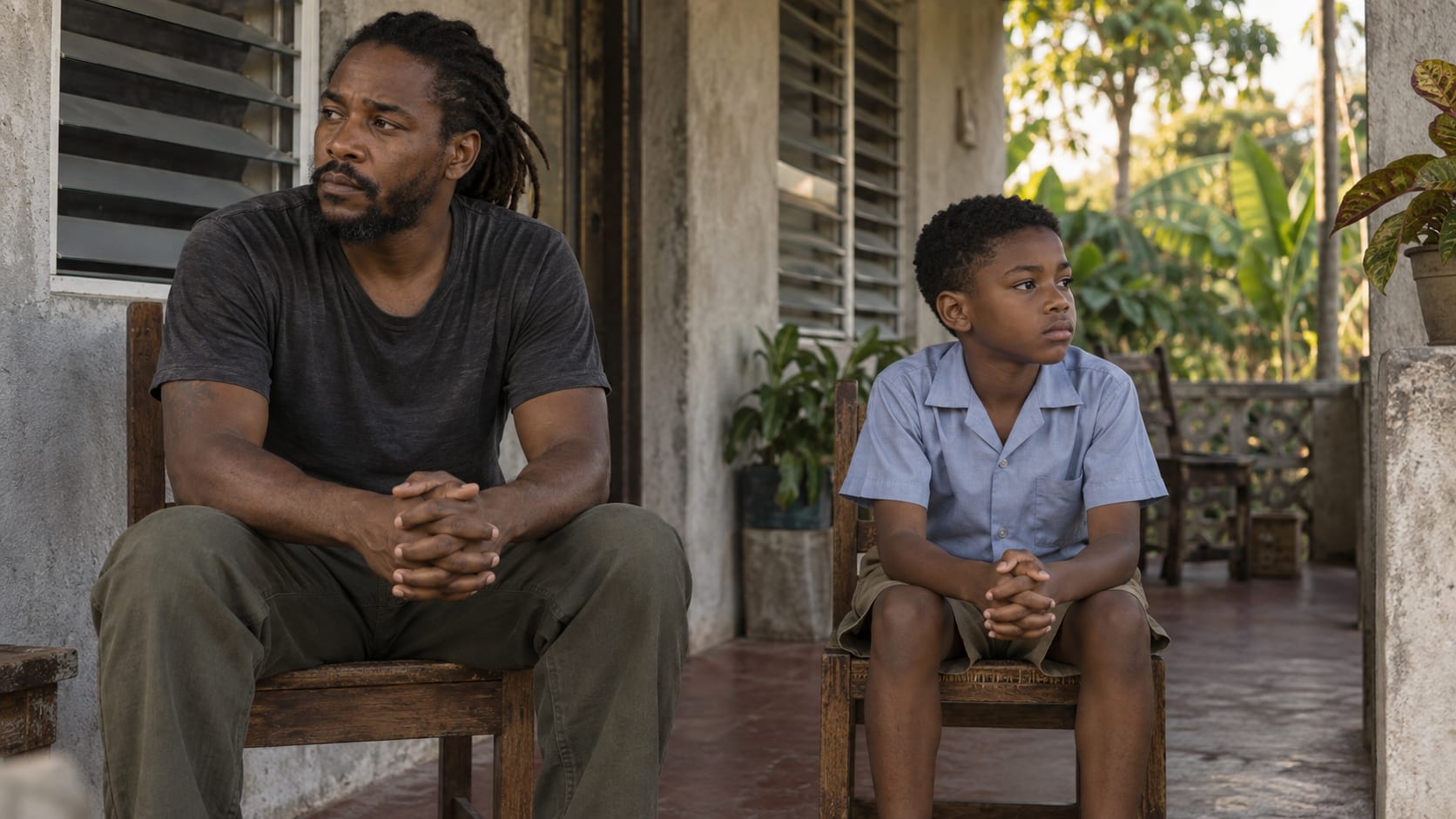
The message may be delivered with love. It may even be intended to prepare a boy for the harsh realities of life.
But repeated often enough, the lesson becomes something else:
Your emotions are dangerous. Hide them.
bell hooks spent considerable time examining this phenomenon. In The Will to Change: Men, Masculinity, and Love, she argued that patriarchal masculinity requires boys and men to disconnect from their emotional selves. She described the suppression of emotional life as a form of “psychic self-mutilation”, arguing that boys are taught to deny pain and suppress their true feelings in order to conform to prescribed masculine ideals.
The important point is not that men are victims and women are perpetrators.
That would be far too simplistic.
The point is that patriarchy hurts everybody differently.
It restricts women through one set of expectations and men through another.
And one of the expectations placed upon men is that a “real man” must be strong, stoic, independent, successful and emotionally controlled.
He must provide.
He must protect.
He must endure.
And, above all, he must not appear to be struggling.
The digital solo
Now add another phenomenon to this equation:
The smartphone.
We have become extraordinarily connected and, paradoxically, extraordinarily alone.
A man can have hundreds of Facebook friends, thousands of Instagram followers, dozens of WhatsApp groups and still have nobody he feels safe enough to call at 2 a.m. and say:
“Brother, I am not okay.”
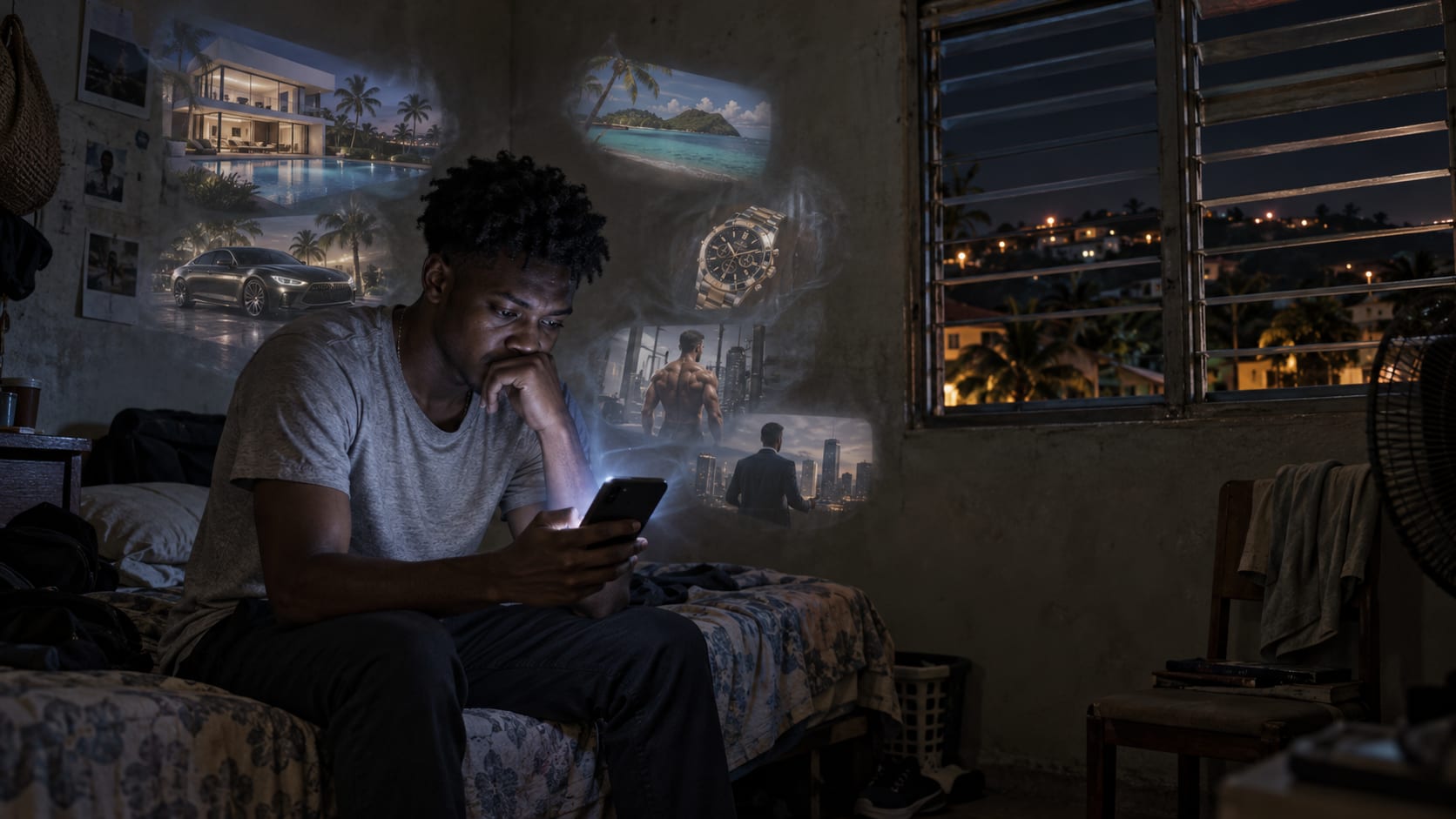
We have built digital silos in which human beings — social creatures by nature — increasingly seek entertainment, validation, companionship and even emotional relief through screens.
And the screen constantly presents the perfect life.
The perfect house.
The perfect car.
The perfect watch.
The perfect vacation.
The perfect body.
The perfect relationship.
The perfect career.
The perfect man.
For a young Jamaican man already trying to establish his worth, the message can become brutal:
This is what success looks like. Now go and get it.
So he goes.
He works.
He hustles.
He borrows.
He sacrifices.
He fails.
He starts again.
And when the shiny object remains out of reach, he has nowhere to put the disappointment.
Because nobody taught him how.
The provider’s burden
There is another uncomfortable conversation we need to have.
A man’s social value is still frequently tied to his ability to provide.
For many men, the equation is painfully simple:
I provide, therefore I am worthy.
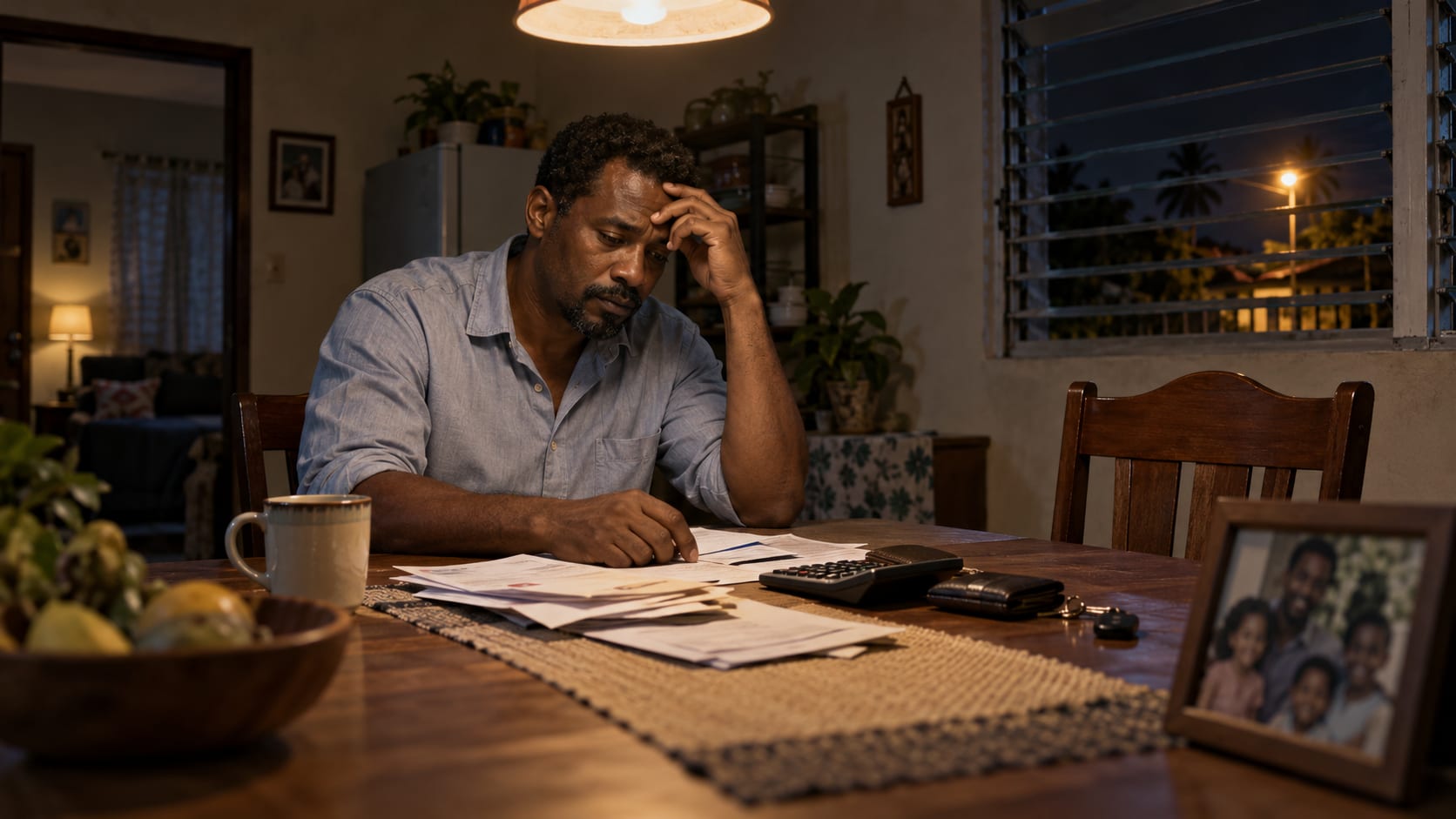
When the job disappears, the business fails, the mortgage becomes overwhelming, the bills pile up, the relationship deteriorates or the dream remains stubbornly out of reach, something deeper than financial security can be threatened.
Identity.
Worth.
Manhood.
And the man who has been taught that his primary responsibility is to provide can experience failure not simply as a setback, but as an indictment of who he is.
Yet who asks him:
“How are you coping?”
Who asks:
“Are you frightened?”
Who asks:
“Are you overwhelmed?”
Who asks:
“Do you need help?”
Too often, nobody.
We talk – but do we listen?
This is where the conversation becomes uncomfortable for women as well.
Women are often rightly described as better communicators.
But communication is not merely the ability to speak.
Communication also requires the ability to listen.
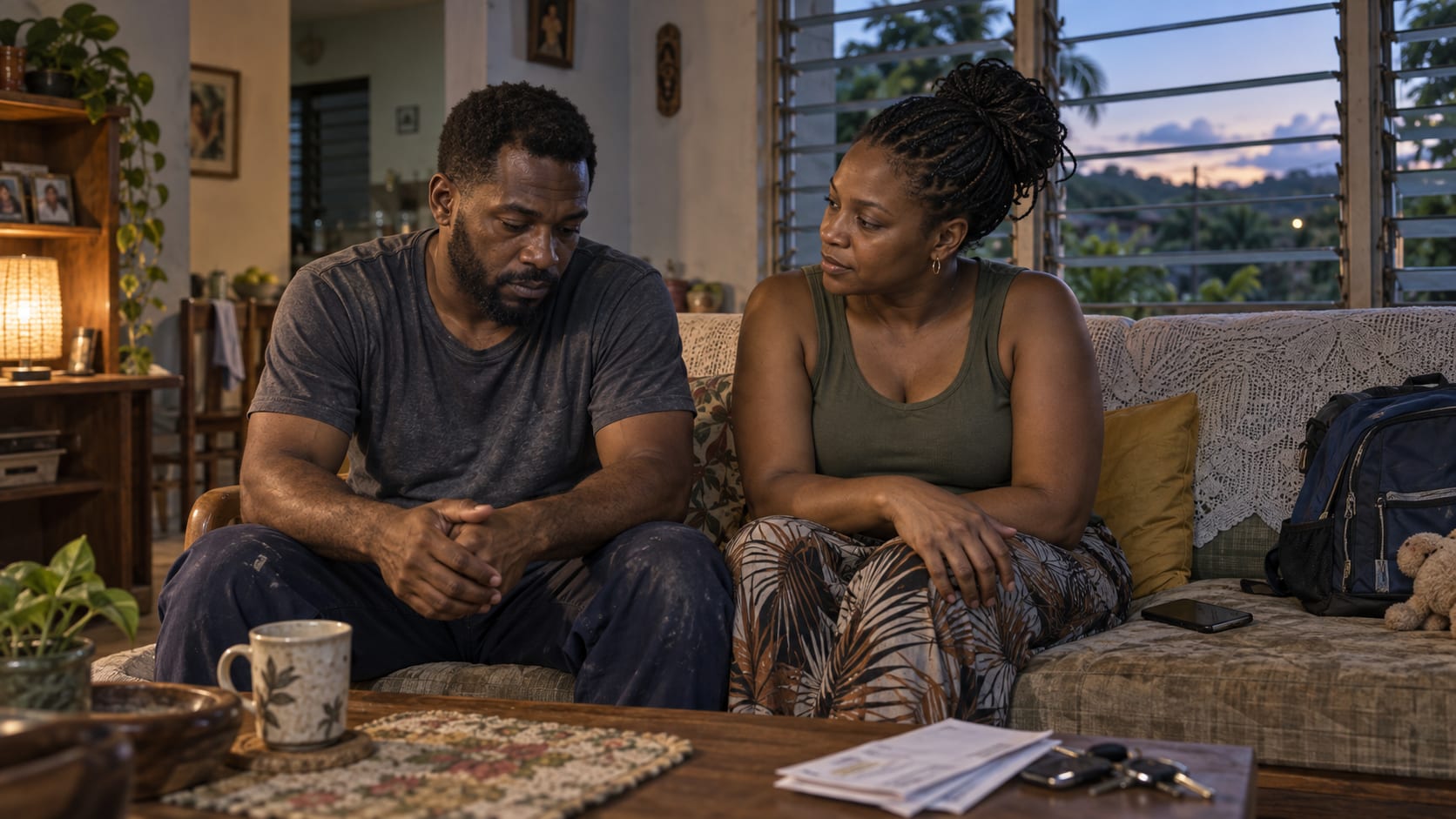
Often lost in the conversation about “communication” is the question of how he feels.
Verbal eloquence is at its best when she speaks about her issues, her needs and what he needs to do to fulfil them.
At the other end of the spectrum is deafening silence.
Sometimes the Jamaican man does not need another instruction.
He does not need another list of responsibilities.
He does not need to be told what he has failed to do.
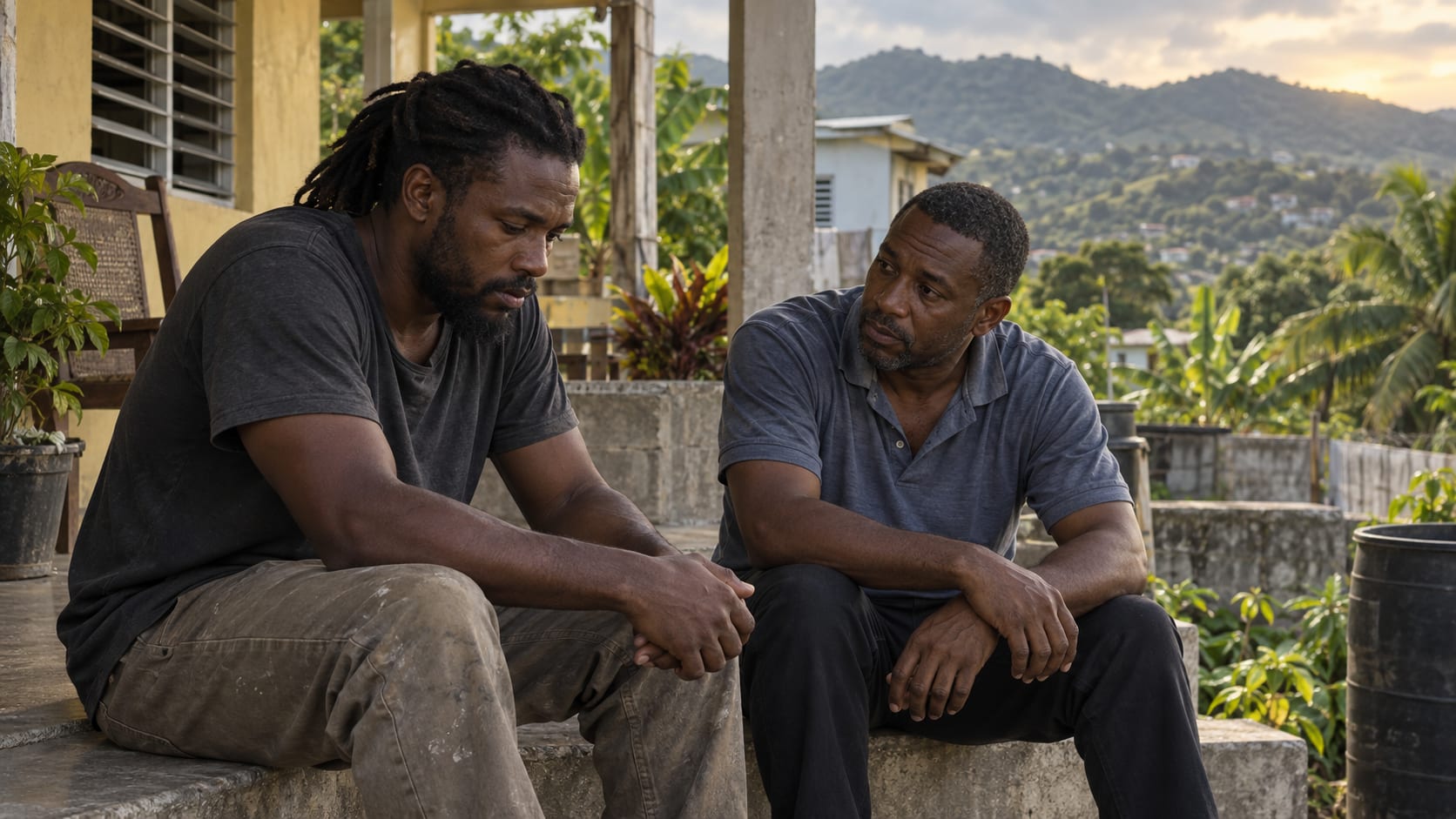
He needs someone to sit beside him and ask:
“Tell me what is happening with you.”
There is a difference between talking at someone and talking with someone.
A man may listen to his partner discuss the children, the bills, the household, the relationship, work and everything that went wrong during her day.
And he should.
But somewhere in that conversation there should also be room for:
“And how was your day?”
Not:
“Why are you so quiet?”
Not:
“You never show emotion.”
Not:
“You don’t care.”
But:
“I notice you are quiet. Are you okay?”
That question may open a door that has been locked for years.
Words of affirmation can help everyone. But how can you possibly know when they are needed if you are talking at someone and not listening?
Women are not the enemy
Let me be clear.
This is not an argument that women cause male suicide.
It is not an argument that men are victims of women.
And it is certainly not an argument that women should carry responsibility for fixing men.
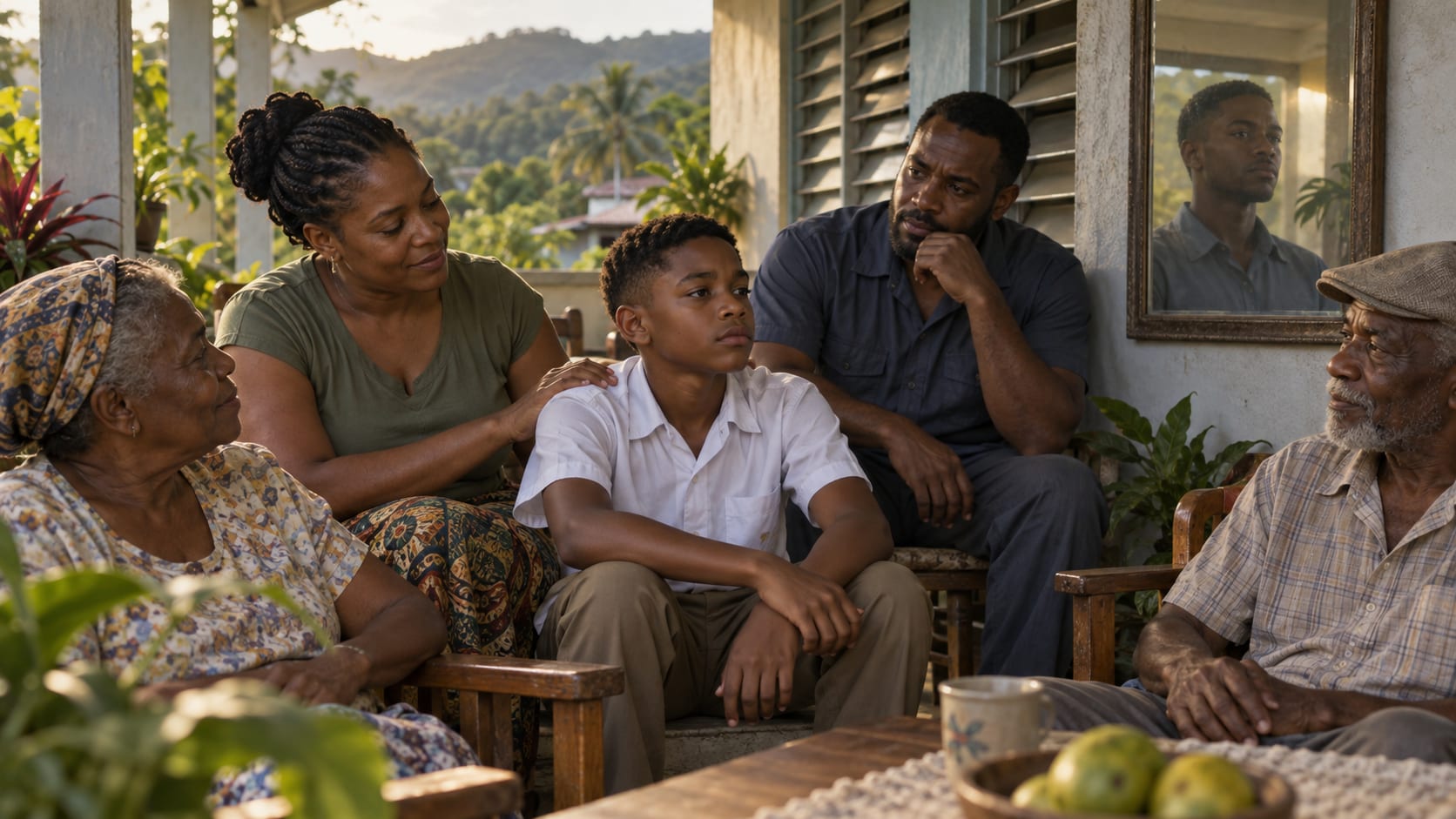
Women themselves are deeply affected by patriarchal expectations.
But if we are serious about changing the culture, we must acknowledge that gender expectations are often transmitted by everyone — mothers, fathers, grandparents, teachers, churches, schools, peers and communities.
Sometimes knowingly.
Sometimes unknowingly.
A mother who tells her son that boys don’t cry may simply be passing on the lesson she herself was taught.
A father who tells his son to “toughen up” may genuinely believe he is preparing him for life.
The cycle continues.
And the boy grows into a man wearing a mask he never consciously chose.
The kinship circle
Which brings me to something distinctly Jamaican.
The male circle.
The gathering.
The domino table.
The bar.
The corner.
The football match.
The fishing trip.
The garage.
The Saturday morning lime.
Women sometimes look at these gatherings and ask:
“What do men talk about?”
Perhaps the better question is:
What happens to men when they are together?
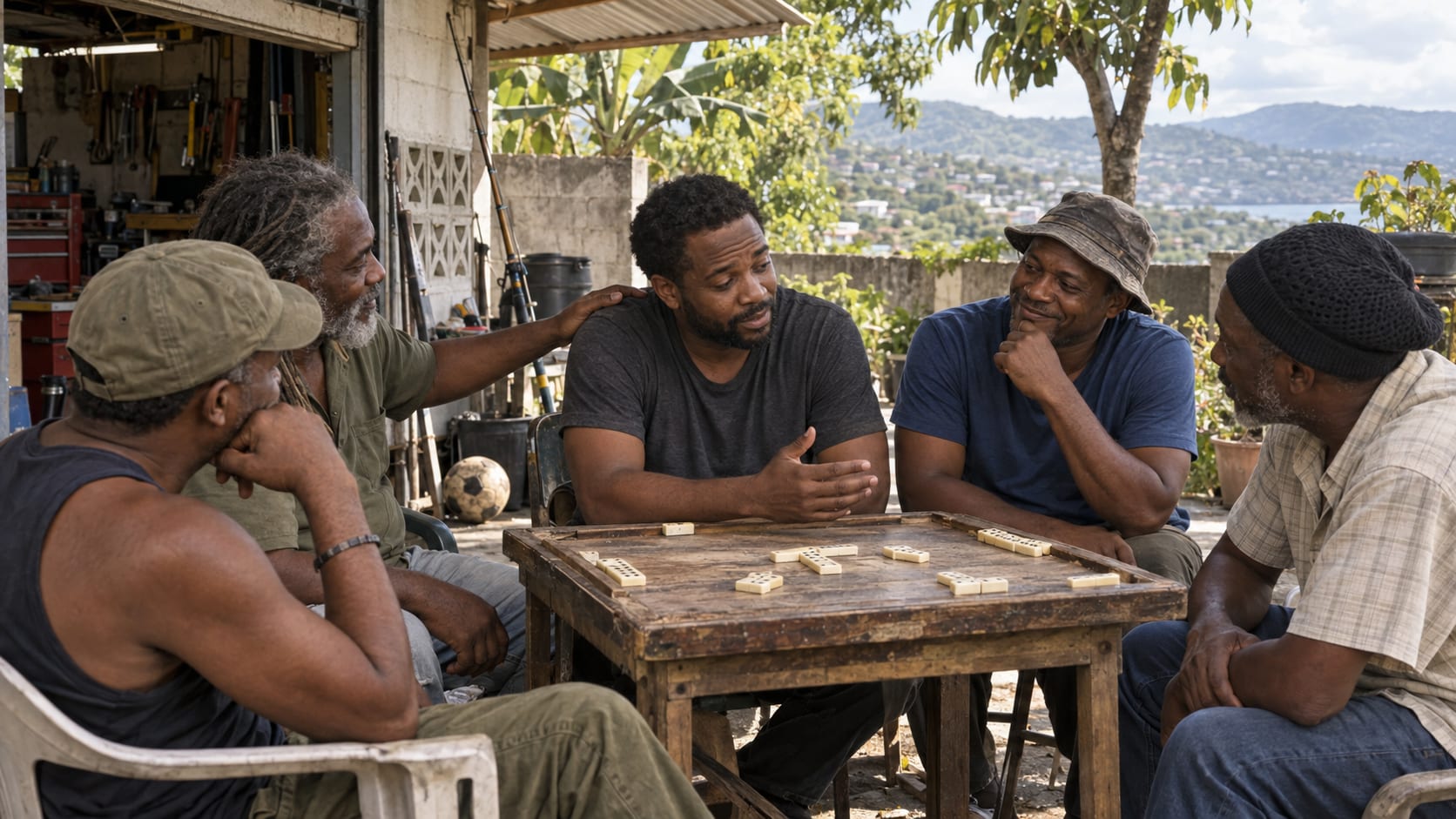
There is something potentially therapeutic about sitting among people who understand your experience.
Consider the structure of addiction recovery programmes.
People sit in circles.
They speak.
They disclose.
They listen.
They are not necessarily there to solve one another’s problems.
They are there to be heard without judgement.
The Jamaican male circle can perform a similar social function — although it should never be confused with professional therapy.
A man may not or may dare not tell his partner that he is terrified about losing his job.
He may not tell his family that he is struggling financially.
He may not tell his children that he feels like a failure.
But sitting with his brothers, something may happen.
Someone makes a joke.
Someone talks about his own problems.
Someone admits that business is bad.
Another says his relationship is falling apart.
Another says he has not slept properly in weeks.
Suddenly, the man who thought he was the only one struggling discovers something powerful:
I am not alone.
For a few hours, the silo disappears.
The mask becomes lighter.
The circle becomes a sanctuary.
And perhaps that is why some men keep returning.
They are not merely “liming”.
They may be maintaining one of the few emotional support systems available to them.
But we cannot leave it there
The male circle can be protective, but it cannot be our only intervention.
Jamaican men also need spaces where vulnerability is normalised.
Schools need to teach boys emotional literacy alongside mathematics and science.
Parents need to understand that raising emotionally healthy boys does not make boys weak.
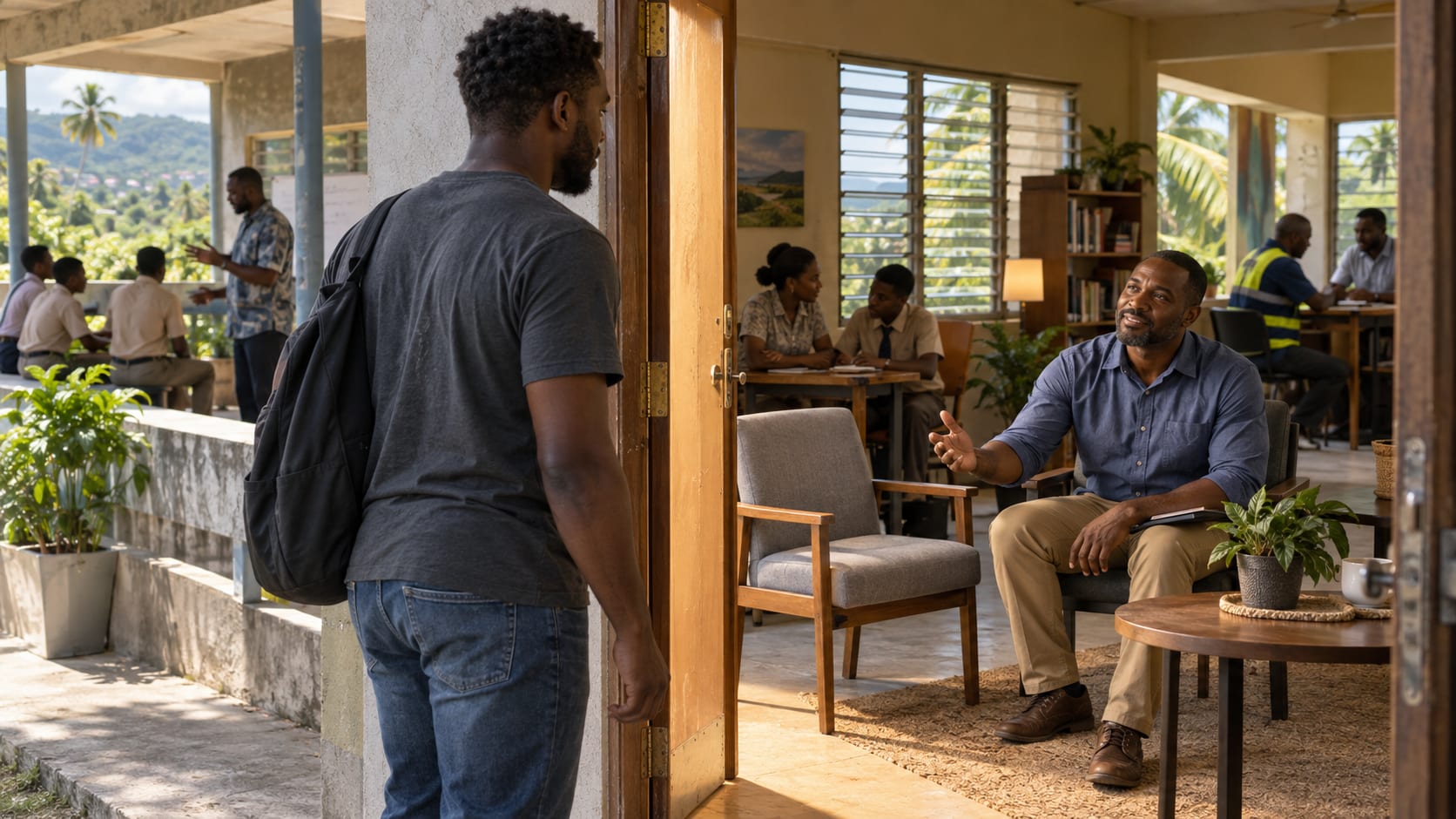
Partners need to learn how to create conversations where both people can speak.
Employers need to understand that a man experiencing emotional distress is not necessarily an unproductive man.
Communities need accessible mental-health services.
And men need to understand something that our culture has often denied them:
Asking for help is not surrender.
The boy is still inside the man
Perhaps the greatest mistake we make is forgetting that every adult man was once a little boy.
A boy who wanted approval.
A boy who wanted to be loved.
A boy who wanted someone to tell him that he was good enough.
A boy who sometimes cried.
A boy who sometimes became frightened.
A boy who sometimes failed.
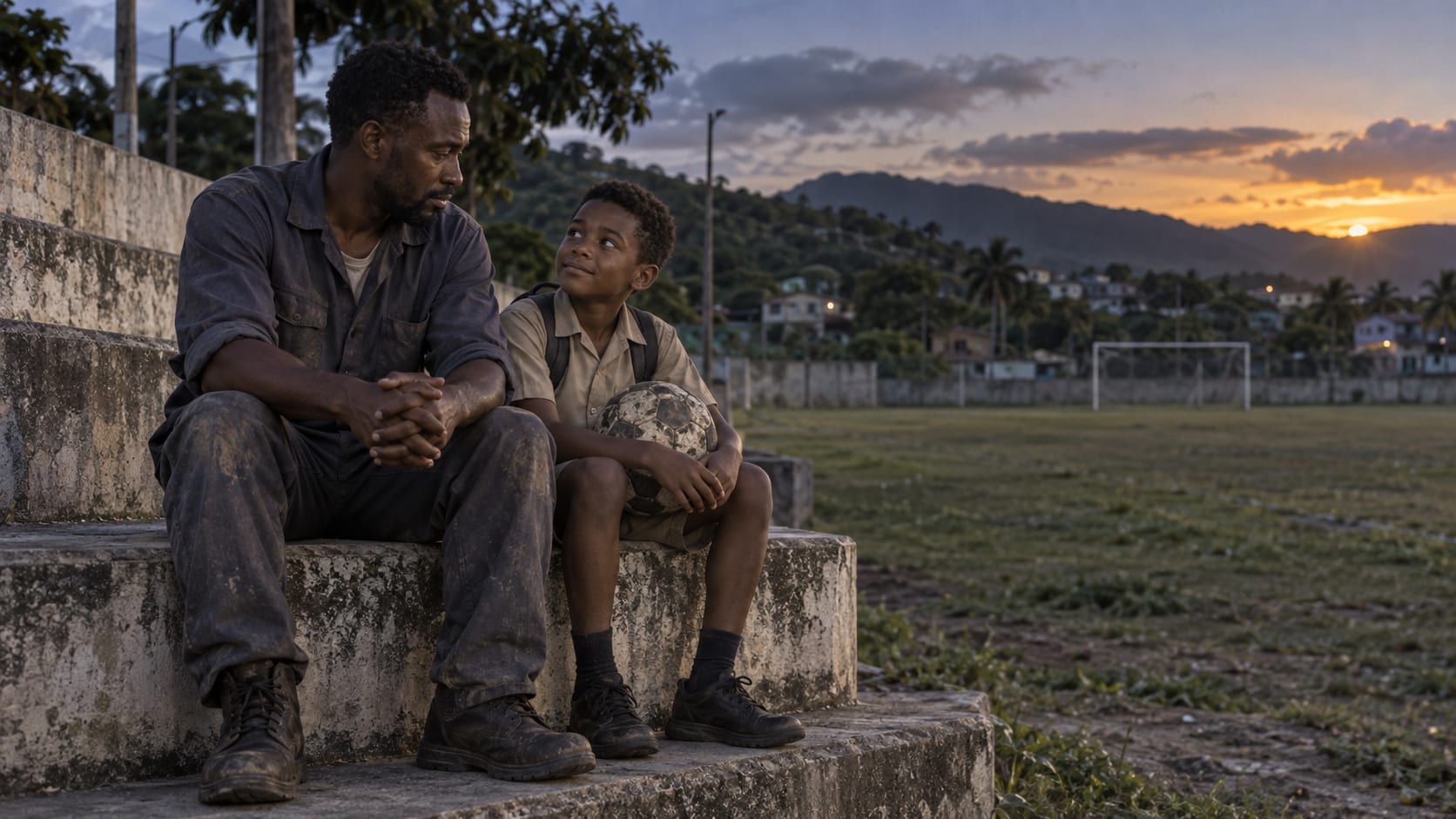
And somewhere along the journey, somebody told him:
“Big man don’t cry.”
So he stopped.
Then he learned to hide disappointment.
Then fear.
Then grief.
Then loneliness.
Until eventually he became very good at saying:
“Mi deh yah.”
Even when he wasn’t.
We need to change the question
If we genuinely want to address Jamaica’s male suicide problem, we cannot wait until a man reaches the edge of the cliff.
We have to start much earlier.
We have to teach boys that courage and vulnerability can coexist.
That crying does not make them women.
That asking for help does not make them weak.
That failure does not make them worthless.
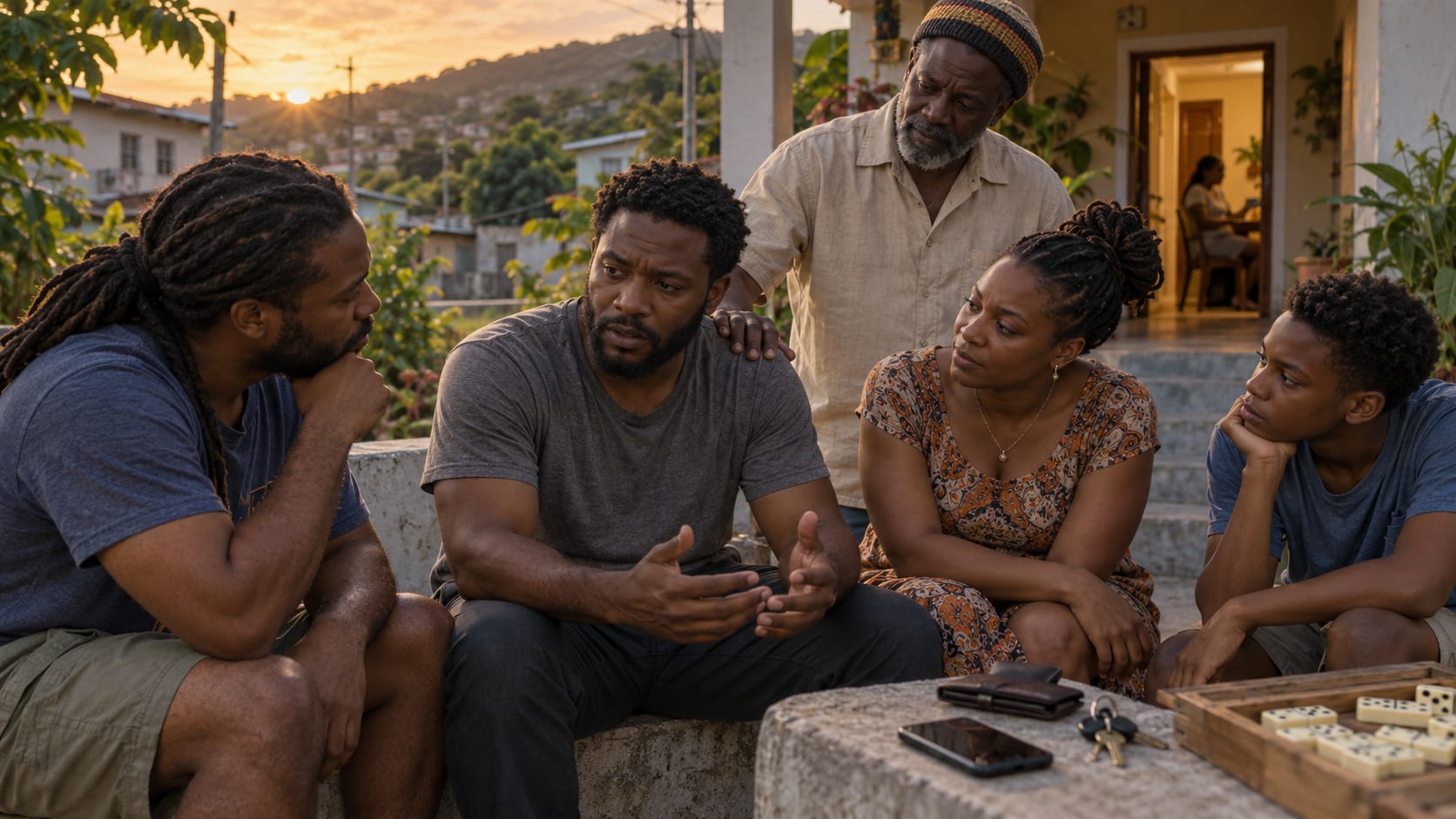
That providing is important, but a man’s value is not determined solely by his bank account.
That a relationship should be a partnership, not an examination in which one person constantly proves his worth.
And that men are allowed to say:
“I am tired.”
“I am scared.”
“I failed.”
“I don’t know what to do.”
“I need help.”
And perhaps most importantly:
“I am not okay.”
The responsibility belongs to all of us.
Men, be your brother’s keeper.
Do not abandon the kinship circle.
Check on the man who has suddenly become quiet.
Check on the friend who has stopped coming around.
Check on the brother who is drinking more than usual.
Check on the man who has lost his job.
Check on the young man who believes his life has failed before it has even begun.
And women, talk with the men in your lives, not merely at them.
Create space for their emotions, just as you expect them to create space for yours.
Because the objective is not to replace one form of gender expectation with another.
The objective is to create human beings who are permitted to be fully human.
Patriarchy will not disappear because we wrote an article about it.
Digital isolation will not disappear because we complain about smartphones.
And suicide will not disappear because we hold another conference.
But perhaps something can begin with one simple question.
Not after the funeral.
Not after the police arrive.
Not after the obituary.
Not after the tragedy.
Today.
Look at the man beside you.
Look at your husband.
Your brother.
Your son.
Your father.
Your friend.
And ask him:
“How are you feeling?”
Then do something even more important.
Stay long enough to hear the answer.



Comments