
PAHO: Strengthening primary care, harnessing new health technologies key to better pandemic recovery and preparedness

/ Our Today
administrator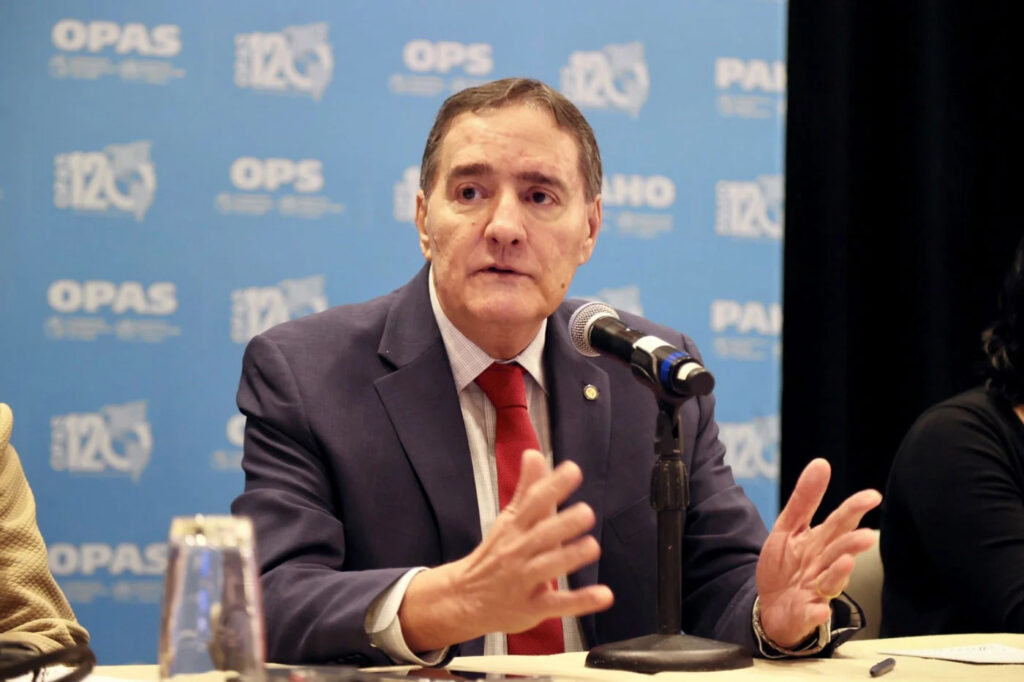
Dr Jarbas Barbosa, director of the Pan American Organization (PAHO) has reiterated that collaboration, renewed attention to primary care and innovation will be key to bridging the gap in access to health and overcoming inequalities painfully exposed during the COVID-19 pandemic.
“Improving global health in today’s world requires that we continue to find common ground across sectors, disciplines, and political differences,” the PAHO director said in his remarks at the Opening Plenary of the World Health Summit Regional Meeting in Washington, DC.
“Only then will we overcome persistent inequalities and build health systems that can respond to emerging threats and help us recover and rebuild from the pandemic stronger than before to achieve our goal of universal health.”
These inequalities are particularly evident in the region of the Americas, Barbosa said, where “despite remarkable progress over the past decades, health remains a promise unfulfilled for so many people.”

Nearly one-third of people in the region live below the poverty line, and over 80 per cent of the population lives in urban areas, including slums with poor access to water and sanitation.
“Yet, families are still asked to cover more than one third of their health care costs from their own pocket,” the PAHO director said. “This is unacceptable to all of us.”
Expanding and ensuring equitable access to health will require both large-scale changes and making use of solutions that are already within reach, he added.
Barbosa also called for greater investment to revitalize and strengthen primary healthcare services, the bedrock of resilient health systems. “Our community health centers, local clinics and other health outposts must be trusted places where families can turn for prevention, diagnosis, and treatment.”
They should also be “the first line of defense against the spread of disease.”.
Barbosa urged countries in the Americas to take advantage of new health technologies and innovative approaches, not just as beneficiaries, but as drivers of health innovation.

“As we saw during the COVID-19 pandemic, our region too often struggles to access life-saving tools like diagnostics, drugs and vaccines,” he said. Latin America and the Caribbean depend almost entirely on other regions to produce health tools.
“Expanding our region’s capacity to manufacture medicines and vaccines will be essential to protecting us against health threats now and into the future,” the PAHO Director said.
He added that the region also has the market to leverage new products and that PAHO’s regional procurement mechanisms – the Revolving Fund for Vaccines and the Strategic Supply Fund– can support countries in pooling needs and funding to purchase health tools at affordable prices, helping countries make the most of limited resources.
The director said that countries have come together since the inception of PAHO to “protect the health of our region,” leading to the eradication of diseases, and building health systems which enabled more people in the Americas to live healthy, productive lives.
“PAHO’s history is proof that we can overcome political divisions and work together to keep health as a priority – even amid global and national conflicts,” Dr Barbosa said.

Comments