
Sunday Sips with H.G. Helps | Fooling the people about the economy; time to teach Basic Health Care in schools; Jamaicans must know about third country deal; and playing games with roads

/ Our Today
administrator
Stop fooling the people about the economy
Finance Minister Fayval Williams is a nice woman in many ways. She does not get it, though; that notwithstanding, niceness does not count when it comes to being brutally honest about the portfolio over which she presides.
I don’t have to be Alan Greenspan’s first cousin, or a fan of the now upgraded Dr Nigel Clarke, in order to determine that the Jamaican economy is in trouble.
Last week, Jamaica’s first woman finance minister sought to inform the nation during updates from Monday’s meeting of the Cabinet that things were bright in the economy.
She said that the rate of recovery from Hurricane Melissa last October was 18 months ahead of earlier projections by the Planning Institute of Jamaica. Now, how in Heaven’s name is that measured?
Mrs Williams should be aware by now that the PIOJ’s credibility has been in question lately. She insisted that the economy was doing ‘well, although some people may not be feeling it’, without factoring in the reality. Jamaica is in a recession. The PIOJ does not have to admit that, but it is so.
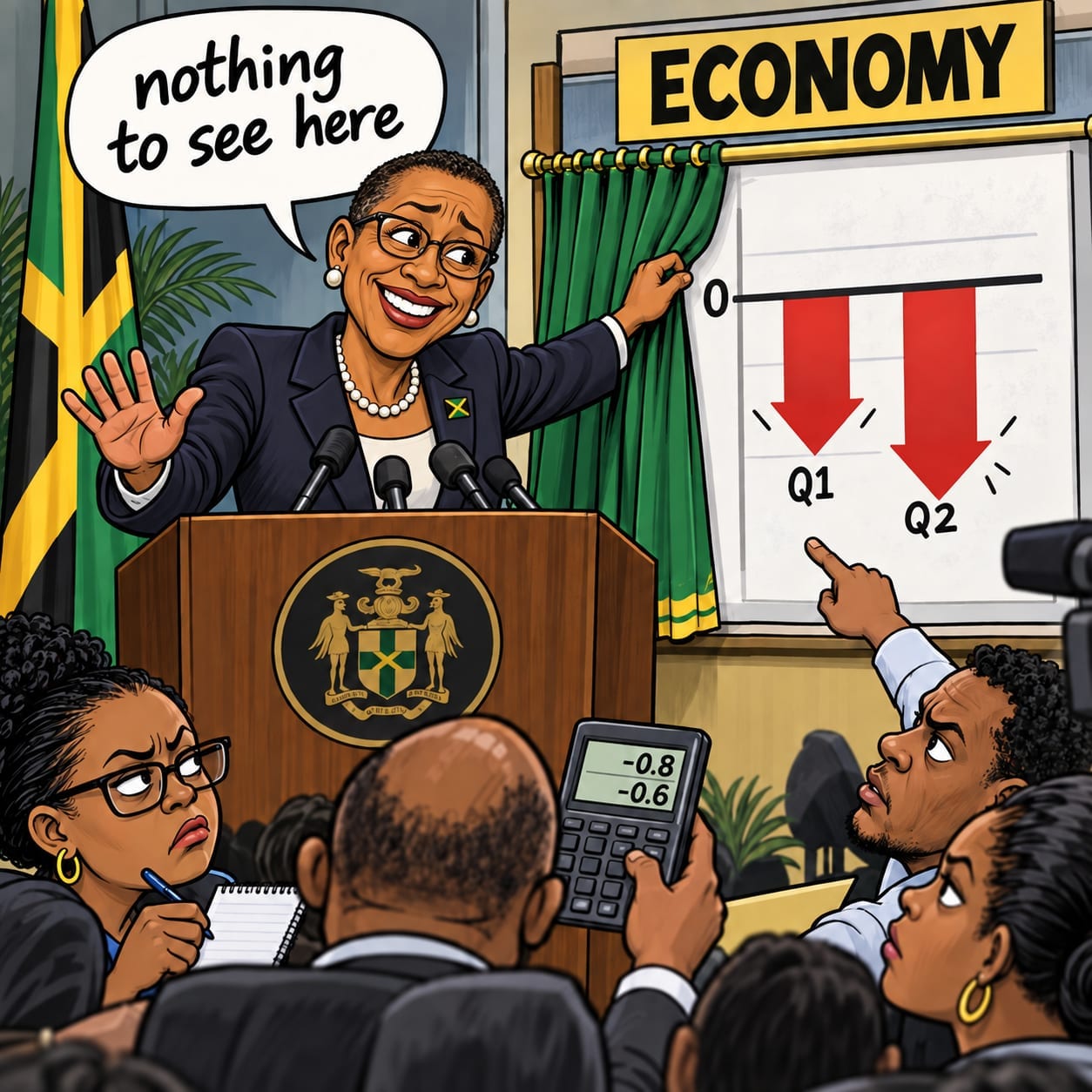
Right now, there is a budget shortfall of $28 billion; point-to-point inflation, over the last three months, annualised, leapt from 5.3 per cent in May to 6.7 per cent by the next month, then to 7.5 per cent in July, and 7.9 per cent by August. The 7.9 per cent is the highest rate of inflation since the COVID-19 pandemic six years ago. Moreover, the inflation rate now is 200 per cent higher than the global mark of 3.8 per cent.
Lest we forget, the Central Bank’s target of a four to six per cent range has been thrown through the window. These are facts that the people ought to be told, and in simple language.
Now that the US Federal Reserve (Central Bank) has hiked interest rates, there is a strong possibility that inflation in Jamaica will soon become a sprint sensation.
Some of Jamaica’s key areas of revenue earning, like tourism and agriculture, are down.
Numbers aside, suffering abounds. The requests for support from people, daily, are countless. They are not tricksters or ‘ginnals’ – they are really in need. I have never seen people approaching me for some kind of assistance, whether I hit the road or by way of telephone contact, like now.
Maybe the finance minister should enforce days off for her close protection officers sometimes, and walk the streets by herself to get a clearer picture of what is happening. Only then will she be convinced that Jamaica is in trouble … big trouble.
Start teaching health care in schools
With Jamaica in the mess that it finds itself, now is the time for the Ministry of Education to introduce a course in Basic Health Care, essentially for secondary schools, to prepare young people for their future and the future of others near to them.
It would come in handy for providing more than backup support for subjects like physical education and human & social biology.
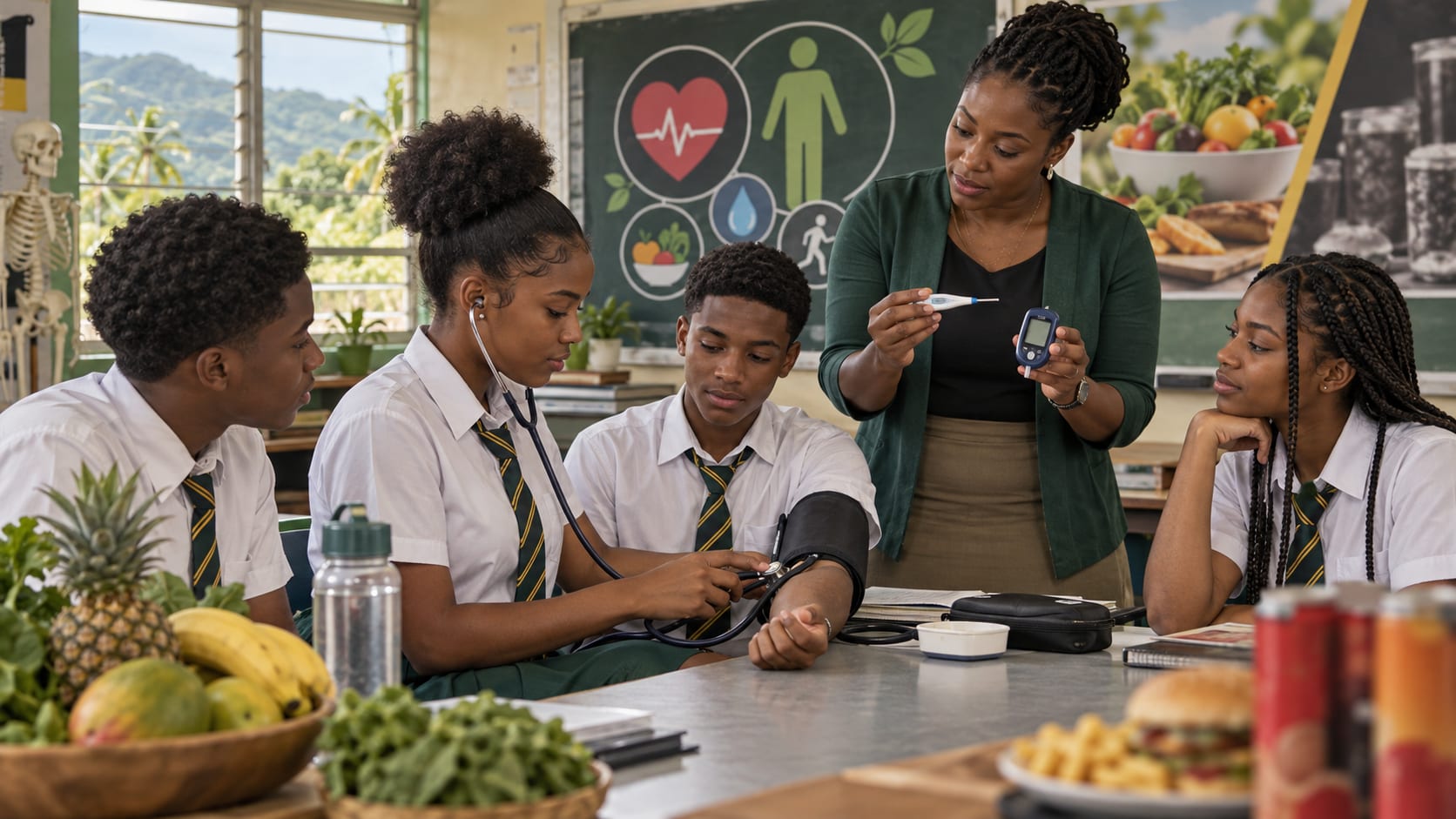
At a time like this, when certain ‘old people diseases’ like diabetes, high cholesterol, high blood pressure and others are being detected in young people from pre-teen onwards, it is critical for them to be taught how to protect or guide themselves, in the midst of improper eating and drinking habits that exist.
The heavy consumption of fast foods, many of them greasy, slimy and full of cholesterol, means that young folk must be on the alert. If not, Jamaica’s health care bill will continue to soar. Once upon a time, it would be largely blasphemous for people to be lined up in fast food places on a Sunday to indulge in those half-cooked, dangerous meals that many establishments are serving now.
Aside from the sugary ones, energy drinks are the norm too, and the people who are indulging do not even realise how serious the practice of consuming them is.
The education system, maybe even from grade six at the primary level, but certainly by grade seven at the secondary level, must accommodate lessons on how schoolchildren can do checks on their own, or even assist with blood pressure, blood sugar, cholesterol, pulse, temperature, breathing, and a few others, and be able to understand what the readings mean.
It is something that must be seen as a ‘win-win’ for Jamaica. Apart from knowing where young people stand, they too may be able to check the numbers or examine older family members, so that when they get the chance to attend outpatient departments or health centres for their 10-hour visits of torture, at least they would have an idea of what is happening.
No more secrecy on third country arrangement
The secrecy surrounding third-country criminals leaving the United States, landing in Jamaica, and potentially moving on to other lands must be unveiled now.
It is unacceptable for Jamaica to enter into an arrangement with the United States, or any other country, about the shipment of convicts, and its people do not know the details.

Last week, Foreign Affairs Minister Kamina Johnson Smith boldly declined to disclose relevant information regarding the arrangement with the US, and that is worrying. The matter is too important for Jamaicans not to know what they are getting into, as they are the ones who will have to rub shoulders with those who are being taken into the country. Although nationals have been told that convicts will be in transit, that may not necessarily be the case. But what is the case?
Governing politicians just cannot get up and ignore the people who put them in office by not informing them of situations like the one at hand.
There is something fishy about the deal, and that is why the ‘nitty-gritty’ is being kept from the public. Interestingly, I read a Washington Post report last Saturday that an Appeals Court in the US determined the day before that the Trump administration’s policy on deporting criminals to third countries was illegal. That’s the second time that a court has so ruled, following that determination last February by a lower court.
It is likely that the US Supreme Court will next intervene, as I am sure that Trump and his subjects will appeal the latest ruling. Shouldn’t Jamaica at least relax and allow the legal system in the US to decide what occurs henceforth?
Playing games with roads
It was instrumental that upon my grand rising on the morning of Friday, September 18, the first bit of information that I accessed was one in which Peter Shoucair, a Jamaican businessman dealing in the wedding planning and travel industries, was expressing outrage that a ‘pothole registry’ had been established, which, supposedly, will document all pothole locations in the Corporate Area, maybe elsewhere, and pass the information on to the National Works Agency or, perhaps, the Kingston & St Andrew Municipal Corporation.

Peter Shoucair is an ‘uptown’ man, in terms of where he resides. Presumably being upper class, he sits far away from the proletariat but still cares about its members, based upon some of his earlier pronouncements.
In his missive, he listed roads with potholes that needed attention, essentially in upper-class areas, among them Russell Heights, Cherry Garden, Millsborough, Jack’s Hill, Lady Musgrave Road, and East King’s House Road.
The potholes identified in those areas, though, are minuscule when compared to others, and I am not even mentioning the inner-city areas, for those are hell zones that have been forgotten, all because of socio-economic situations that relate to the residents and their financial capacity to influence power. They are the same one’s though, who, by way of their overall votes, are more powerful than any other category of people to determine the final outcome in elections, yet often ignore that power in preference of a plate of curry goat and rice, fried chicken and fries and/or a $5,000 bill.
For years, I have been advocating the establishment of a Pothole Patrol by the NWA, that is empowered and equipped to travel the streets, identify potholes and other road irritants, and work towards fixing them. Compared to years ago, the people are far more docile now. They block roads primarily to complain about police killings of ‘innocent’ people, rather than about poor quality surfaces.
I have seen road surfaces across this island which are sickening. Starting to name them now would be an exercise that would take 40 days and 40 nights to reach halfway. Just look at one example, though: For over two months now, a particular pothole has existed in a corner along the busy Golden Spring main road in St Andrew, near the turnoff at Brook’s Level Road, causing all sorts of confusion. The NWA seems to be waiting on a major collision to occur, and lives to be lost.
We have a minister, so-called, who continues to paint bright pictures of plans to fix roads by spending billions under the Spark Programme, or some other fancy-sounding project. The fact is that change must be made at that level, like the case of health care in Jamaica, for anything tangible to happen.
Like health, where it would be an advantage to have someone with a professional background in medicine to really appreciate what is needed for the sector and act upon it, the Works portfolio is crying out for someone sensible to lead it – preferably an engineer, instead of the hopeless pretender that is there now. Surely, the prime minister can do better. He must!
H G Helps is a veteran journalist



Comments