
The Math behind Manatee: How much of Atlantic LNG’s idle capacity does 604 MMscf/d actually fill?

/ Our Today
administrator
Trinidad and Tobago’s Energy Minister Roodal Moonilal has framed the Manatee gas field as a fix for declining domestic output, but the more precise question for Atlantic LNG is how much of the plant’s underused liquefaction capacity the project can realistically restore.
Atlantic LNG’s four trains carry a combined nameplate capacity of roughly 15 million tonnes per annum. Train 1, however, has been idle since 2020 due to gas shortages and was confirmed for permanent decommissioning earlier this year, reducing effective capacity across Trains 2, 3 and 4 to approximately 11.8 mtpa. Actual exports in 2025 came in at around 9 million tonnes, according to Reuters reporting cited by the Energy Chamber of Trinidad and Tobago, leaving roughly 2.8 mtpa of capacity unused even after accounting for the Train 1 write-off.
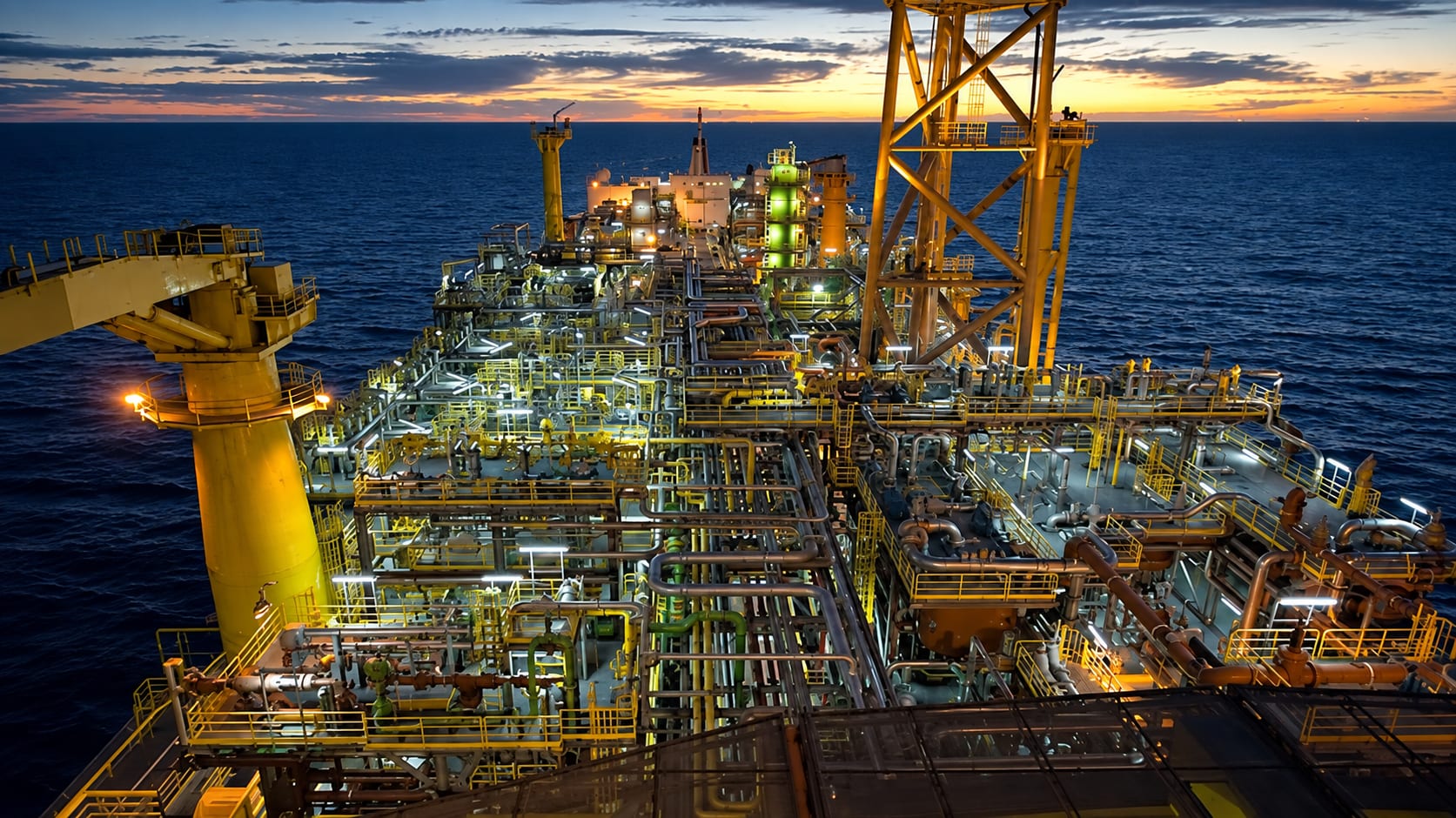
Manatee’s expected peak output of 604 MMscf/d translates, using a standard industry conversion of roughly 130 to 140 MMscf/d of feed gas per mtpa of LNG, to somewhere in the range of 4.3 to 4.6 mtpa of liquefaction capacity if the full volume were directed to export. That figure alone would be enough to close most or all of the current utilisation gap at Trains 2 through 4.
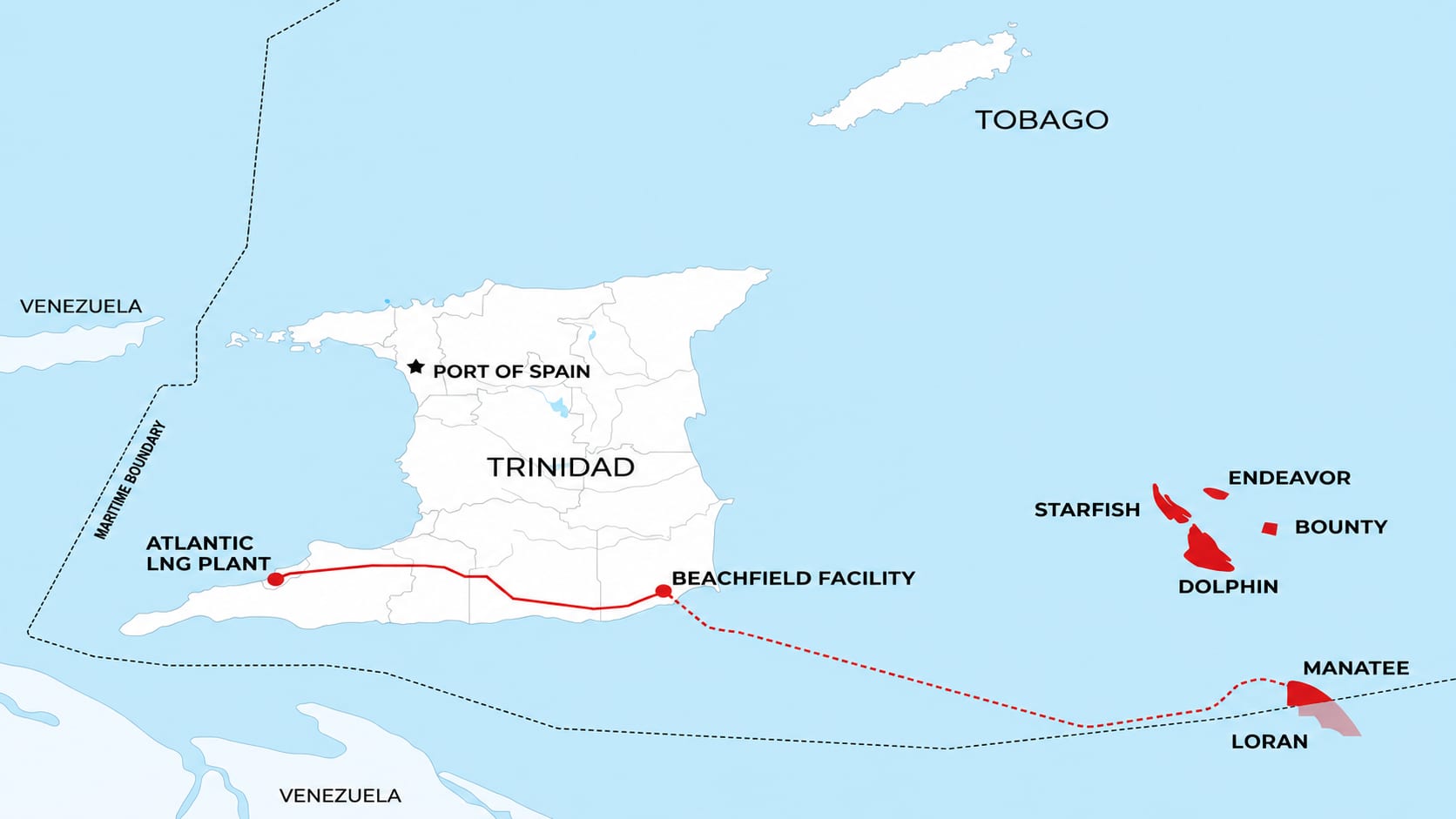
The catch is that Manatee’s gas is not earmarked solely for Atlantic LNG. Moonilal has said the field will supply both the domestic market, including petrochemical plants and power generation at Point Lisas, and LNG exports. [confirm official split between domestic allocation and Atlantic LNG feed for Manatee’s 604 MMscf/d] Without that breakdown, the realistic contribution to closing Atlantic LNG’s utilisation gap is smaller than the headline production figure suggests, though still meaningful given how thin the margin has become.
Context matters here too. Atlantic LNG has spent much of 2026 managing scheduled and unscheduled outages, including an extended Train 4 maintenance shutdown and an emergency repair to Train 3 after a crack was found in its flaring system. Even with new gas volumes arriving, actual export performance depends on all three remaining trains running reliably at the same time, something the plant has struggled to sustain in recent years.
First gas from Manatee is not expected until 2027, and the field is one of several projects the government is counting on to arrest the broader decline in gas production, alongside continued output from BP and Shell’s mature fields. Whether Manatee alone pushes utilisation back toward nameplate levels, or simply slows further erosion, depends on how much of its gas actually reaches the liquefaction trains rather than the domestic grid.




Comments